Friction is key to making better robot world models
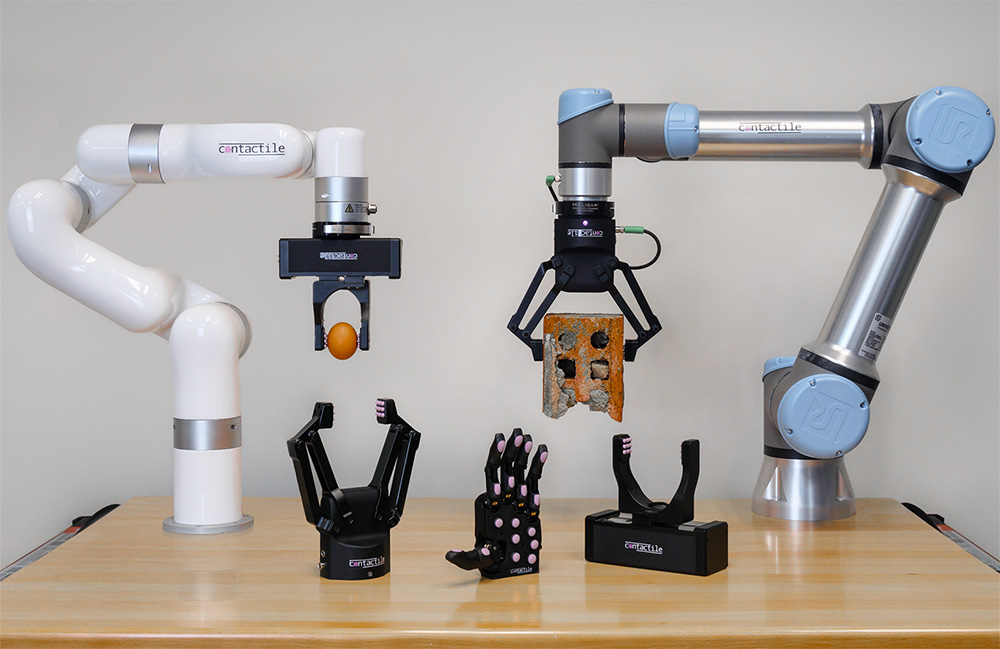
Contactile offers robotic hands and grippers equipped with its tactile sensors. | Source: Contactile World models are the next frontier in robot learning. But, because conditioning on touch remains fundamentally incomplete, they cannot reliably generalize across novel surfaces and objects. A new model class, VμA, proposes to fix that by making friction a first-class input. World models are the next frontier The most ambitious direction in robot learning today is the world model: a generalist mo
Get smart on it
World models are AI systems that help robots predict the consequences of their actions and generalize to new situations, but current models rely primarily on camera images and joint position data, which is insufficient for tasks involving physical contact with objects. The missing piece is the coefficient of static friction, the physical parameter that determines whether a grasped object will slip, which cannot be seen by cameras or inferred from joint currents alone. When robots condition their world models on friction as a direct input rather than trying to infer it from pressure maps or motor signals, they shift from statistical pattern-matching toward causal physical understanding, enabling reliable generalization across novel surfaces and objects. This approach, called VμA models (vision-μ-action), treats friction as a first-class conditioning input alongside vision and motor action.
Related news
Photos: First look at J&J’s Ottava surgical robot
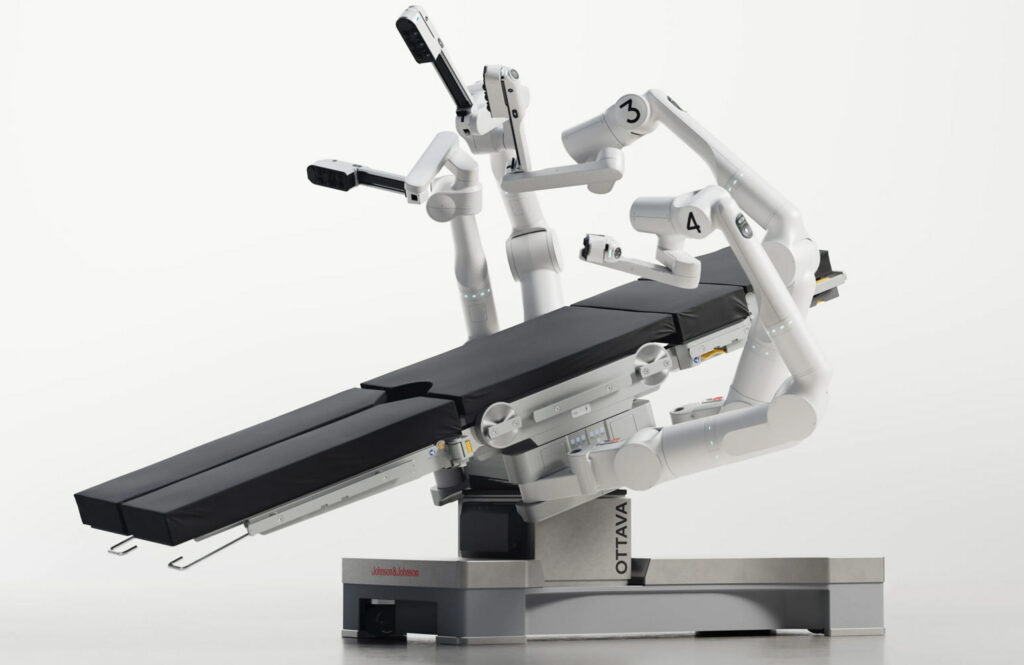
Johnson & Johnson’s Ottava surgical robot has four robotic arms that come out from underneath the operating table. Photo credit: Johnson & Johnson Johnson & Johnson MedTech unveiled its long-awaited Ottava surgical robot after winning FDA de novo authorization. It’s the world’s first table-integrated, soft-tissue robotics system. The robot-in-table design is meant to save space in the operating room, with J&J saying its novel architecture takes up 30-50% less space tha
Generalist’s GEN-1 foundation model now supports a range of robot end effectors
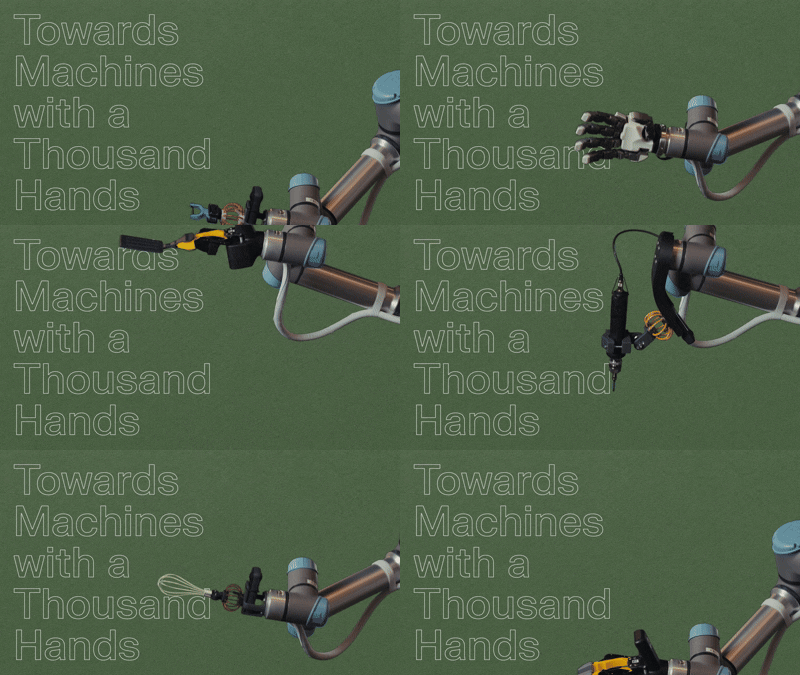
Generalist’s latest embodied foundation model, GEN-1, now supports a broad range of robot end effectors. The company said GEN-1 is compatible with five-fingered hands to specialized tools with new modes of actuation and everything in between. By training GEN-1 to work with these new hands, Generalist said it is demonstrating that a single base AI model can learn sensorimotor policies on robots that transfer across radically different ways of interacting with the physical world. Below, the