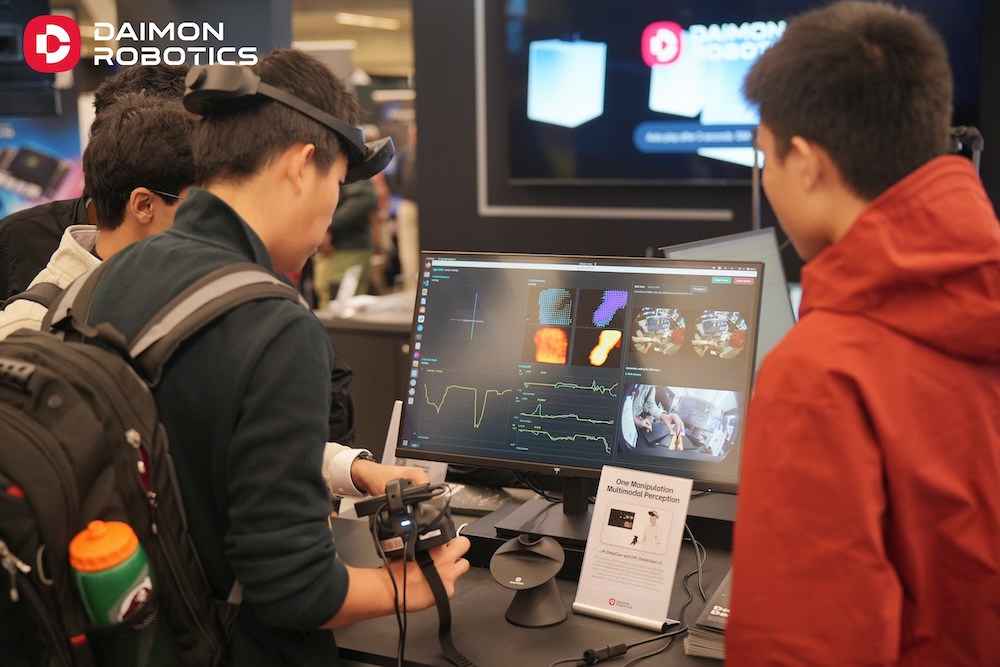
Daimon Robotics builds tactile intelligence infrastructure
The Robot Report: Daimon Robotics building the infrastructure layer for tactile intelligence
Credit: Daimon Robotics Vision has become central to modern robotics, but cameras alone cannot tell a robot everything it needs to know about physical contact. When handling flexible objects, inserting components, or manipulating delicate items, robots need information about forces, slippage, and contact that visual systems may miss. Daimon Robotics wants to provide the infrastructure to help robots develop that capability. Rather than focusing exclusively on tactile sensors or devel
Get smart on it
Daimon Robotics is building infrastructure that combines tactile sensors, data collection, simulation, and AI models to help robots understand physical contact and manipulation tasks. While vision systems can tell robots what objects look like, tactile feedback provides information about forces, slippage, and contact that cameras cannot detect, which becomes essential for handling flexible objects, inserting components, or manipulating delicate items. The company is positioning itself as an infrastructure provider rather than a foundation model developer, collecting large-scale tactile data and working to bridge the gap between simulated and real-world environments so other companies can build more capable robotic systems. This matters because robots performing assembly, packaging, and other manipulation tasks in production environments need to handle variations in objects and materials while adjusting their actions based on physical feedback.
Relevant courses
Want to go deeper than the news? Explore live, cohort-based AI courses taught by practitioners.
Browse AI courses on MavenRelated news

Laplace Intelligence red-teams robots and self-driving cars before they hit the real world
University of Michigan spinout Laplace Intelligence uses AI agents and interactive simulation to stress-test robots and self-driving vehicles before deployment. The profitable startup is competing in Startup Battlefield at TechCrunch Disrupt, October 13-15 in San Francisco.

A woman was arrested in Philly for blocking a delivery robot
Carolyn Marvin was arrested and charged with disorderly conduct after blocking the path of an Uber delivery robot and refusing to get out of the way. Marvin told Philadelphia's ABC13 "I know they're taking the jobs of human delivery workers and so, I have been protesting them whenever I saw them by standing in front of them and preventing them from going forward." Police responded to the scene and asked Marvin to move out of the robot's way. When she refused, they placed her in
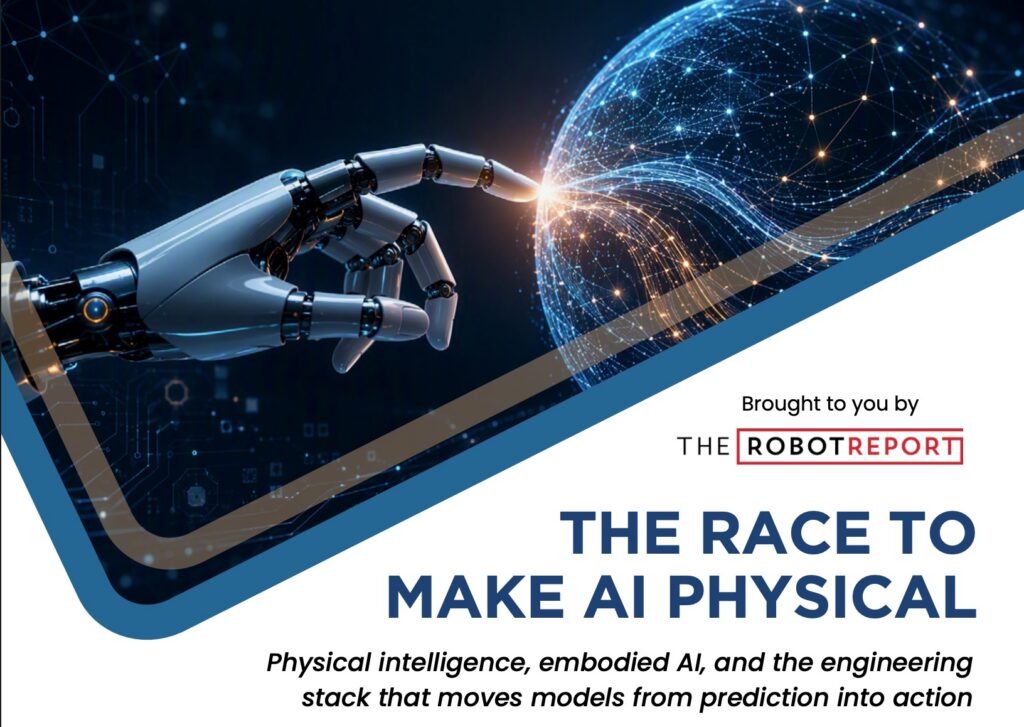
ADI explains the race to make AI physical
The Report Report presents a whitepaper on the race to physical AI. AI has become remarkably good at understanding language, images, and code. The next challenge is harder — understanding reality, according to Analog Devices Inc. or ADI. Physical AI moves intelligence out of digital environments and into machines that must sense, decide, and act in the world. Unlike software, those systems face imperfect measurements, timing constraints, changing conditions, and the consequences of action,
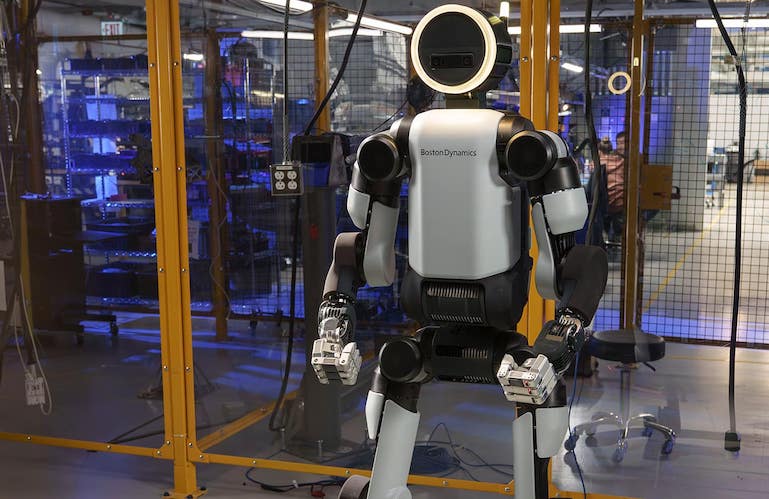
The rise of the machines is canceled: Why humanoids with AI are helpers, not enemies
Boston Dynamics’ Atlas humanoid, shown here, is an example of a robot ready for AI. For decades, engineers have been trying to create robots that look and act like humans. Now, rapid advances in artificial intelligence are bringing humanoid robots out of the lab and onto the factory floor. As fears grow that AI will displace workers, a global race is underway to develop humanoid robots capable of performing human work. Competitors include Tesla, startups backed by Amazon and NVIDIA, and st

Why opportunity charging is winning as robot fleets scale
The Robot Report Podcast · Why Opportunity Charging Is Winning as Robot Fleets Scale Ben Waters, CEO of Wibotic. In Episode 266 of The Robot Report Podcast, our guest is Ben Watters is the CEO and co-founder of WiBotic, a company that develops wireless charging solutions and fleet-wide battery management software for industrial mobile platforms of all shapes and sizes. The company‘s mission is to energize businesses with autonomous systems to grow and scale without limitation, while creat
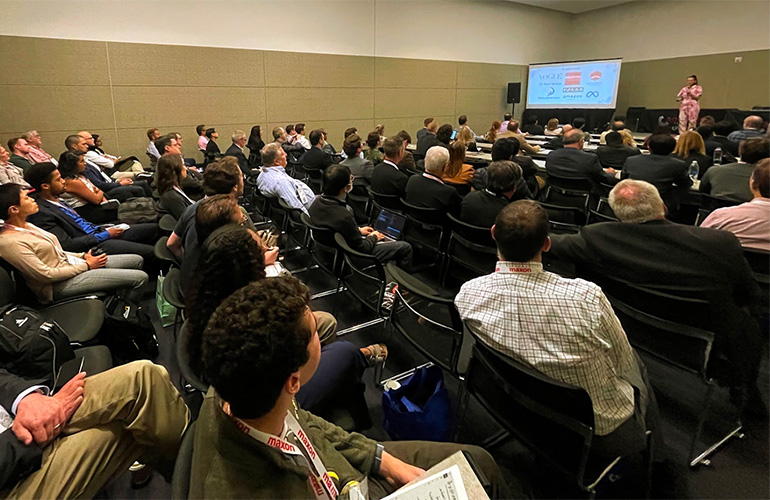
MassRobotics opens applications for Healthcare Robotics Startup Catalyst Program
Startups in the MassRobotics healthcare catalyst cohort will have an opportunity to showcase their technology at the Robotics Summit & Expo. | Source: MassRobotics MassRobotics this week opened its call for applicants for Cohort 6 of its Healthcare Robotics Startup Catalyst Program. The program is a four-month, non-equity initiative that helps robotics and automation teams accelerate clinical readiness, technical validation, and go-to-market in healthcare and life sciences. Applications are