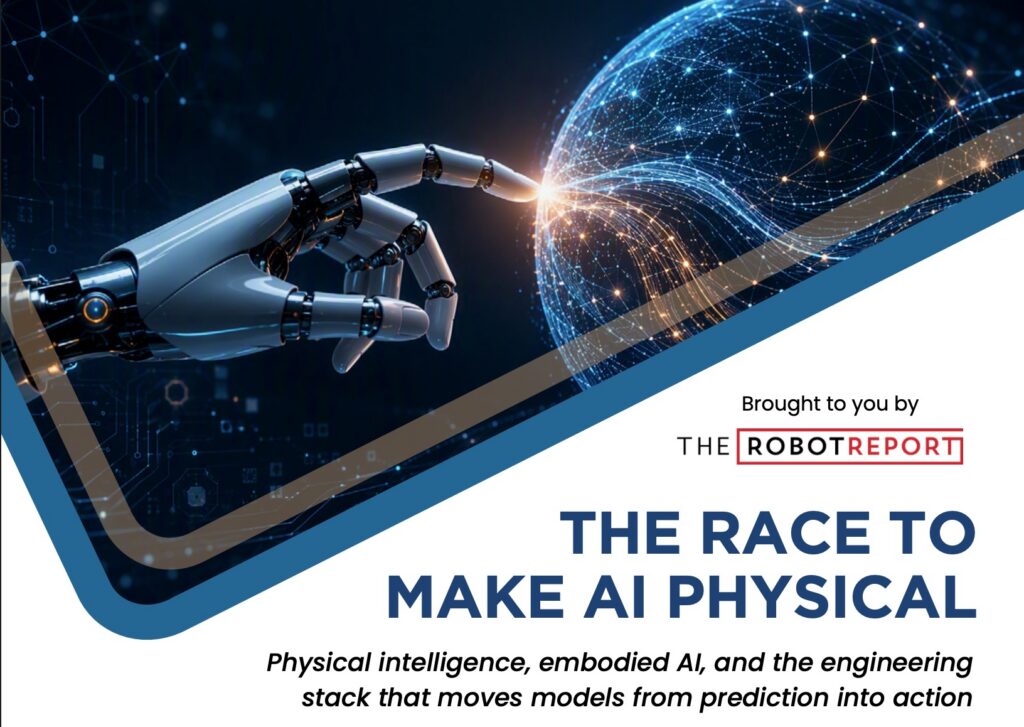
ADI explains physical AI challenge
The Robot Report: ADI explains the race to make AI physical
The Report Report presents a whitepaper on the race to physical AI. AI has become remarkably good at understanding language, images, and code. The next challenge is harder — understanding reality, according to Analog Devices Inc. or ADI. Physical AI moves intelligence out of digital environments and into machines that must sense, decide, and act in the world. Unlike software, those systems face imperfect measurements, timing constraints, changing conditions, and the consequences of action,
Get smart on it
Physical AI refers to moving artificial intelligence out of digital environments and into machines that must sense, decide, and act in the physical world. Unlike software systems, physical AI systems must handle imperfect measurements, timing constraints, changing conditions, and real-world consequences of their actions. Success requires advances across sensing, simulation, computing, connectivity, and control technologies that sit beneath the application layer. Physical AI matters because machines that can read multiple inputs, recognize patterns like bearing wear, and adapt before failure represents a step beyond simple rule-following to something closer to judgment.
Relevant courses
Want to go deeper than the news? Explore live, cohort-based AI courses taught by practitioners.
Browse AI courses on MavenRelated news

Industrial Next wants factory robots to switch tasks in minutes, not weeks
Industrial Next helps manufacturers automate complex, delicate tasks that have traditionally required human labor.
The rise of the machines is canceled: Why humanoids with AI are helpers, not enemies
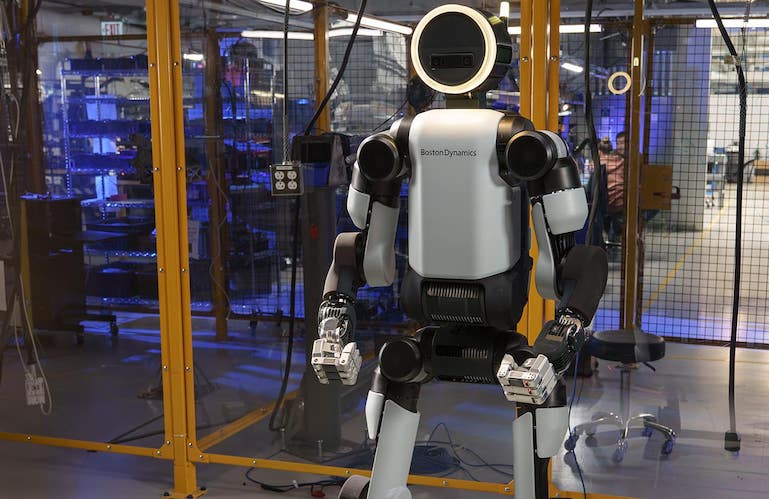
Boston Dynamics’ Atlas humanoid, shown here, is an example of a robot ready for AI. For decades, engineers have been trying to create robots that look and act like humans. Now, rapid advances in artificial intelligence are bringing humanoid robots out of the lab and onto the factory floor. As fears grow that AI will displace workers, a global race is underway to develop humanoid robots capable of performing human work. Competitors include Tesla, startups backed by Amazon and NVIDIA, and st

Why opportunity charging is winning as robot fleets scale
The Robot Report Podcast · Why Opportunity Charging Is Winning as Robot Fleets Scale Ben Waters, CEO of Wibotic. In Episode 266 of The Robot Report Podcast, our guest is Ben Watters is the CEO and co-founder of WiBotic, a company that develops wireless charging solutions and fleet-wide battery management software for industrial mobile platforms of all shapes and sizes. The company‘s mission is to energize businesses with autonomous systems to grow and scale without limitation, while creat
MassRobotics opens applications for Healthcare Robotics Startup Catalyst Program
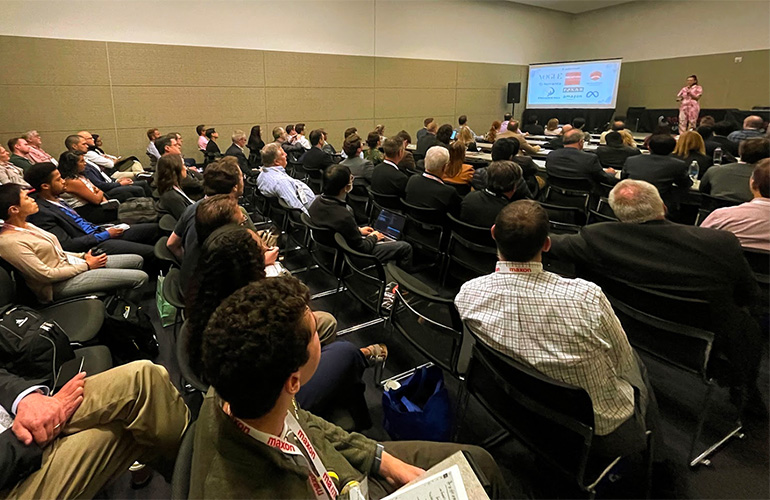
Startups in the MassRobotics healthcare catalyst cohort will have an opportunity to showcase their technology at the Robotics Summit & Expo. | Source: MassRobotics MassRobotics this week opened its call for applicants for Cohort 6 of its Healthcare Robotics Startup Catalyst Program. The program is a four-month, non-equity initiative that helps robotics and automation teams accelerate clinical readiness, technical validation, and go-to-market in healthcare and life sciences. Applications are

Physical AI is more than robots, says the Nvidia veteran now investing in it
Amulya Vishwanath, who spent seven years leading product marketing for NVIDIA’s robotics platforms, says robotics is currently in its “Lego era,” with the basic building blocks like actuators, robotic hands, software, and safety standards still being rebuilt. This view runs counter to those who believe that robotics, powered by a general foundation model, is about to have […]

A Nvidia insider-turned-VC on why robotics hasn’t hit its ChatGPT moment, yet
Amulya Vishwanath, who spent seven years leading product marketing for NVIDIA’s robotics platforms, says robotics is currently in its “Lego era,” with the basic building blocks like actuators, robotic hands, software, and safety standards still being rebuilt. This view runs counter to those who believe that robotics, powered by a general foundation model, is about to have […]