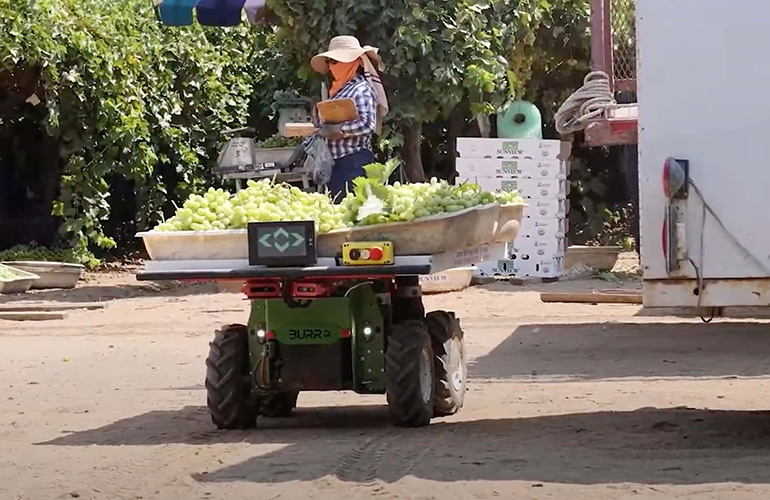
Building robots for unpredictable, infrastructure-free environments
Burros can carry, tow, scout, patrol, mow, push, pull, or propel a variety of attachments as a platform for manipulation. | Credit: Burro AI In 2018, Burro did a demo. The robot worked. We were excited. We thought we understood the problem. We did not understand the problem. What we understood was how to make a robot perform in conditions we controlled, for an audience prepared to see it succeed, over a time horizon short enough that the long tail of real-world failures hadn’t had time to
Get smart on it
Building robots that work reliably in unpredictable outdoor environments requires fundamentally different engineering than robots designed for controlled indoor settings. The key challenge is that outdoor conditions vary constantly across time, weather, and seasons, and these environments cannot be solved through simulation alone but only through real-world operation and continuous learning from field data. The primary technical bottleneck is developing infrastructure-free localization and perception systems that allow robots to know their precise location and understand their surroundings without supporting infrastructure, as sensors degrade and environments change. Most robotics companies fail not because their technology is flawed but because they optimize for successful demonstrations rather than addressing the reliability demands and environmental variability that actual deployment requires.
Related news
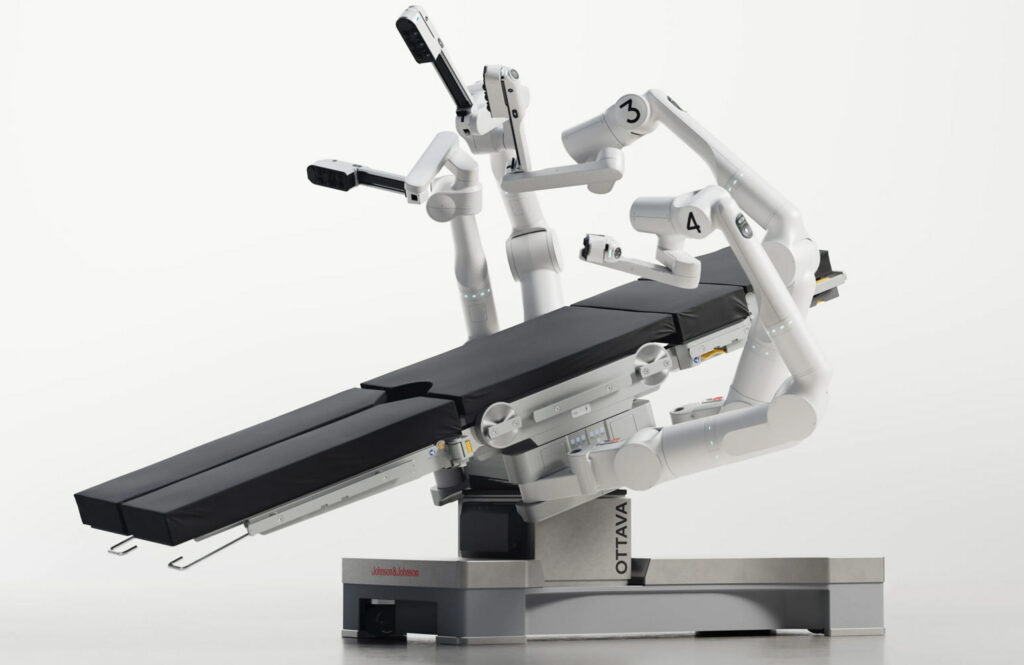
Photos: First look at J&J’s Ottava surgical robot
Johnson & Johnson’s Ottava surgical robot has four robotic arms that come out from underneath the operating table. Photo credit: Johnson & Johnson Johnson & Johnson MedTech unveiled its long-awaited Ottava surgical robot after winning FDA de novo authorization. It’s the world’s first table-integrated, soft-tissue robotics system. The robot-in-table design is meant to save space in the operating room, with J&J saying its novel architecture takes up 30-50% less space tha
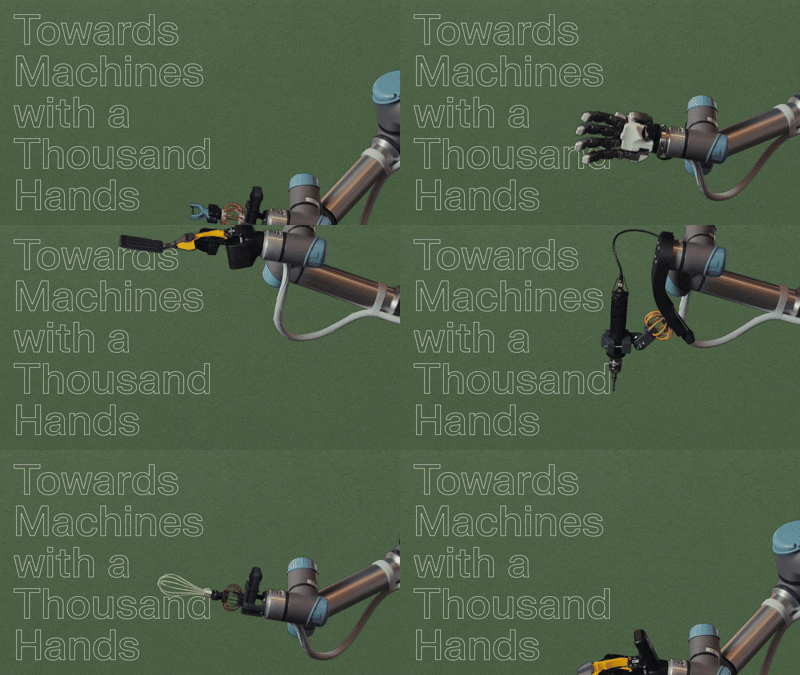
Generalist’s GEN-1 foundation model now supports a range of robot end effectors
Generalist’s latest embodied foundation model, GEN-1, now supports a broad range of robot end effectors. The company said GEN-1 is compatible with five-fingered hands to specialized tools with new modes of actuation and everything in between. By training GEN-1 to work with these new hands, Generalist said it is demonstrating that a single base AI model can learn sensorimotor policies on robots that transfer across radically different ways of interacting with the physical world. Below, the