Boston Dynamics opens Metaplant Application Center to train Atlas humanoid robots
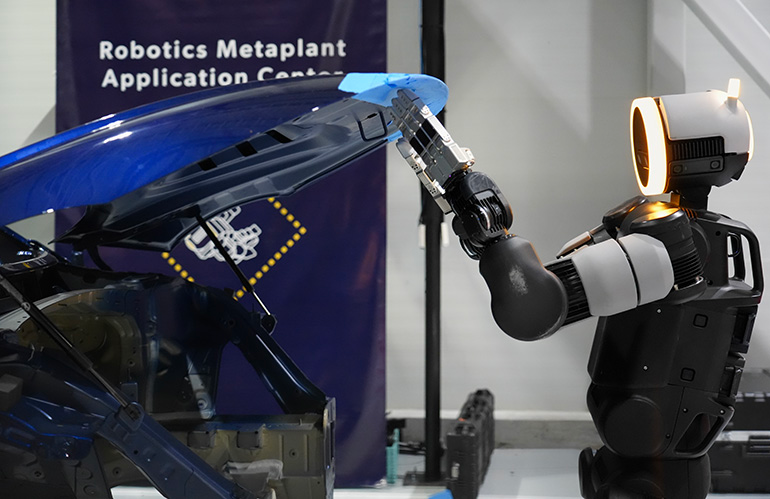
Atlas is now in training in the Metaplant Application Center near Savannah, Ga. Source: Boston Dynamics On the path to general-purpose automation, developers are training humanoid robots on specific skill sets. Boston Dynamics Inc. today opened its Robotics Metaplant Application Center, or RMAC, at Hyundai Motor Group Metaplant America. The company said the Georgia facility is a testbed and training center for integrating its Atlas humanoids directly into parent Hyundai’s automotive manufa
Get smart on it
Boston Dynamics has opened a permanent facility called the Robotics Metaplant Application Center at an automotive manufacturing plant to train and test its Atlas humanoid robots on real factory tasks. The facility represents a shift from previous small-scale robot trials to a larger operation focused on collecting high-quality training data by having Atlas robots learn to handle automotive parts, which requires complex manipulation skills like grasping fragile components and managing awkwardly shaped items. The center is designed to prepare Atlas for broader deployment across manufacturing plants, with the parent company planning to deploy thousands of units globally over the coming years. Boston Dynamics expects to continue scaling up data collection and training through 2027, with plans to expand the facility significantly and eventually explore applications in other industries beyond automotive.
Related news
With the new VENTUNO Q board, Arduino hopes to make robotics development easier
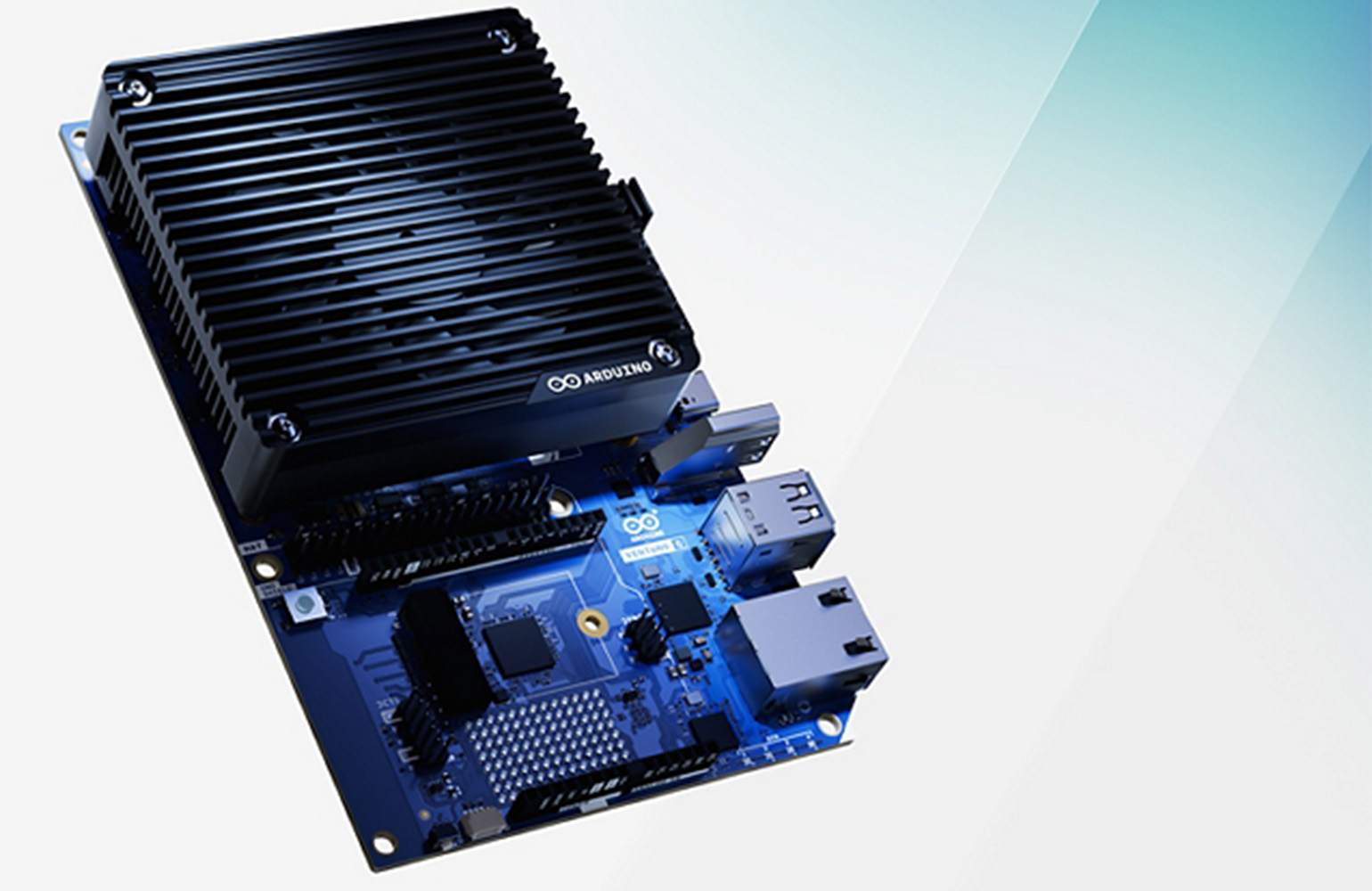
Arduino VENTUNO Q’s dual-brain architecture pairs a Qualcomm Dragonwing IQ8 Sprocessor with a real-time STM32H5 microcontroller. | Source: Qualcomm Arduino S.r.l., a subsidiary of Qualcomm Technologies Inc., recently opened pre-orders for VENTUNO Q, a edge AI platform powered by the Qualcomm Dragonwing IQ8 Series. Arduino built the board for developers, prioritizing familiarity and ease of use with the right software, accessories, and extensions. While this is Arduino’s first intenti
How to Use NVIDIA Warp and MjWarp to Accelerate Robotics Simulation and Learning Workflows
Faster simulation tools could help roboticists train autonomous systems more efficiently by compressing months of testing into weeks.