5 Physical AI Infrastructure Platforms Shaping Robotics in 2026
From accelerated computing and simulation to data operations, open-source tooling, validation engineering, and continuous learning, these five platforms represent distinct control points in the emerging physical AI stack. For most of the modern AI boom, infrastructure had a single center of gravity: compute. Models grew larger, training runs consumed more GPUs, and the industry organized itself around accelerators, cloud clusters, training frameworks, and developer software. That stack was suf
Get smart on it
Physical AI infrastructure refers to the systems required to develop robots that must perceive their environment, reason about motion and contact, act through a physical body, and learn from failures, which differs fundamentally from earlier AI focused only on generating text, images, or code. The infrastructure stack for physical AI is becoming a system of interdependent layers including accelerated computing, simulation, data collection and annotation, validation engineering, and open-source tools rather than simply being centered on computing capacity. Five horizontal infrastructure platforms represent different control points in this emerging stack: one providing the development substrate through accelerated computing and simulation, one focused on validation and testing for autonomous machines, one specializing in converting raw physical interactions into training data, one handling open-source coordination, and one managing continuous learning from deployed systems. Understanding these layers matters because they determine how efficiently robots can be developed across different makers, embodiments, and industries.
Related news

Experts look ahead at the next 20 years of robotics at RoboBusiness
From left to right: Rodney Brooks, Jonathan Hurst, and Ken Goldberg. Robotics has evolved from a promising technology into a critical business tool across manufacturing, logistics, healthcare, agriculture, defense, and beyond. At RoboBusiness 2026, which takes place Oct. 20 and 21 in Santa Clara, Calif., industry leaders will reflect on the breakthroughs that defined the past two decades. In the show’s opening keynote session, as RoboBusiness marks its 20th anniversary, leaders in robotics
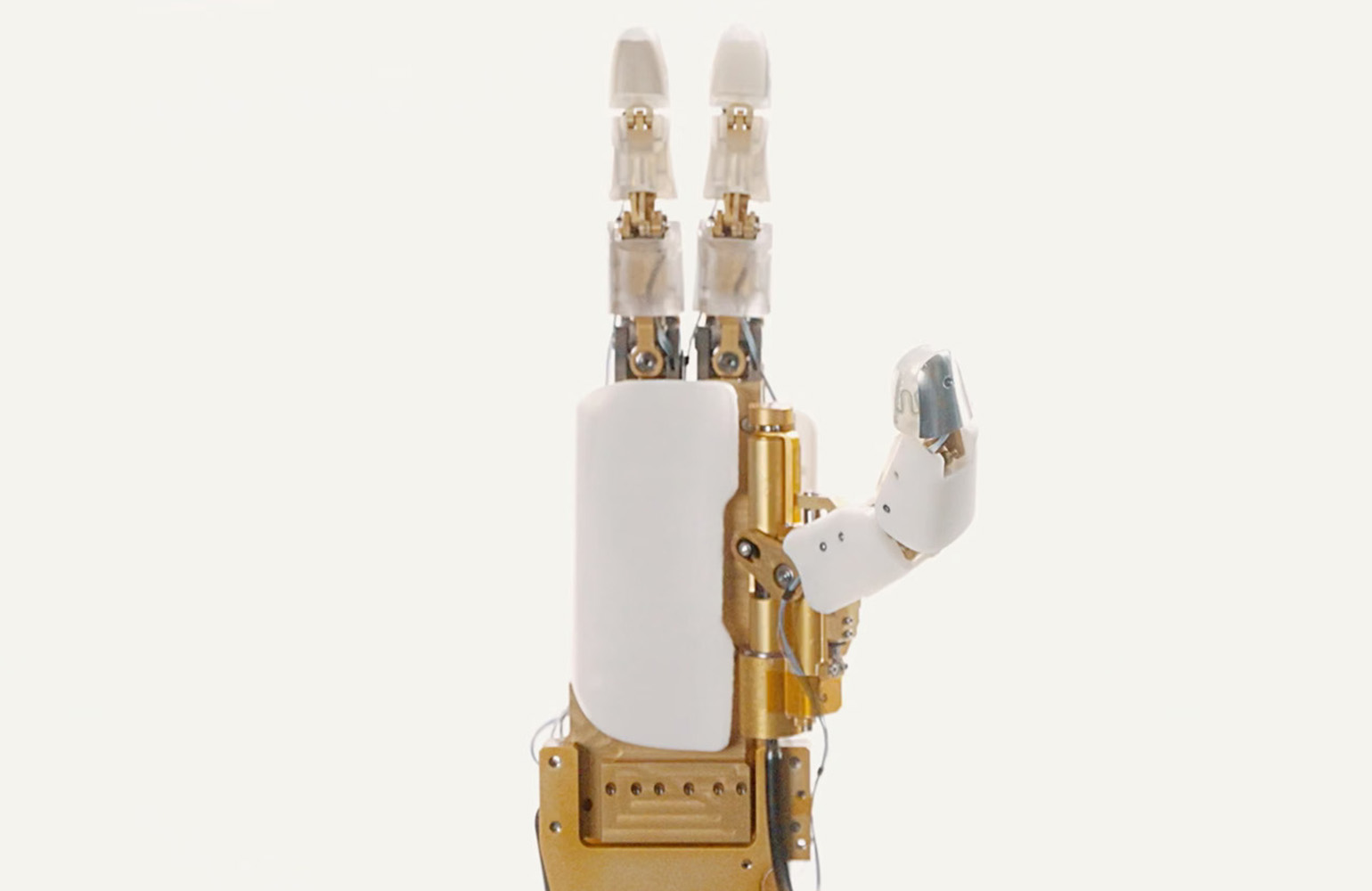
Tacta Systems takes aim at high-skilled manufacturing work with TactaBot
Tacta’s robotic hand comes in three- and five-finger configurations. | Source: Tacta Systems Tacta Systems last week launched the TactaBot, which includes the company’s Tacta Hand, Skill Capture system, and a Dexterous Intelligence AI model. These three components work together to create capable, scalable, and adaptable robotic hands for high-value work. “We have vison-only robots and a variety of different robots that do really good work today, which is moving objects and so on, but