
AI research discovers 28 zero-day vulnerabilities in robotics software
The Robot Report: 28 Zero-Day Findings in Less Than Two Days: What AI-Speed Discovery Means for Robotics
VicOne identified an initial set of 28 zero-day findings in less than two days using AI-assisted research across software and tools supporting the Physical AI ecosystem. These include projects developed or maintained by Google, NVIDIA, and Meta, among others. Based on initial validation, all 28 findings are classified as zero-day vulnerabilities. The count may change following vendor and vulnerability-authority review, and some findings do not yet have CVE tracking numbers. Many of these tools
Get smart on it
AI-assisted research discovered 28 previously unknown security weaknesses in software tools used across the robotics ecosystem in less than two days. These vulnerabilities exist in tools that help teams develop, train, simulate, and operate robots, meaning compromises at any stage could affect what robots learn, how they are tested, or how they are controlled. AI can accelerate the discovery of such weaknesses faster than human researchers alone, but this speed also means robotics teams have little time to respond before attackers could potentially exploit them. Teams must now determine which affected software they use, what each weakness could change in their systems, and how to verify that security patches remain safe to deploy without introducing new risks.
Relevant courses
Want to go deeper than the news? Explore live, cohort-based AI courses taught by practitioners.
Browse AI courses on MavenRelated news

Solving the Interconnect Challenge in Modern Robotics: How 3M Is Engineering for Motion, Density, and Uptime
By Heilind Electronics As robotics systems grow more capable — faster, more precise, and increasingly reliant on AI-driven vision and control — the humble interconnect is being asked to do more than ever. Signal integrity, mechanical durability, and board real estate are no longer secondary considerations in robotics design; they’re often the limiting factor. 3M has built out a portfolio of connectors, cables, and cable assemblies aimed squarely at these pressure points, and the company&#

Why physical AI is the next lucrative frontier
Genesis AI recently unveiled the Eno robot to bring physical AI into commercial environments. Source: Genesis AI The fastest-growing market categories have humble beginnings. Physical AI, the combination of robotics and advanced artificial intelligence, is just the latest example. ChatGPT began as a pitch deck at an accelerator before it became a household name in 2023. Before cloud computing became a boardroom imperative, founders were building it, server rack by server rack, cluster by cluster
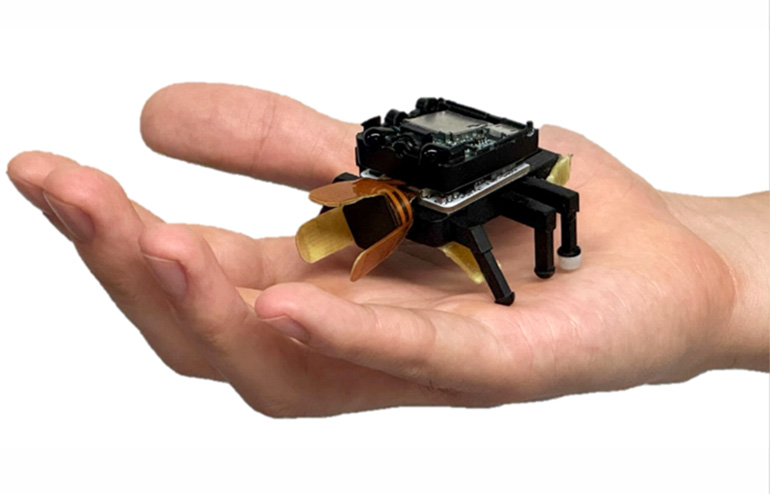
Unusual robotic animals can prove their utility
Korean researchers have developed a beetle-like soft robot. Source: KAIST When we hear the word “robot,” we still conjure up images of mechanical figures from old science fiction films. However, reality has long since evolved: We’re surrounded by smart vacuum cleaners, voice assistants, and even four-legged machines that mimic dogs. But what are these robotic animals? They’re not just battery-powered toys. They’re complex electronic devices, infused with elements of
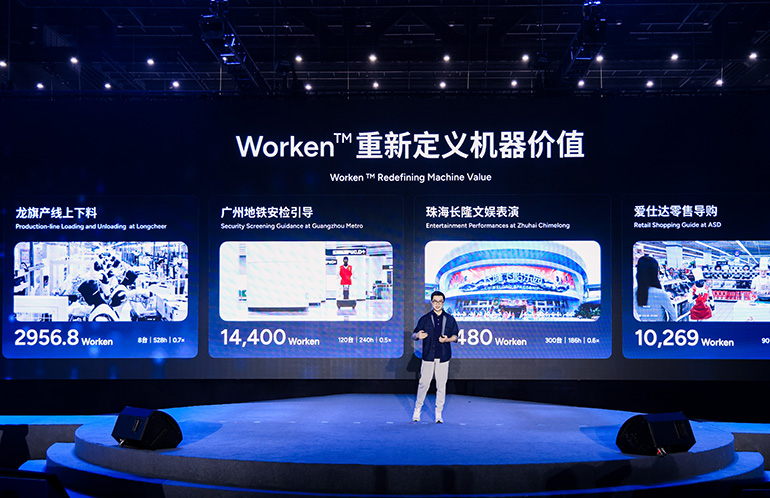
AGIBOT introduces Worken to measure robot productivity at AGIBOT Innovation Day 2026
Peng Zhihui, president, CTO, and director of AGIBOT, introduces Worken at AGIBOT Innovation Day 2026. Source: AGIBOT AGIBOT today introduced Worken, a proposed framework for measuring the productivity of robots in real-world environments, at AGIBOT Innovation Day 2026 in Shanghai. Combining the words “Work” and “Token,” the concept seeks to shift attention beyond the number of robots manufactured or deployed toward how much useful work they can perform autonomously and consistently. The company
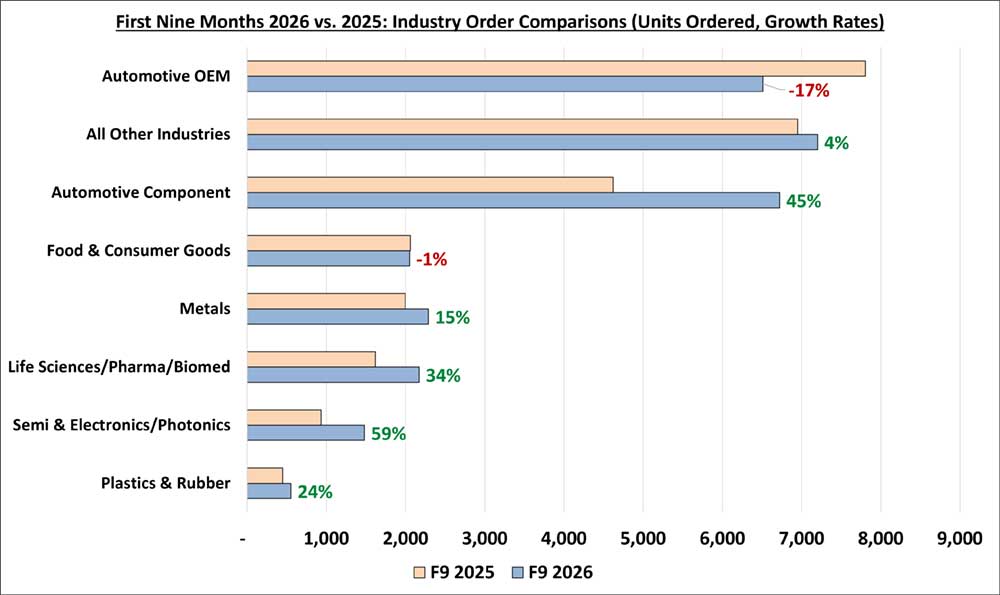
North American robot orders climb 24.8% in Q3 of 2026, says A3
While automotive OEM orders declined in the first half of 2026, they picked up in Q3. Source: A3 North American companies ordered 10,989 robots valued at $723.5 million in the third quarter of 2026, according to the latest data from the Association for Advancing Automation, or A3. Orders increased 24.8% in units and 26.1% in value compared with the third quarter of 2025, making it the strongest quarter of the year so far, it said. The third-quarter gains pushed total orders for the first nine mo

What Symbotic’s Walmart growth teaches robotics startups about anchor customers
Symbotic’s recent quarterly filing lists its largest customer, together with affiliates, as “Customer A,” and the annual report names that customer as Walmart. Customer A supplied 90.5% of revenue in the quarter that ended June 27, 2026. Symbotic reported $720.8 million in revenue and $55 million in net income for the same quarter. Few robotics companies have turned one demanding customer into a business this size, and this profit follows earlier profits. The quarter also in