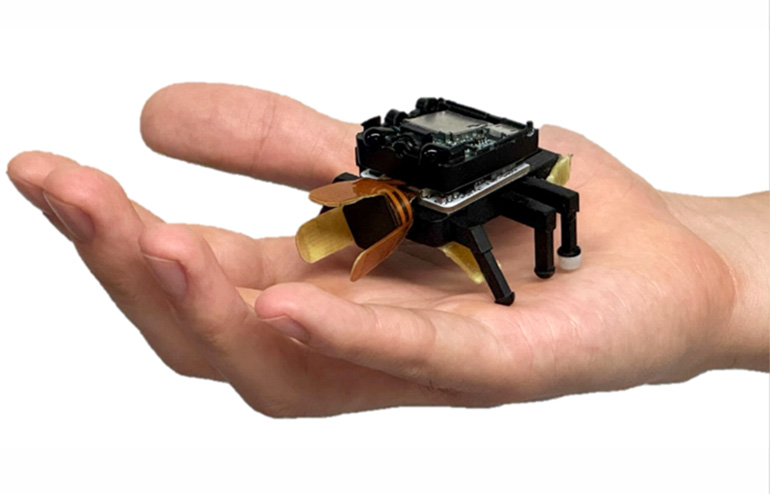
Korean researchers develop beetle-like soft robot
The Robot Report: Unusual robotic animals can prove their utility
Korean researchers have developed a beetle-like soft robot. Source: KAIST When we hear the word “robot,” we still conjure up images of mechanical figures from old science fiction films. However, reality has long since evolved: We’re surrounded by smart vacuum cleaners, voice assistants, and even four-legged machines that mimic dogs. But what are these robotic animals? They’re not just battery-powered toys. They’re complex electronic devices, infused with elements of
Get smart on it
Robotic animals are complex electronic devices equipped with sensors, motors, and artificial intelligence that replicate the appearance and behavior of real or imaginary creatures. These devices serve practical purposes beyond entertainment, including disaster rescue operations, infrastructure inspection and repair, site exploration, and pest control at airports. Researchers at leading institutions worldwide have developed specific animal-inspired robots tailored to different tasks, such as cyborg cockroaches for searching rubble, robotic snakes for underwater pipeline maintenance, and mechanical falcons for airfield bird deterrence. The advantage of these zoomorphic robots is their ability to navigate obstacles and reach difficult-to-access places without requiring food or water, making them suitable for dangerous environments and planetary exploration.
Relevant courses
Want to go deeper than the news? Explore live, cohort-based AI courses taught by practitioners.
Browse AI courses on MavenRelated news

AGIBOT introduces Worken to measure robot productivity at AGIBOT Innovation Day 2026
Peng Zhihui, president, CTO, and director of AGIBOT, introduces Worken at AGIBOT Innovation Day 2026. Source: AGIBOT AGIBOT today introduced Worken, a proposed framework for measuring the productivity of robots in real-world environments, at AGIBOT Innovation Day 2026 in Shanghai. Combining the words “Work” and “Token,” the concept seeks to shift attention beyond the number of robots manufactured or deployed toward how much useful work they can perform autonomously and consistently. The company
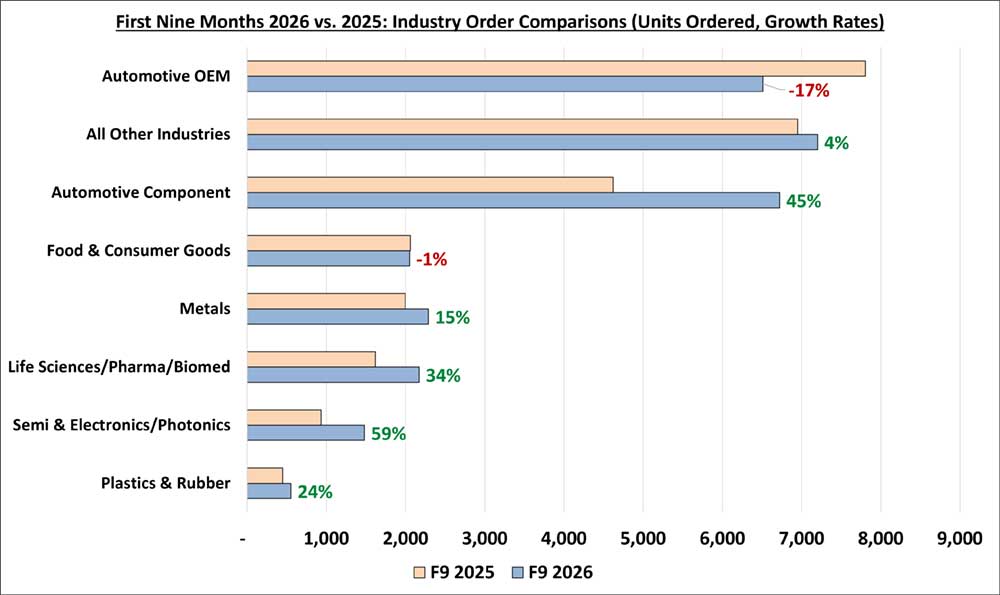
North American robot orders climb 24.8% in Q3 of 2026, says A3
While automotive OEM orders declined in the first half of 2026, they picked up in Q3. Source: A3 North American companies ordered 10,989 robots valued at $723.5 million in the third quarter of 2026, according to the latest data from the Association for Advancing Automation, or A3. Orders increased 24.8% in units and 26.1% in value compared with the third quarter of 2025, making it the strongest quarter of the year so far, it said. The third-quarter gains pushed total orders for the first nine mo

What Symbotic’s Walmart growth teaches robotics startups about anchor customers
Symbotic’s recent quarterly filing lists its largest customer, together with affiliates, as “Customer A,” and the annual report names that customer as Walmart. Customer A supplied 90.5% of revenue in the quarter that ended June 27, 2026. Symbotic reported $720.8 million in revenue and $55 million in net income for the same quarter. Few robotics companies have turned one demanding customer into a business this size, and this profit follows earlier profits. The quarter also in