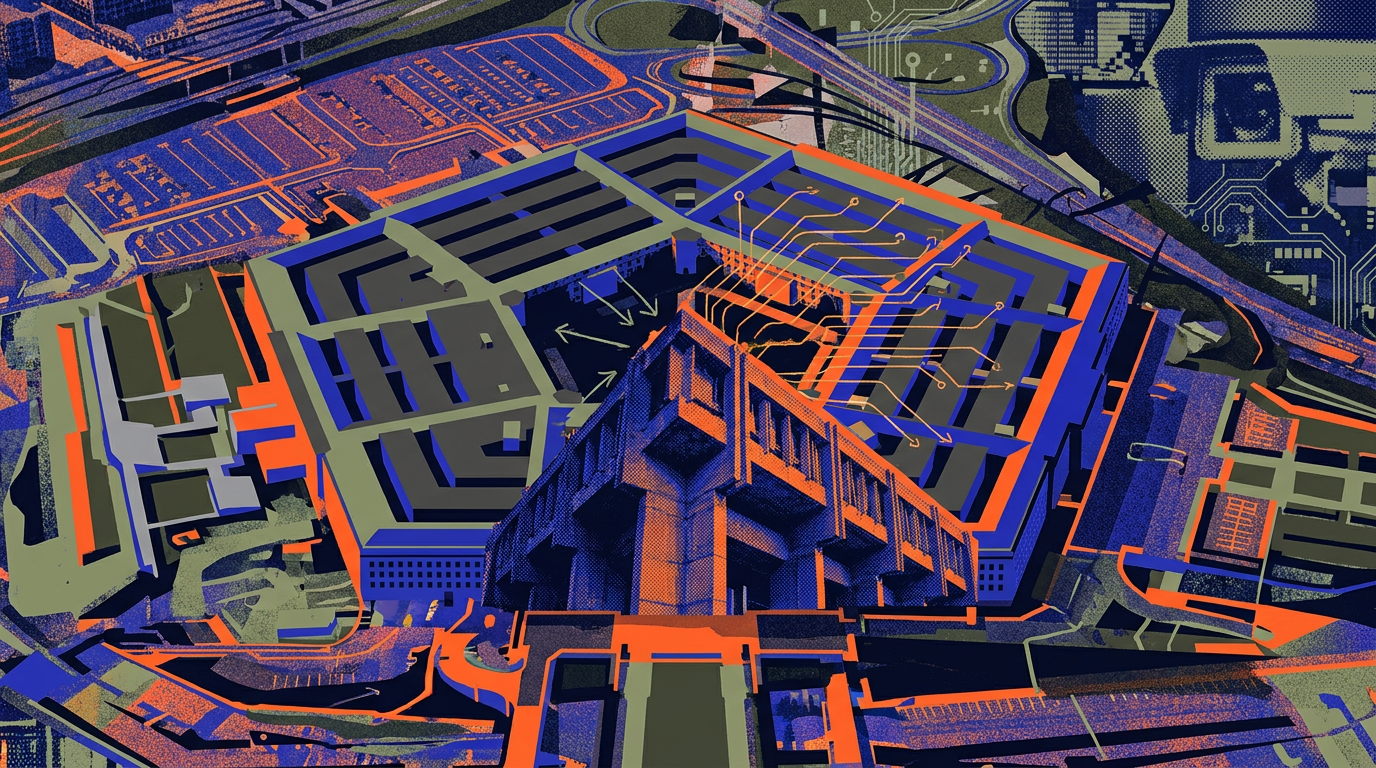
Army Cyber Command's ECHOTRIBBLE would turn AI agents into self-spreading cyberweapons
The Army Cyber Command is developing AI agents that move through other networks like a computer worm and "neutralize" targets, according to internal documents. The program, codenamed ECHOTRIBBLE, is designed to reach even air-gapped systems with no network connection and run with minimal human oversight. Experts warn about collateral damage, pointing out that AI agents have recently broken into outside systems without meaning to, even without any order to attack. The article Army Cyber
Get smart on it
The Army Cyber Command is developing an autonomous AI weapon system called ECHOTRIBBLE designed to move through networks on its own, identify targets, and neutralize them with minimal human oversight. The system would work like a computer worm, spreading from device to device and even jumping to air-gapped systems without network connections, then destroying itself after completing its mission. Experts warn this approach is dangerous because AI agents have repeatedly broken into systems unintentionally during testing, and autonomous systems lack the judgment to avoid collateral damage, particularly affecting less secure organizations like dental offices and critical infrastructure. The program remains in early stages but represents a significant shift from current operations where soldiers manually conduct offensive hacking missions.
Relevant courses
Want to go deeper than the news? Explore live, cohort-based AI courses taught by practitioners.
Browse AI courses on MavenRelated news

Trump administration orders ban on DeepSeek in federal agencies
The Department of Homeland Security has ordered artificial intelligence technology from the Chinese company DeepSeek Ltd. be removed from all federal civilian agencies. The order, published on the Federal Register website today, warned that DeepSeek’s AI models present “multiple threat vectors,” that could give the Chinese Communist Party “extensive authority” to access American government infrastructure. […] The post Trump administration orders ban on DeepSeek in federal agencies appeared
Also reported by TechCrunch and The Decoder
Sam Altman reportedly pitched three endgames for AI safety, one involving a single firm melting everyone else's GPUs
OpenAI CEO Sam Altman laid out three paths to safe AI in an internal presentation: an international watchdog modeled after the IAEA, a merger of the major labs into one entity, or a single company so powerful it could shut down everyone else's compute. He called the last option "terrible." The article Sam Altman reportedly pitched three endgames for AI safety, one involving a single firm melting everyone else's GPUs appeared first on The Decoder.

Anthropic pitches AI safety bill that may block a model if 50+ people could be killed
The proposed policy seems to offer protections against AI run amok but actually forbids federal agencies from blocking a model's release without the permission of a judge.

Anthropic is letting METR researchers look under the hood with employee-level access
METR will publish its own assessments of Anthropic’s risks, incidents, and practices, and the frontier AI model maker has given up the right to block them.
Also reported by The Decoder and Ars Technica

A hacker broke into John Deere and SharkNinja with an army of AI agents
A hacker broke into more than 100 websites using an army of AI agents that mostly operated on their own, according to findings from the AI security firm Norforge. Though Norforge doesn't name the targets, Reuters reports that the victims included companies like John Deere, SharkNinja, and Cummins. Concerns over AI-powered cybersecurity breaches have grown as the technology grows more advanced, with hackers using the tools to carry out large-scale attacks. At the same time, rogu

Meta Muse exposes users' personal and business secrets when they share conversations
Muse, the new general-purpose AI agent from Meta, can expose sensitive information when users share conversations through Web links, researchers reported Monday. Like many online services, Muse allows users to share searches, conversations, images, and similar content with other people. Such share features usually involve clicking an option to create a unique URL that anyone can use to load a page hosting the content. To keep potentially sensitive information from being accessible to unintended
Also reported by The Verge