Training Gemma-3 for Structured Mathematical Reasoning with Tunix GRPO, LoRA Adapters, and GSM8K Rewards
In this tutorial, we build an end-to-end GRPO training workflow that teaches Gemma-3 to reason through GSM8K math problems using Tunix, JAX, LoRA, and custom reward functions. We start by preparing the environment, authenticating with Hugging Face, loading the Gemma-3 model, and wrapping GSM8K examples into a prompt format that requires both structured reasoning and a final numeric answer. We then define reward functions that assess format adherence and mathematical correctness, attach LoRA ada
Get smart on it
This tutorial demonstrates how to train Gemma-3, an AI language model, to solve math problems by using reinforcement learning techniques including GRPO (a training method), LoRA adapters (lightweight weight adjustments), and custom reward functions. The training workflow teaches the model to structure its responses with explicit reasoning sections followed by numeric answers on GSM8K math problems. The approach matters because it shows how to improve an AI model's mathematical reasoning while keeping computational costs manageable by only updating adapter weights rather than the entire model. The tutorial requires familiarity with machine learning concepts like reinforcement learning, model training, and the ability to set up a development environment with specific libraries like JAX and Tunix.
Related news

OpenAI Releases GPT-Realtime-2.1 and GPT-Realtime-2.1-mini for Low-Latency Voice Agents in the API
OpenAI has released two new Realtime models in its API. They are named gpt-realtime-2.1 and gpt-realtime-2.1-mini. Both target low-latency voice and multimodal experiences. The mini model is the notable part of this release. It is a mini reasoning model for realtime voice. It ships at the same cost as the earlier gpt-realtime-mini. OpenAI also reduced p95 latency by at least 25% across Realtime voice models. That reduction comes from improved caching. What is GPT-Realtime-2.1-mini gpt-rea
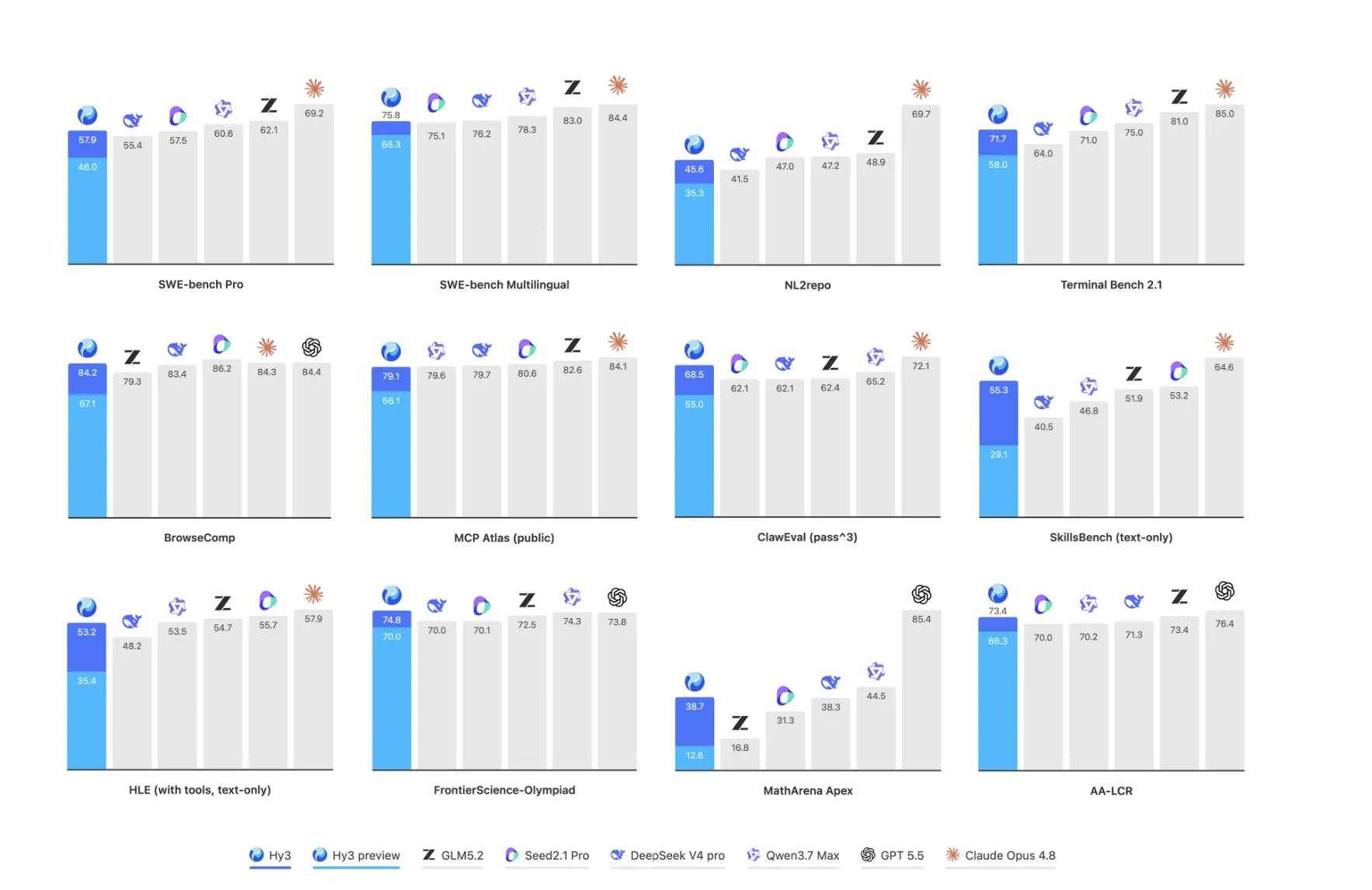
Tencent Releases Hy3: An Open 295B Mixture-of-Experts (MoE) Model with 21B Active Parameters and 256K Context
Tencent’s Hy team released Hy3. Hy3 is a 295B-parameter Mixture-of-Experts (MoE) model. It activates only 21B parameters per token. The weights ship under the Apache License 2.0. Hy3 is aimed at reasoning, agentic workflows, and long-context tasks. What is Hy3? Hy3’s architecture contains a sparse MoE with 192 experts and top-8 routing. Only 8 experts fire per token, so compute stays low. The model also uses a Multi-Token Prediction (MTP) layer. MTP predicts several tokens