SpaceXAI Releases Grok 4.7: A Larger Base Model at the Same $2/$6 Price as Grok 4.6
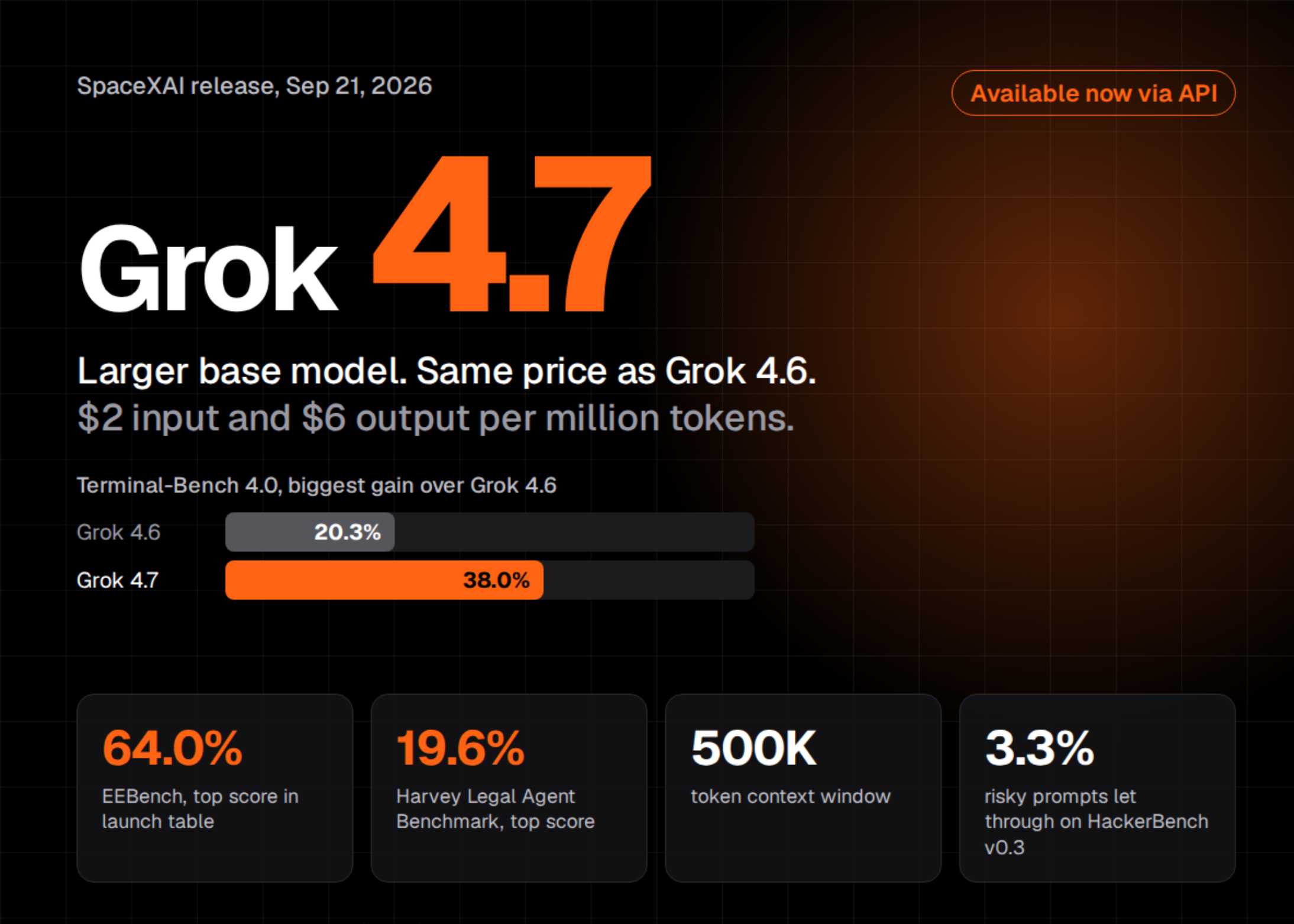
SpaceXAI has released Grok 4.7, its new flagship model for coding, agentic tasks, and knowledge work. Grok 4.7 is built on a larger base model and a longer reinforcement learning run. It still ships at the same price and speed as Grok 4.6. Is it deployable? Yes, as a hosted model. You can call grok-4.7 today through the xAI API, Cursor, Grok Build, OpenRouter, Vercel, and Cloudflare. What Changed Under the Hood SpaceXAI lists 4 changes over Grok 4.6: A new, larger base model: Grok
Get smart on it
SpaceXAI released Grok 4.7, a new AI model built on a larger base model and longer training than its predecessor while maintaining the same pricing of $2 per million input tokens and $6 per million output tokens. The model is designed for coding, agentic tasks, and knowledge work, featuring a 500,000-token context window and improved capabilities in self-verification and long-context handling. In benchmark testing, Grok 4.7 outperformed Grok 4.6 across all measured tasks, with particularly strong results on the EEBench test and Harvey Legal Agent Benchmark, though other competing models led on certain individual benchmarks. The model includes a new safeguard stack and can be accessed through multiple platforms including the xAI API, Cursor, Grok Build, OpenRouter, Vercel, and Cloudflare.
Related news
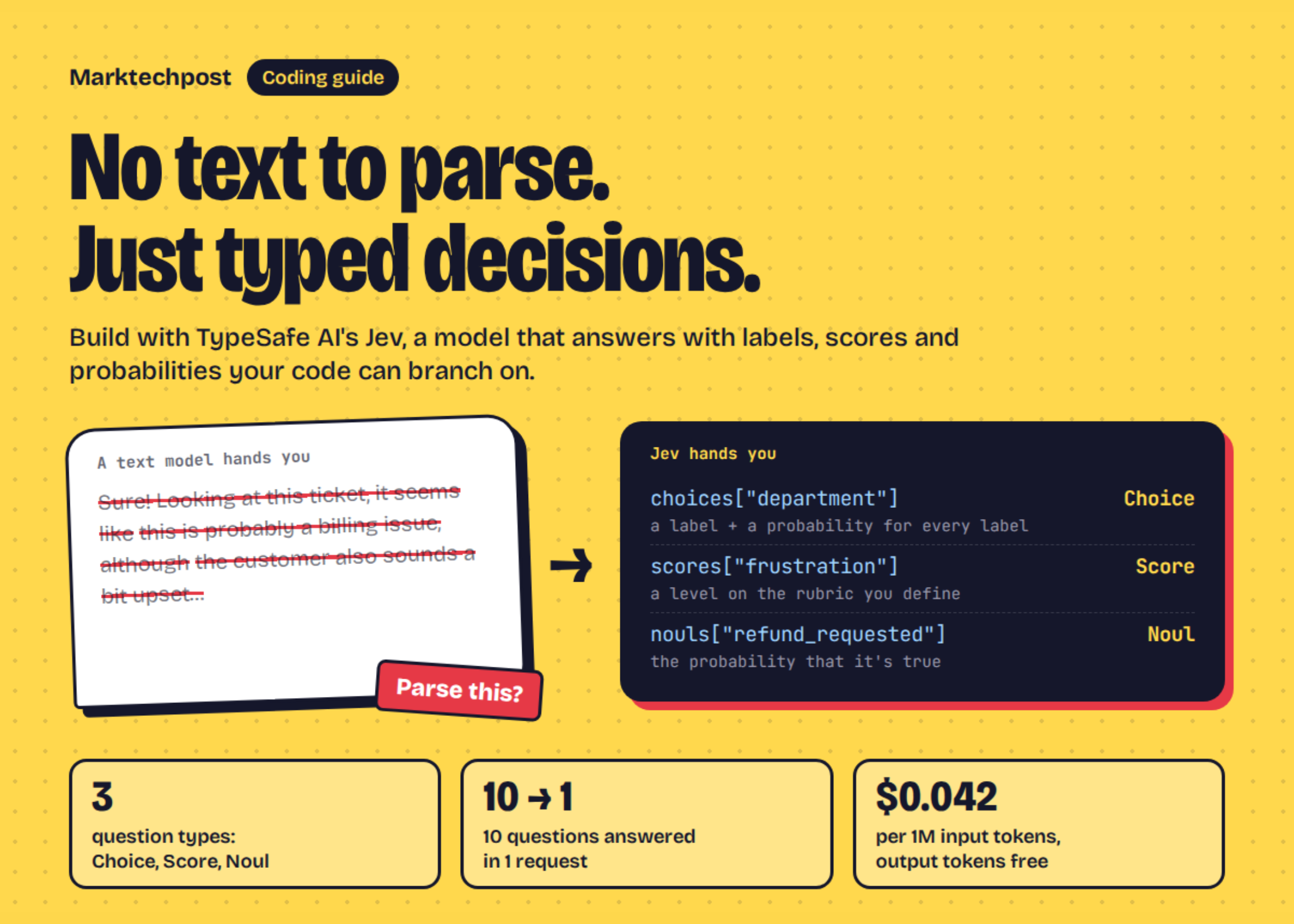
A Coding Guide to TypeSafe AI Jev: Typed Decisions, Calibrated Confidence, and Speculative Fan-Out with a System One Model
In this tutorial, we work with Jev, TypeSafe AI’s first System One model, which does not generate text at all: we send it a piece of program state and a set of typed questions, and it returns choices, scores, and yes/no probabilities that our code can branch on directly. We install the official Python SDK, make a first call that uses all three question primitives at once, and look at how the shape of the state changes what the model can know. We then recompute the published confidence sta
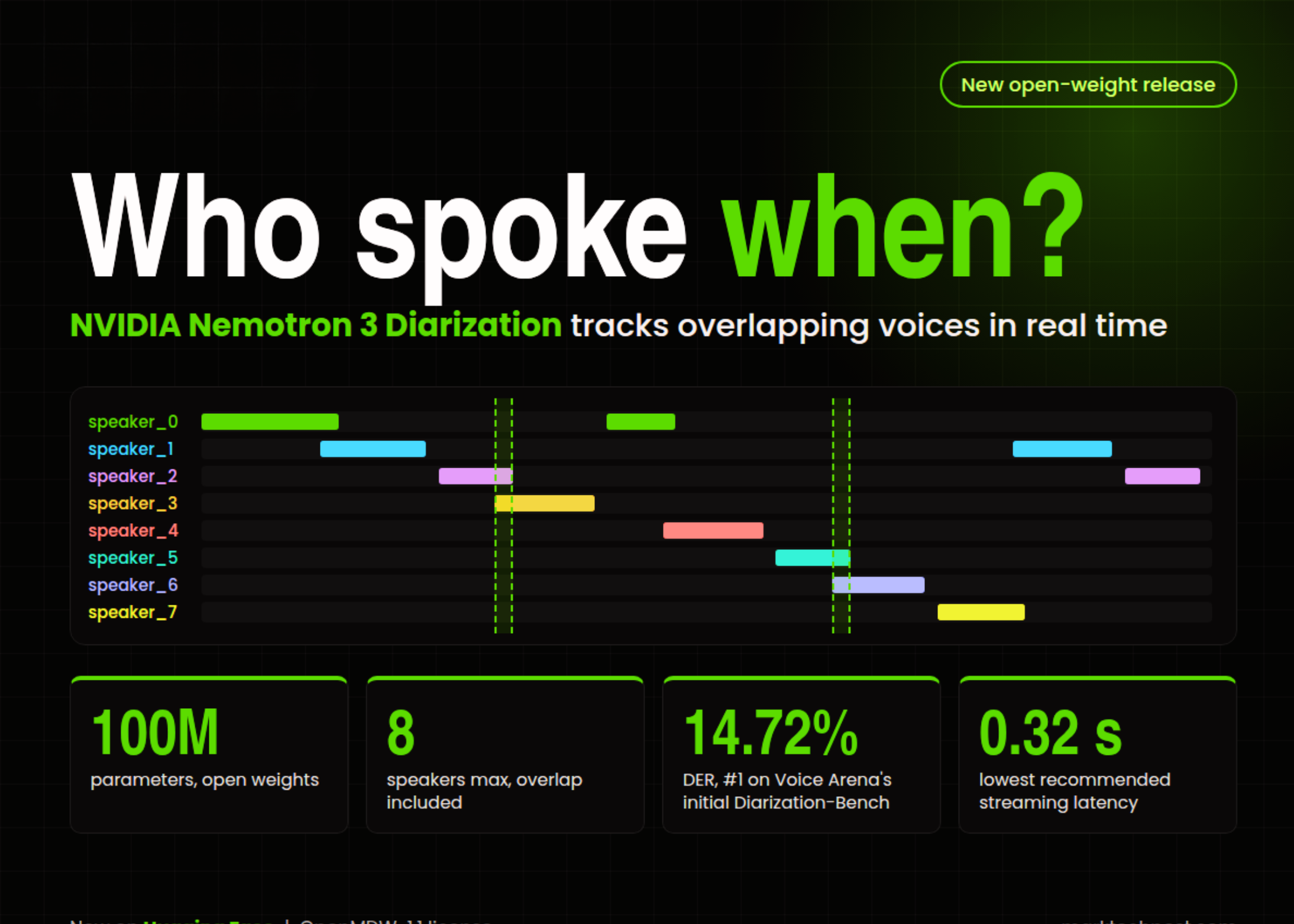
NVIDIA Releases Nemotron 3 Diarization: A 100M-Parameter Open-Weight Model That Tracks 8 Speakers in Real Time
NVIDIA has released Nemotron 3 Diarization, an open-weight speaker diarization model on Hugging Face. It answers one question about any conversation: who spoke when. The 100M-parameter model tracks up to 8 speakers, including when voices overlap. One checkpoint handles both offline recordings and real-time streaming. Is it deployable? Yes. The weights are released under the OpenMDW License 1.1, which permits commercial use. It runs on Linux through NVIDIA NeMo, using Ampere, Ada Lovelace, Ho