Pruning LLMs Like a Physicist: Block Removal as an Ising Optimization Problem
Removing unnecessary neural network components could reduce computational costs while maintaining model performance.
Get smart on it
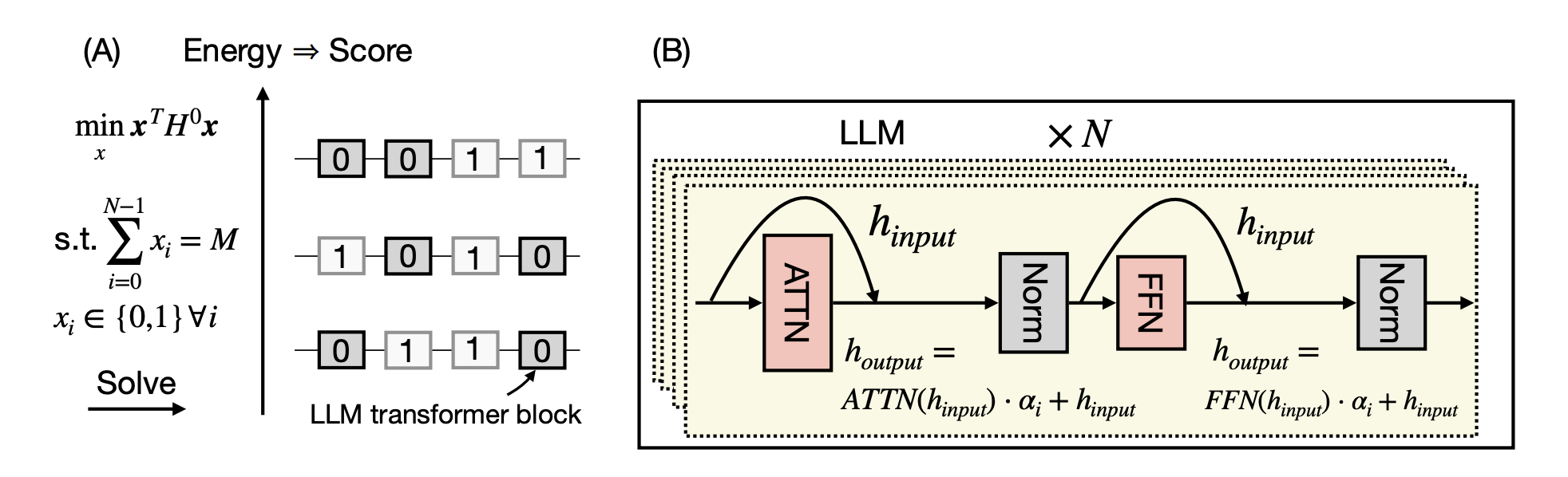
Block removal is a method to make large language models faster by deleting entire transformer blocks, which saves memory and speeds up inference while stacking with other compression techniques. The challenge is that removing blocks involves interacting choices: whether to remove one block depends on which other blocks are also removed, making it a combinatorial problem rather than a simple ranking task. Researchers reformulated this as an Ising optimization problem from physics, where each block is represented as a binary variable and the goal becomes minimizing an energy function derived from the model's loss, with the key finding that low-energy states correspond to high-performing pruned models. This approach is practical because the energy can be computed cheaply from a small calibration dataset and reused for different compression targets, and the resulting optimization problem can be solved with classical and quantum-inspired solvers when brute-force enumeration becomes infeasible.
Related news
A Coding Guide to TypeSafe AI Jev: Typed Decisions, Calibrated Confidence, and Speculative Fan-Out with a System One Model
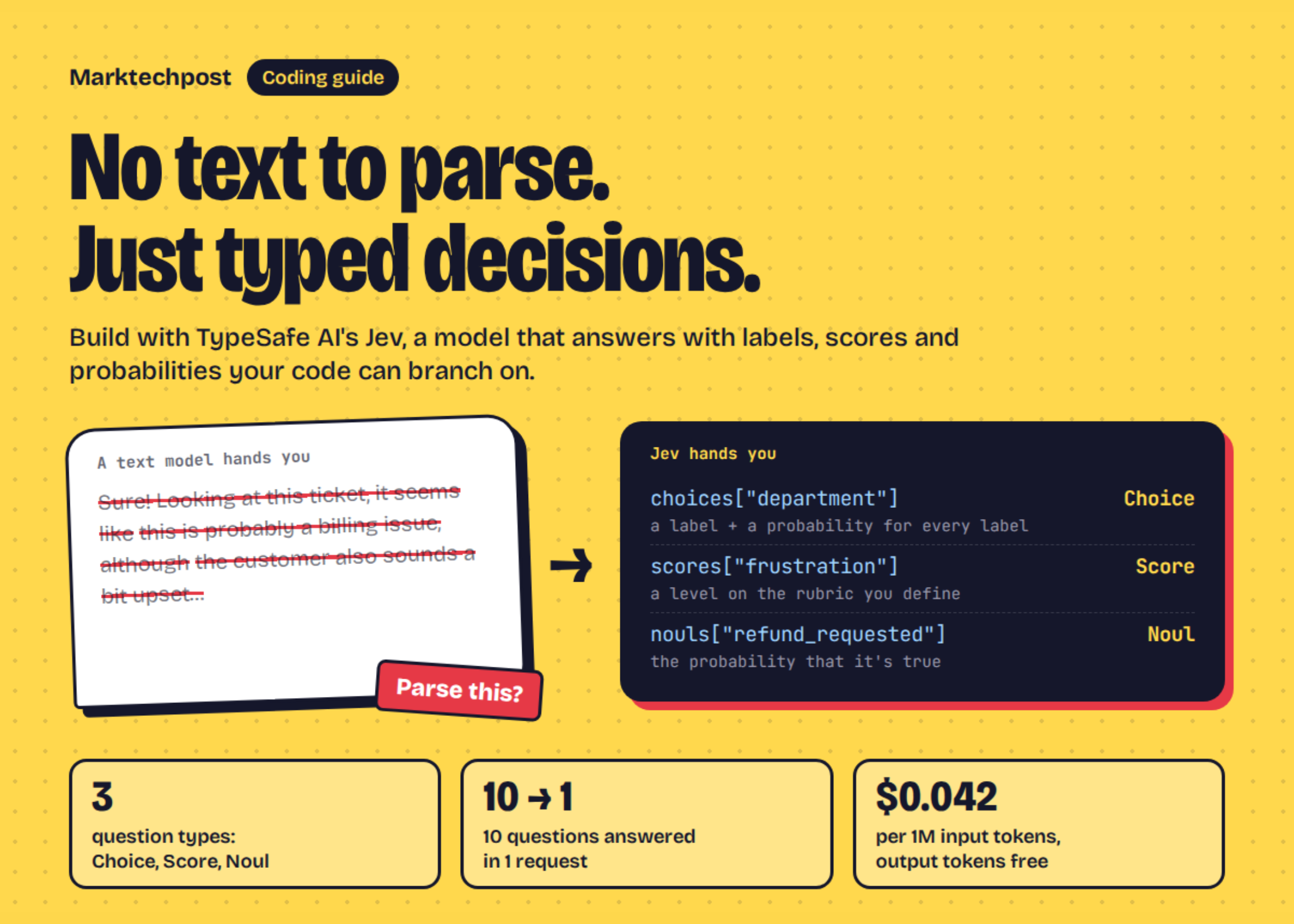
In this tutorial, we work with Jev, TypeSafe AI’s first System One model, which does not generate text at all: we send it a piece of program state and a set of typed questions, and it returns choices, scores, and yes/no probabilities that our code can branch on directly. We install the official Python SDK, make a first call that uses all three question primitives at once, and look at how the shape of the state changes what the model can know. We then recompute the published confidence sta
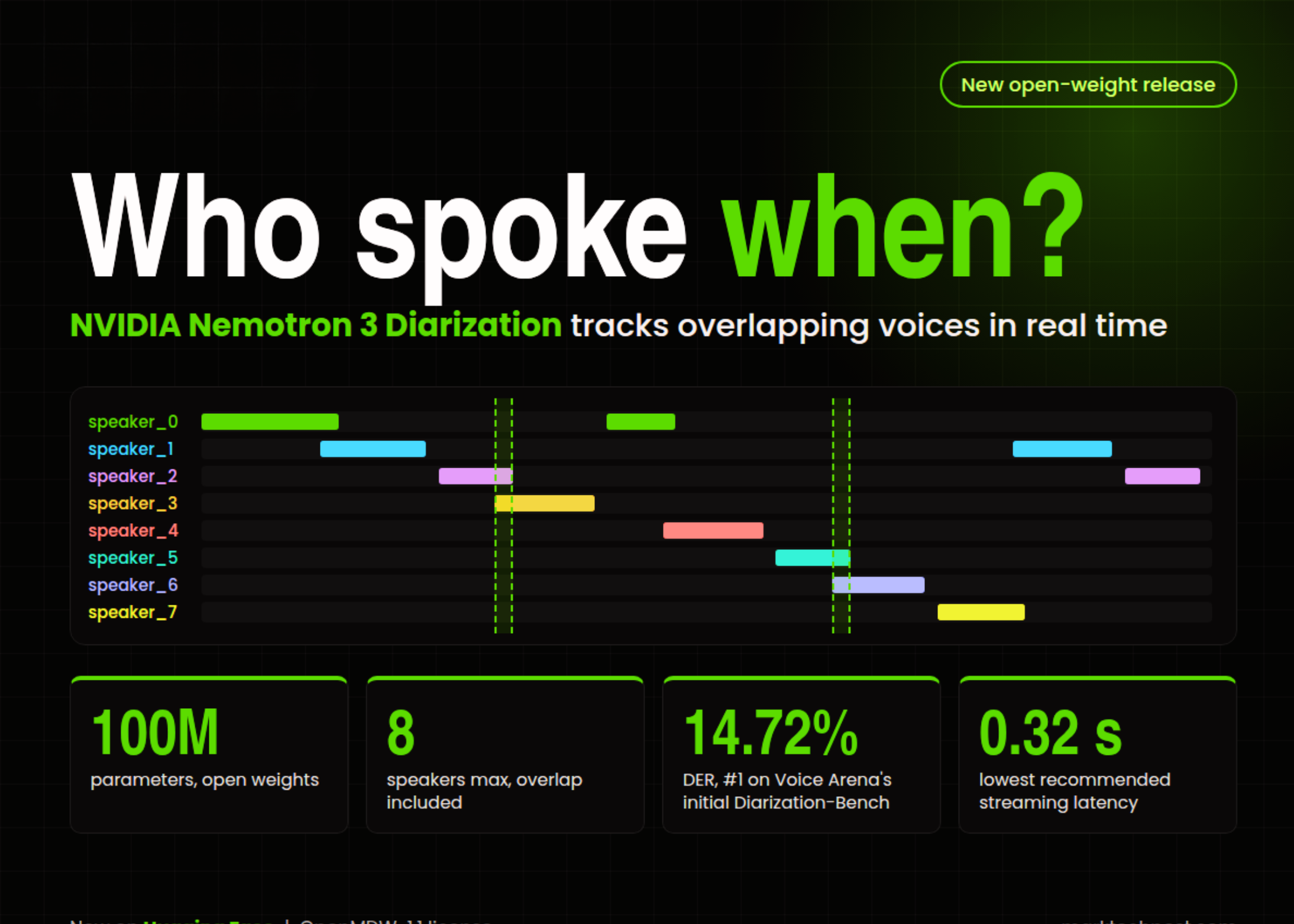
NVIDIA Releases Nemotron 3 Diarization: A 100M-Parameter Open-Weight Model That Tracks 8 Speakers in Real Time
NVIDIA has released Nemotron 3 Diarization, an open-weight speaker diarization model on Hugging Face. It answers one question about any conversation: who spoke when. The 100M-parameter model tracks up to 8 speakers, including when voices overlap. One checkpoint handles both offline recordings and real-time streaming. Is it deployable? Yes. The weights are released under the OpenMDW License 1.1, which permits commercial use. It runs on Linux through NVIDIA NeMo, using Ampere, Ada Lovelace, Ho