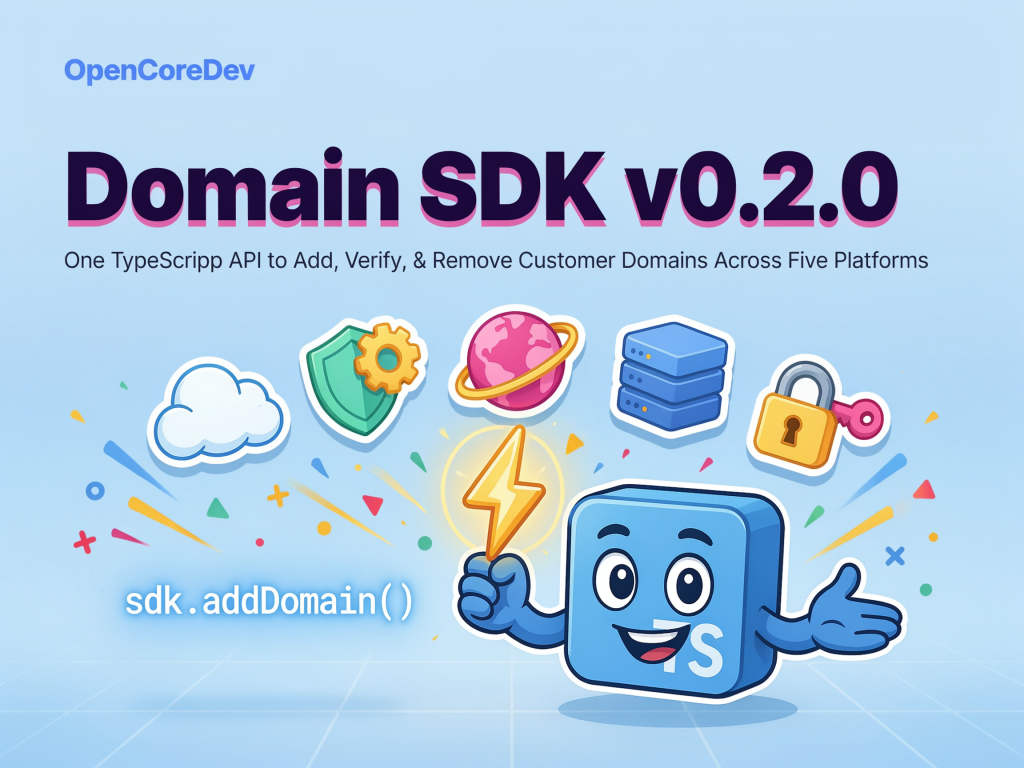
OpenCoreDev Releases Domain SDK 0.2.0: One TypeScript API to Add, Verify, and Remove Customer Domains Across Five Platforms
Custom domains are a standard SaaS feature. Yet every hosting platform exposes a different API for them. OpenCoreDev has published Domain SDK, a TypeScript client that normalizes that work. Version 0.2.0 reached npm a day after the first release. What is Domain SDK? Domain SDK covers Vercel, Cloudflare for SaaS, Railway, Render, and Netlify. You add a hostname, show the exact DNS records, then track provider state until it is ready. It does not register domains, host DNS, deploy apps,
Make your prediction
Will the Domain SDK npm package reach version 0.3.0 by July 29?
Resolves by Jul 29, 2026
Your prediction
50% · 50/50 coin flip
NOYES
Get smart on it
Domain SDK is a TypeScript tool that provides a single, unified API for adding, verifying, and removing customer domains across five different hosting platforms. Each hosting platform normally has its own separate API for managing custom domains, so this tool standardizes that work and allows developers to switch between platforms by changing only the import statement. The SDK models domain status as eight separate states rather than a simple yes-or-no, tracking DNS configuration, ownership verification, and TLS certificates independently since these complete at different times. Different platforms have different capabilities, so the SDK exposes a runtime capabilities check rather than hard-coding limitations.
Related news
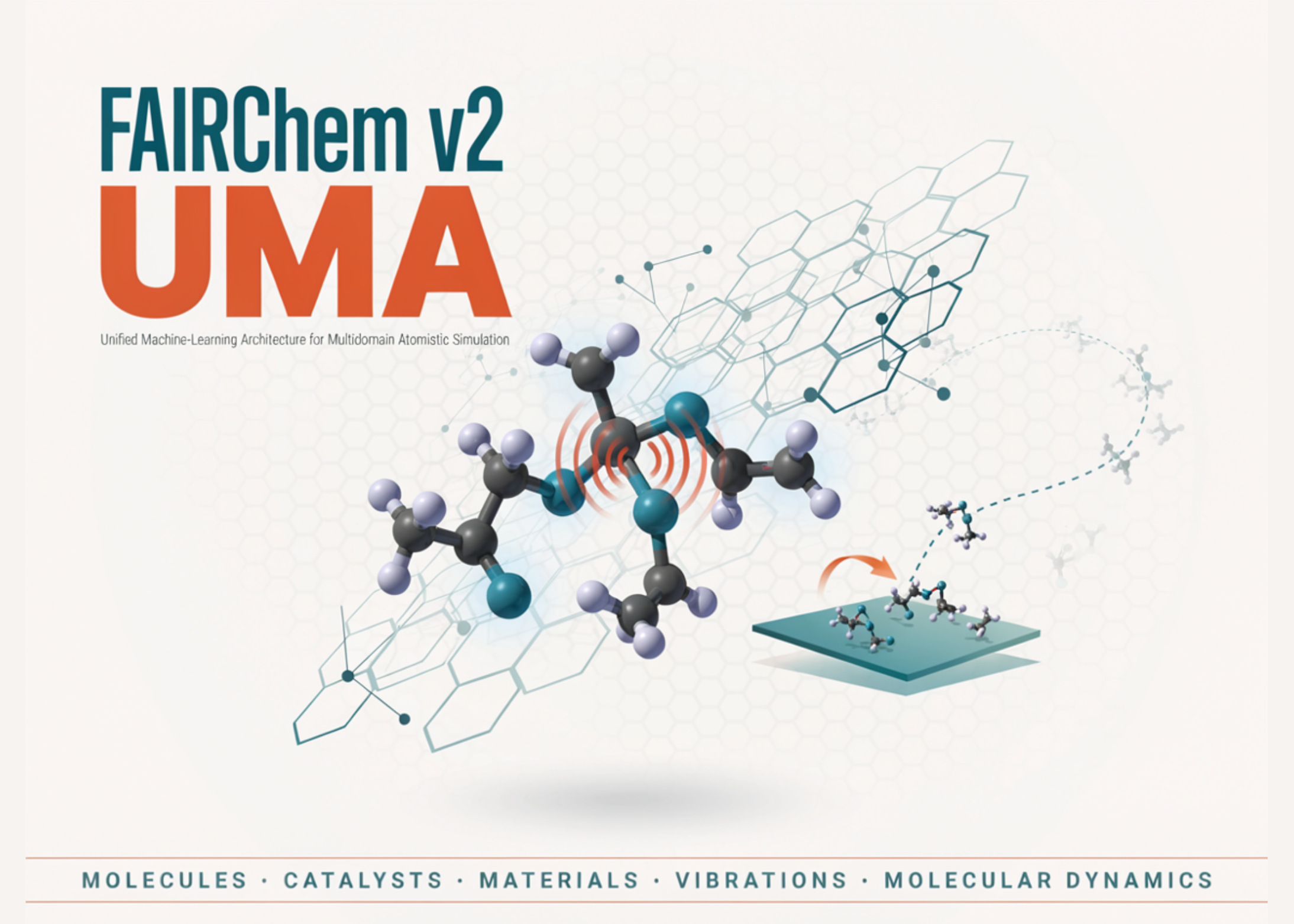
FAIRChem v2 UMA for Multidomain Atomistic Simulation across Molecules, Catalysts, Materials, Vibrations, and Molecular Dynamics
In this tutorial, we explore FAIRChem v2 and the UMA universal machine-learning interatomic potential as a unified framework for atomistic simulation across molecular chemistry, catalysis, and inorganic materials. We configure an environment, authenticate with Hugging Face to access the gated UMA model weights, and initialize task-specific calculators for the omol, oc20, and omat domains. We then apply the same pretrained potential to a broad set of computational chemistry workflows, including
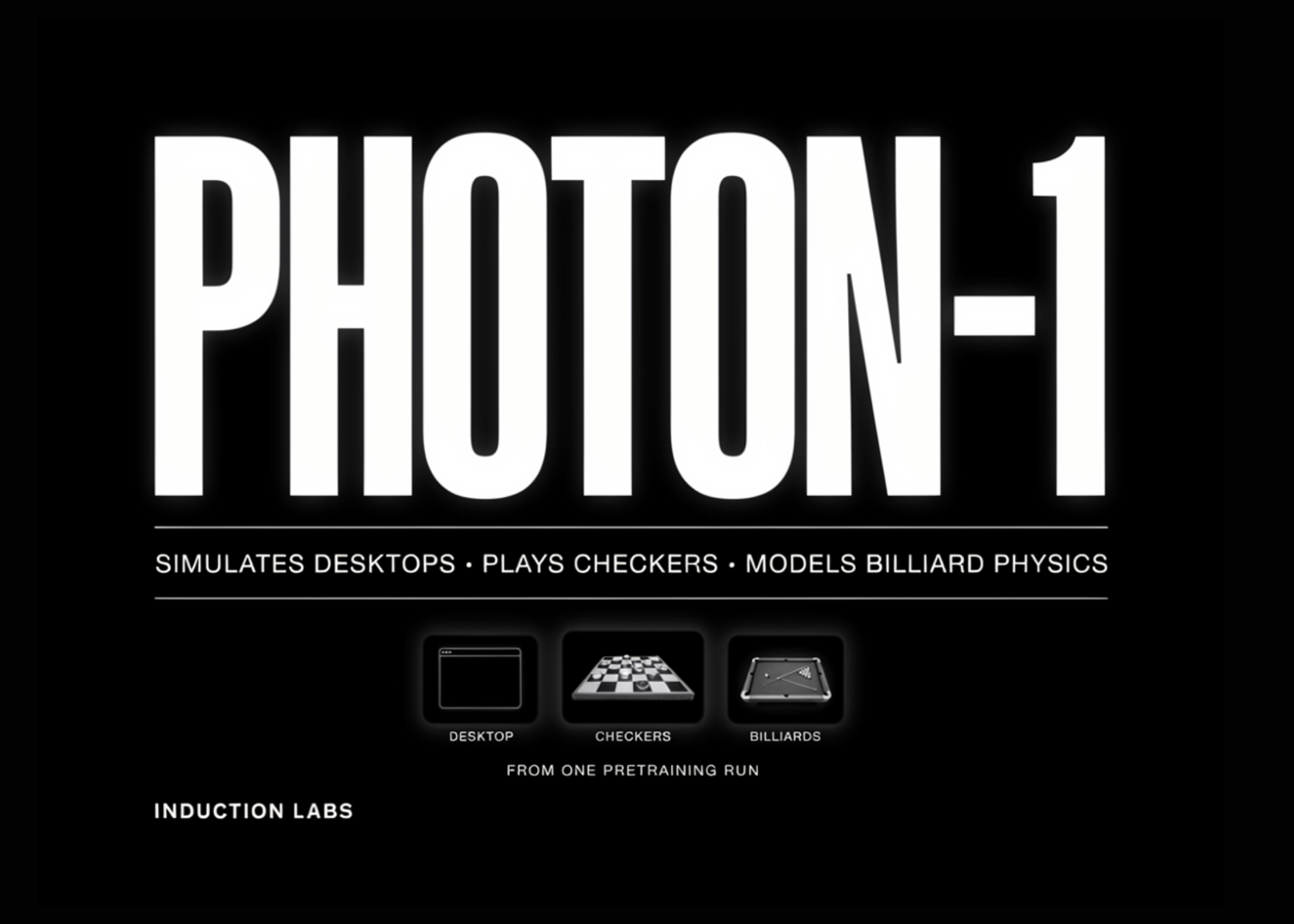
Induction Labs Photon-1 Simulates Desktops, Plays Checkers, and Models Billiard Physics From One Pretraining Run
Most agents that learn from video need to know what action produced each frame. Induction Labs is arguing that this requirement is the bottleneck. Last week, they released imagination models, a foundation model architecture that pretrains on raw video with no action labels at all. Their test system is Photon-1, a sparse 106B-A5B mixture-of-experts (MoE) transformer trained on 18 years of computer demonstration video. On an internal computer use benchmark, Induction Labs reports that Photon-1