OpenAI Releases GPT-Realtime-2.1 and GPT-Realtime-2.1-mini for Low-Latency Voice Agents in the API
OpenAI has released two new Realtime models in its API. They are named gpt-realtime-2.1 and gpt-realtime-2.1-mini. Both target low-latency voice and multimodal experiences. The mini model is the notable part of this release. It is a mini reasoning model for realtime voice. It ships at the same cost as the earlier gpt-realtime-mini. OpenAI also reduced p95 latency by at least 25% across Realtime voice models. That reduction comes from improved caching. What is GPT-Realtime-2.1-mini gpt-rea
Get smart on it
OpenAI has released two new Realtime models designed for voice interactions through its API. The models can process audio and text inputs directly without needing separate speech-to-text and text-to-speech systems, which reduces delays and preserves speech nuance. A key capability is reasoning, which allows the models to think internally before responding and to use tools or functions in multi-step tasks, preventing the awkward silences that occur when voice agents process function calls. The update also includes at least a 25 percent reduction in response delays through improved caching, which also lowers costs for long sessions.
Related news
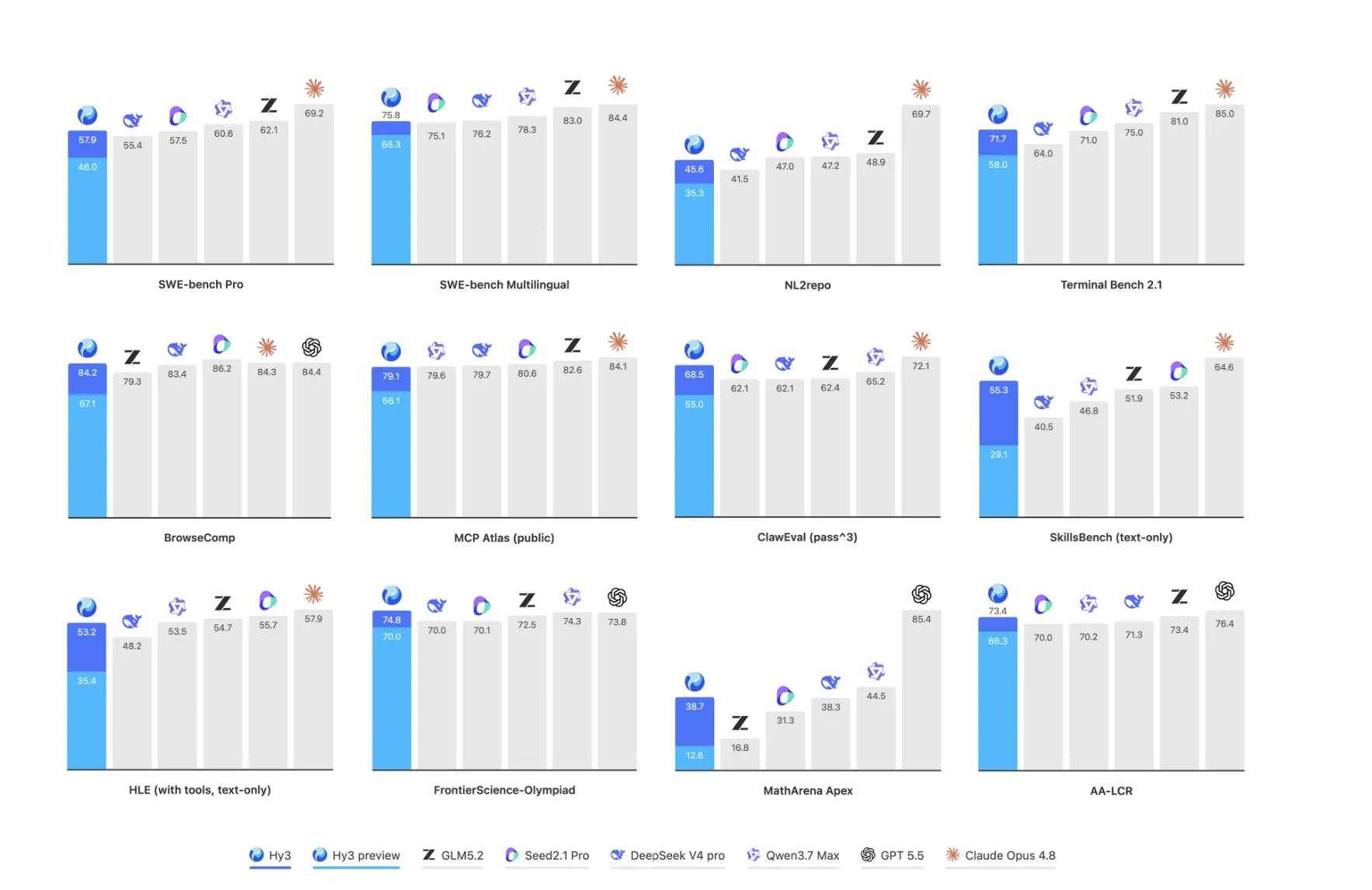
Tencent Releases Hy3: An Open 295B Mixture-of-Experts (MoE) Model with 21B Active Parameters and 256K Context
Tencent’s Hy team released Hy3. Hy3 is a 295B-parameter Mixture-of-Experts (MoE) model. It activates only 21B parameters per token. The weights ship under the Apache License 2.0. Hy3 is aimed at reasoning, agentic workflows, and long-context tasks. What is Hy3? Hy3’s architecture contains a sparse MoE with 192 experts and top-8 routing. Only 8 experts fire per token, so compute stays low. The model also uses a Multi-Token Prediction (MTP) layer. MTP predicts several tokens

LeRobot v0.6.0: Imagine, Evaluate, Improve
The framework adds tools for testing and refining robotic AI systems, addressing a key bottleneck in making these models more practical.