
OpenAI Releases GPT-6.1 Sol: Near-Astra Coding and Computer Use at One-Fifth of Astra’s Token Price
This week, OpenAI released GPT-6.1 Sol. It upgrades GPT-6 Sol, the mid-tier model in the GPT-6 family. OpenAI’s claim is specific: near-Astra results on agentic coding, computer use, and professional work. The price is one-fifth of GPT-6 Astra’s standard input and output rates. Cached input drops to $0.10 per million tokens, 50% below GPT-6 Sol. Is it deployable? Yes, as a hosted model. It is live today in the OpenAI API as gpt-6.1-sol, and in ChatGPT Work and Codex. Where So
OpenAI released a mid-tier model that performs comparably to its highest-tier model on coding and professional work tasks but costs one-fifth as much. The model includes a large context window of 1,050,000 tokens, supports five levels of reasoning effort, and is available through the API and in hosted applications. This matters because it offers organizations a cost-effective option for agentic tasks and computer use without sacrificing performance on key benchmarks compared to more expensive competitors. The model fits into OpenAI's three-tier GPT-6 pricing strategy, positioned between the most expensive tier and the most affordable tier.
One short email a day with the stories that matter. Free. Unsubscribe with one click.
Want to go deeper than the news? Explore live, cohort-based AI courses taught by practitioners.
Browse AI courses on Maven
Introducing Gemini 4 Hydrogen
Google's latest model aims to compete with other frontier AI systems in reasoning and multimodal capabilities across text, image, audio, and video.
Also reported by Ars Technica

Google’s latest Search upgrade promises better answers to your most complicated questions
Powered by Gemini 4 Hydrogen, Google's AI Mode is getting better at understanding complex queries, surfacing relevant links, and delivering richer visual responses.
Also reported by The Verge, SiliconANGLE, MarkTechPost and The Decoder
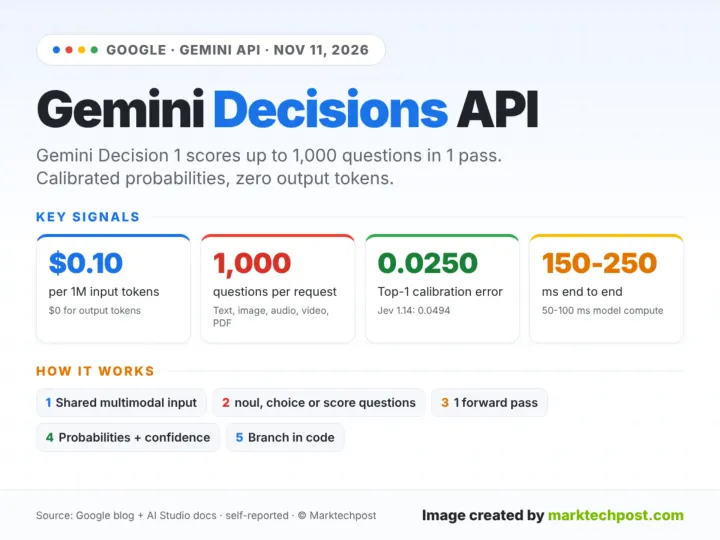
Google Launches Gemini Decisions API With Gemini Decision 1 at $0.10/M Tokens
Google has launched the Gemini Decisions API, powered by a new model, Gemini Decision 1 (gemini-decision-1). The Gemini Decisions API does not generate text. It scores up to 1,000 typed questions against one shared input and returns calibrated probabilities. For developers, this targets the small branching calls inside agents: routing, policy checks, tool selection and grading. Google prices it at $0.10 per 1M input tokens, with zero output tokens billed. TL;DR Size: Context is 262,144 t
Also reported by SiliconANGLE and The Decoder
ElevenLabs Scribe v3 Live uses conversational context to stop voice agents from cutting off callers mid-sentence
ElevenLabs has released Scribe v3 and Scribe v3 Live, two new speech recognition models designed to transcribe accurately through background noise and crosstalk. Benchmarks from Artificial Analysis confirm that Scribe v3 narrowly beats competitors like OpenAI, Google, and Microsoft on accuracy. That precision comes at a cost, though. Rivals like Microsoft and xAI run many times faster and charge roughly half the price. The article ElevenLabs Scribe v3 Live uses conversational context to
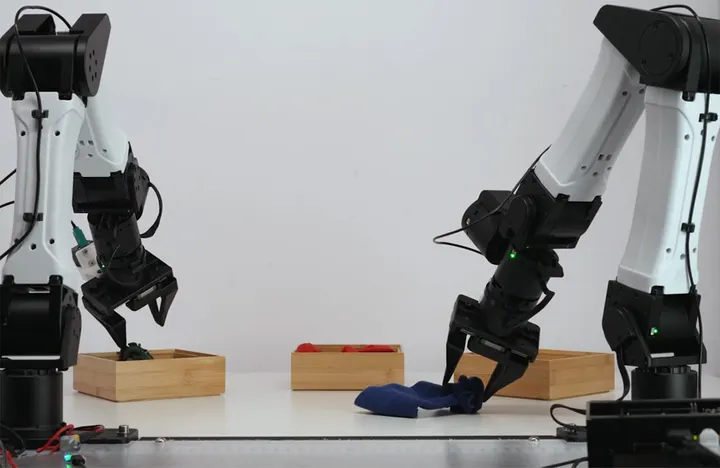
Runway’s Praxis-1 world action model for robotics is now available
Praxis-1 builds on Runway’s work as a founding member of the Cosmos Coalition, advancing open world models for physical AI. | Source: Runway Runway AI Inc. yesterday released Praxis-1, its world action model for robotics. The model is now available to developers with open weights under the Apache 2.0 license. Runway first announced Praxis-1 in September with launch partners including Noble Machines, Standard Bots, and Ultra. Since then, these companies have been running the model on their own ha

Google’s AlphaGenome 2 zooms in on the cellular roots of disease
A graphic representing Google’s AlphaGenome Atlas. | Image: Google Researchers at Google DeepMind have unveiled a new AI model designed to unravel how changes in our DNA affect different cells, giving scientists a more detailed view of a notoriously difficult problem that could hold important clues to the causes of disease - and point the way to new treatments. AlphaGenome 2 is the successor to DeepMind's genome-predicting AI model AlphaGenome, which was released last year. Whil