Moonshot AI Open-Sources MoonEP: A Perfectly Balanced Expert Parallelism Library for MoE Training
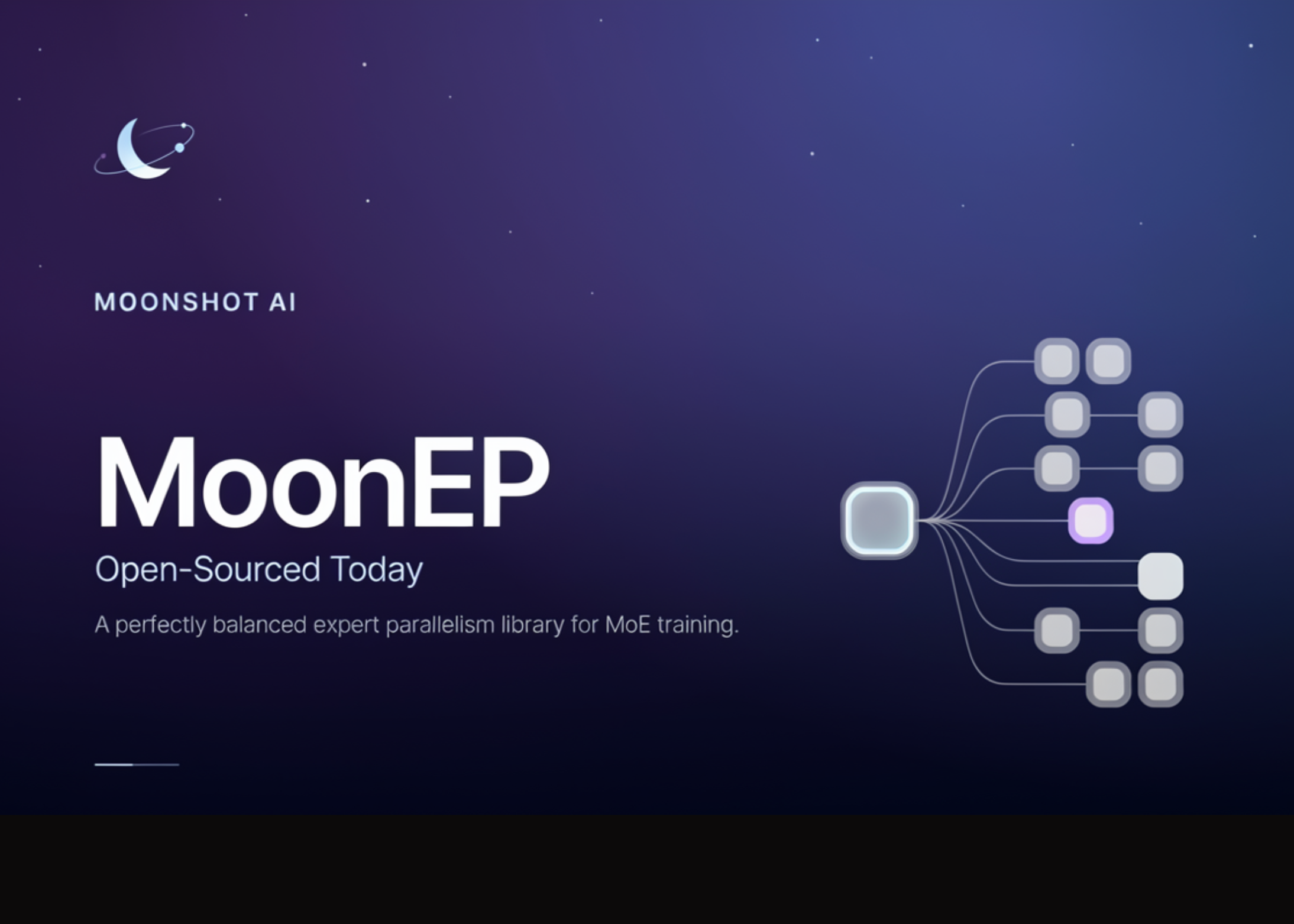
Moonshot AI has open-sourced MoonEP, an Expert Parallelism (EP) communication library for distributed Mixture-of-Experts (MoE) workloads. The team announced the release as a library built to make expert-parallel communication more efficient at scale. It ships under an MIT license. MoonEP arrived as part of Kimi K3 Open Day. Alongside the K3 model weights and technical report, Moonshot released three infrastructure codebases: MoonEP, FlashKDA, and AgentEnv. FlashKDA had already been open-sour
Get smart on it
Moonshot AI has released MoonEP, a library designed to improve how distributed artificial intelligence systems handle Mixture-of-Experts (MoE) workloads by ensuring balanced communication across computing ranks. The problem MoonEP solves is that routers directing tokens to different experts are typically unbalanced, causing some experts to receive far more tokens than others, which slows down processing since the system's speed is limited by its slowest participant. MoonEP achieves perfect balance by guaranteeing every rank receives exactly the same number of tokens through online-planned redundant experts that are prefetched before computation, while also using static memory shapes to eliminate per-layer synchronization overhead. The library was released under an MIT license alongside other infrastructure code as part of an open-day announcement.
Related news

Pokee AI Releases Pokee-Isaac 28B: A 10M-Token Context Agentic Model Built to Run Inside the Customer Boundary
Long-horizon agents accumulate context faster than they resolve tasks. Every tool output, observation, and intermediate reasoning step stays in the window, and the two capabilities that matter — holding that context and staying coherent across it — have so far been available almost exclusively from cloud endpoints. That excludes regulated industries, public-sector institutions, and on-device applications, where the data is not permitted to leave the boundary at all. Pokee AI released Pokee-Isaa
Mistral AI Releases Shieldstral 1.0 3B: An Open-Weights Policy-Adaptive Multimodal Safety Classifier Matching Models 7× Its Size
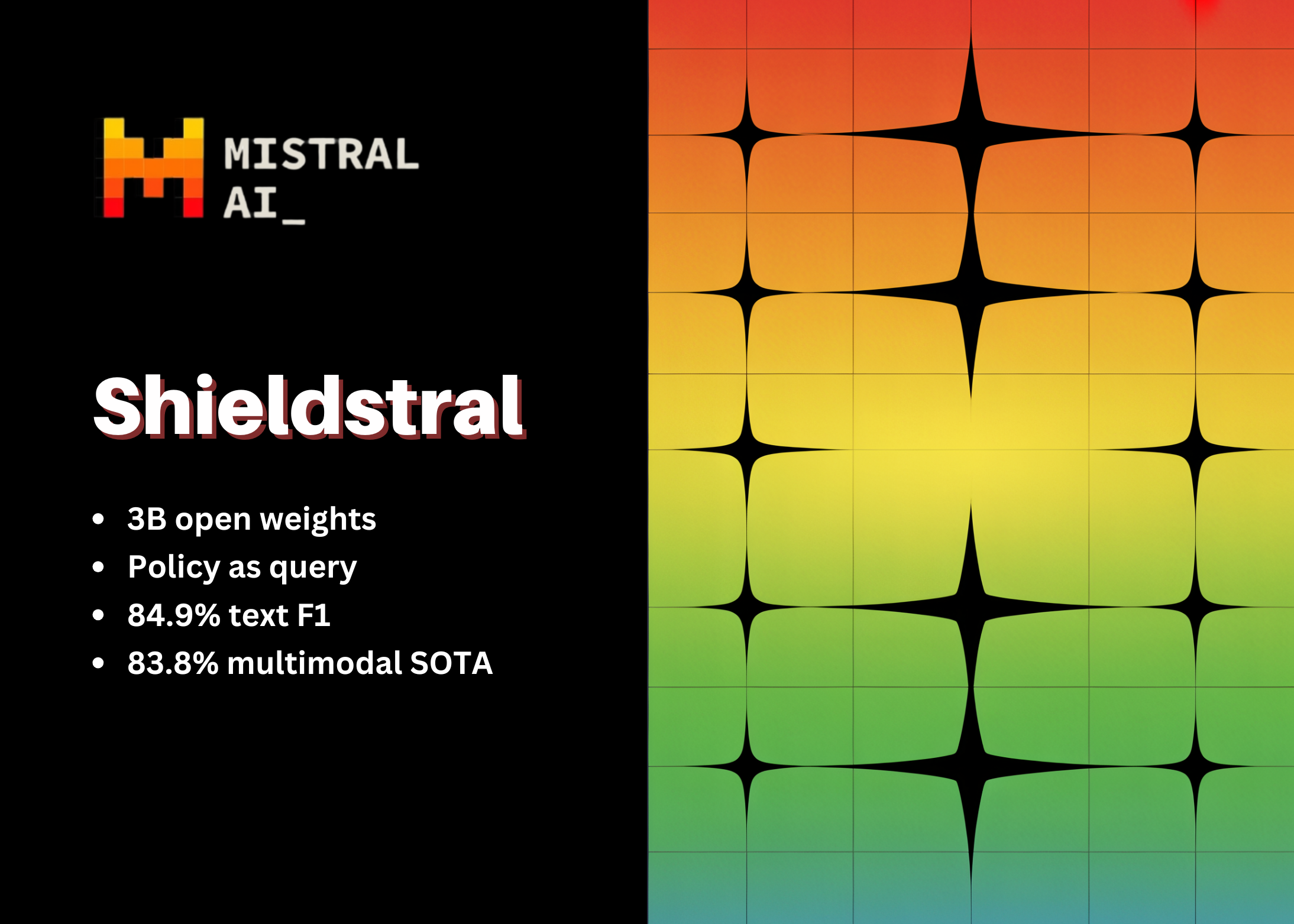
Mistral AI has released Shieldstral 1.0 3B, an open-weights, policy-adaptive multimodal safety classifier that treats content moderation as a single yes/no question rather than a fixed taxonomy of harm categories. Most guardrail models bake their category list into the weights, so re-targeting one to a new deployment context means retraining — and the same content can be acceptable on a cybersecurity research tool while being harmful on a mental-health platform. Shieldstral inverts that: operat