Microsoft launches its first cybersecurity model, plus a new agentic cybersecurity system
Microsoft bolstered its AI cybersecurity offerings this week with the launch of its first AI security model and a new security platform.
Get smart on it
Microsoft launched its first cybersecurity-specialized model called MAI-Cyber-1-Flash, designed to find vulnerabilities in complex codebases, alongside a new AI security platform called Perception that deploys teams of agents to automate security workflows. This matters because hackers are increasingly using AI in cyberattacks, and the company claims its model is more powerful and cost-effective than competitor models from Anthropic, Google, and OpenAI on established AI cybersecurity benchmarks. Perception uses red teams to simulate potential attacks, blue teams to detect bugs, and green teams to fix them, with the stated goal of reducing work that previously took hours of manual effort by specialized security staff down to minutes. The tools will enter a crowded market where competitors like Anthropic and OpenAI have already launched their own AI security solutions this year.
Related news

Pokee AI Releases Pokee-Isaac 28B: A 10M-Token Context Agentic Model Built to Run Inside the Customer Boundary
Long-horizon agents accumulate context faster than they resolve tasks. Every tool output, observation, and intermediate reasoning step stays in the window, and the two capabilities that matter — holding that context and staying coherent across it — have so far been available almost exclusively from cloud endpoints. That excludes regulated industries, public-sector institutions, and on-device applications, where the data is not permitted to leave the boundary at all. Pokee AI released Pokee-Isaa
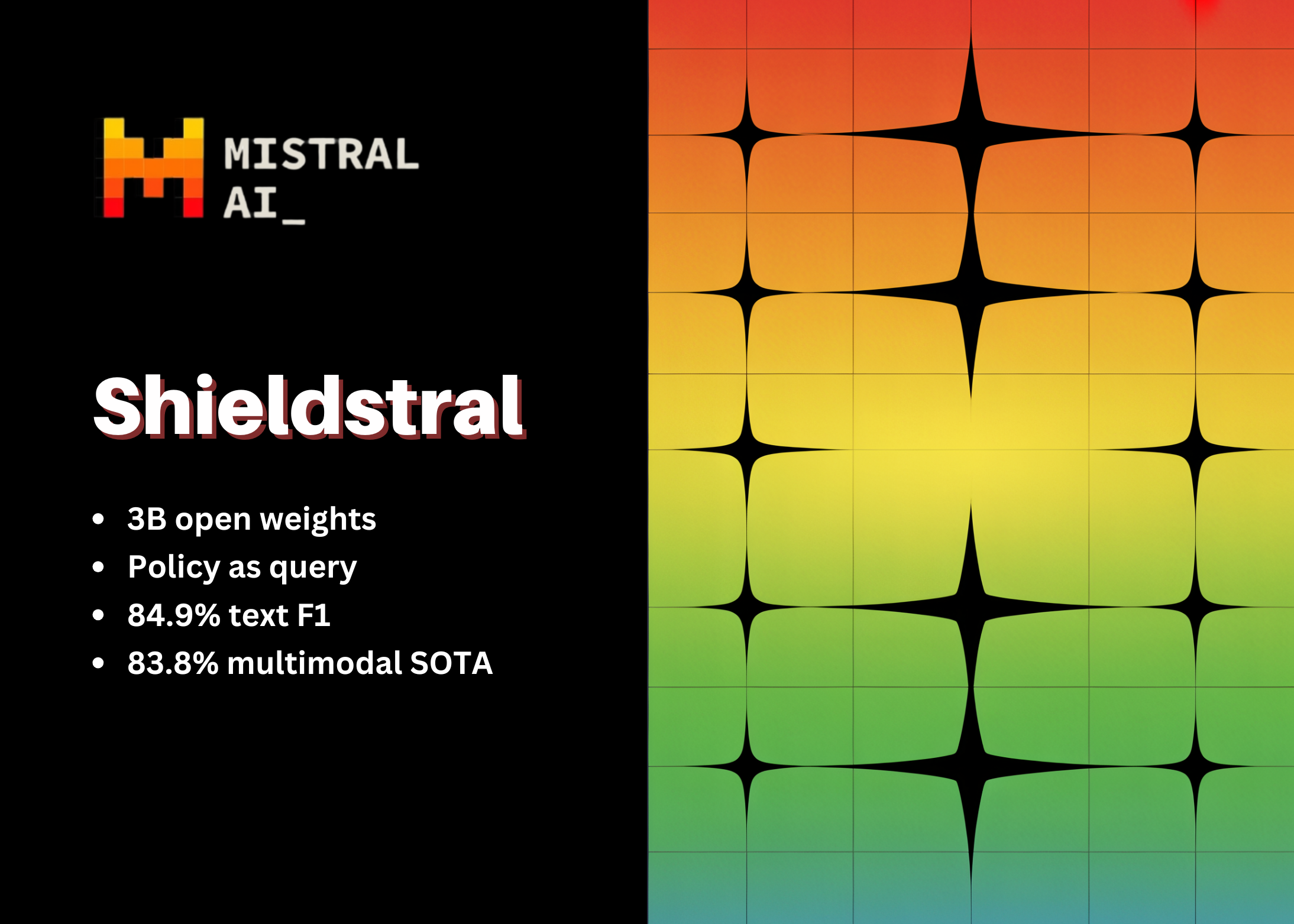
Mistral AI Releases Shieldstral 1.0 3B: An Open-Weights Policy-Adaptive Multimodal Safety Classifier Matching Models 7× Its Size
Mistral AI has released Shieldstral 1.0 3B, an open-weights, policy-adaptive multimodal safety classifier that treats content moderation as a single yes/no question rather than a fixed taxonomy of harm categories. Most guardrail models bake their category list into the weights, so re-targeting one to a new deployment context means retraining — and the same content can be acceptable on a cybersecurity research tool while being harmful on a mental-health platform. Shieldstral inverts that: operat