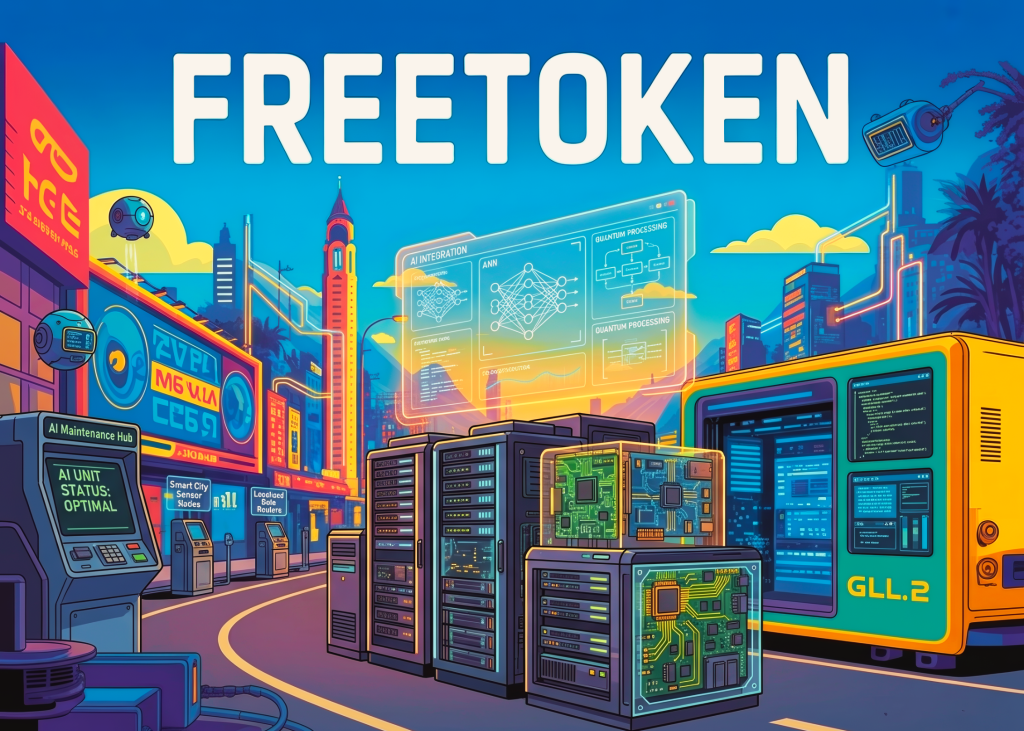
Meet FreeToken: An Edge-Native MoE Serving Engine that Runs 753B GLM-5.2 on a Single Workstation GPU
Frontier open-weight models are shipping faster than the hardware assumptions around them. Kimi-K3, GLM-5.2 and DeepSeek-V4-Flash are closing the capability gap with proprietary systems, but releasing parameters only determines who can obtain a model — not who can afford to run it. Serving them still assumes datacenter-class GPU clusters, and as agentic workloads push inference demand up, that cost lands hardest on individual developers and small teams. Meanwhile, more than a hundred million co
Make your prediction
Will FreeToken enable running a 700B+ parameter model on a single GPU by September 30, 2026?
Resolves by Sep 30, 2026
Your prediction
50% · 50/50 coin flip
NOYES
Get smart on it
FreeToken is a serving system that allows large artificial intelligence models to run on personal computers with standard GPUs instead of requiring expensive datacenter clusters. The system works by treating a personal machine as a unified platform and continuously mapping computation onto whatever GPU, CPU, and memory the machine actually has available. This matters because frontier open-weight models are being released faster than the hardware infrastructure to run them, making it difficult for individual developers and small teams to afford inference costs. FreeToken enables this by using techniques like bandwidth-adaptive execution and elastic memory management to work around the limitations of consumer hardware, allowing models with hundreds of billions of parameters to run at practical speeds on devices like laptops and gaming desktops.
Related news
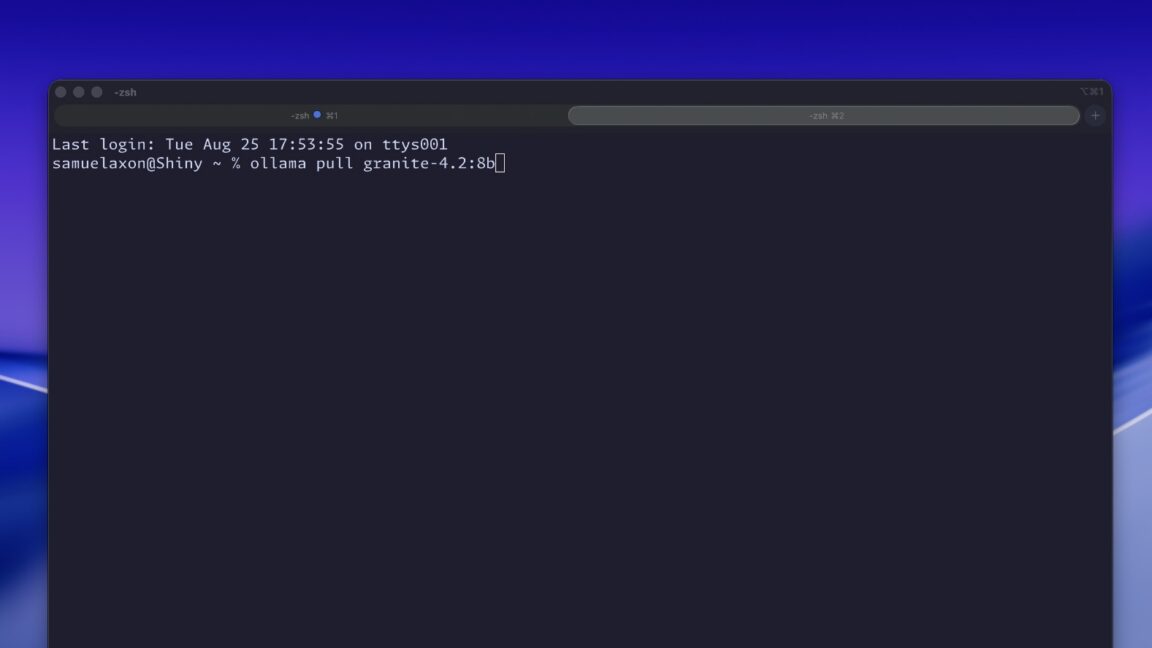
IBM's new Granite 4.2 models ride the wave of interest in local LLMs
IBM has rolled out the newest models in its family of open-weight large language models designed to be downloaded and self-hosted. The newly launched Granite 4.2 comes in 3B, 8B, and 30B parameter variants. Like previous versions, IBM is taking a decoder-only approach here. These new releases offer a 128,000-token context window natively. The 8B and 30B variants (not the 3B one) also go through an agentic reinforcement learning block; they were trained for expanded capabilities like using the t
IBM Releases Granite 4.2: Bringing Native Reasoning and Agentic RL to Open Enterprise Models
IBM has released Granite 4.2, a family of open reasoning language models in 3B, 8B, and 30B parameter sizes. Unlike earlier Granite releases, which were instruction-following assistants, Granite 4.2 is built around explicit reasoning. Every model can emit a chain of thought before answering, and every model exposes a thinking / non-thinking switch plus a low-effort mode that spends a short reasoning budget on easy questions. The models are decoder-only dense transformers, pre-trained from scrat