Liquid AI Releases LFM2.5-2.6B: An On-Device Agentic Model With 128K Context, Tool Calling, And Open Weights
Liquid AI released LFM2.5-2.6B, an agentic model that runs entirely on-device. It plans, calls tools, and works through multi-step tasks on phones, laptops, PCs, and robots. The model has 2.69B total parameters, a 131,072-token context window, and a 128,000-token vocabulary. Pre-training used approximately 34 trillion tokens. Two checkpoints shipped: LFM2.5-2.6B-Base for fine-tuning, and LFM2.5-2.6B post-trained for agentic workloads. Because inference stays local, data never leaves the device
Get smart on it
Liquid AI released LFM2.5-2.6B, a small artificial intelligence model with 2.69 billion parameters that can run directly on personal devices like phones, laptops, and robots without sending data to external servers. The model handles multi-step tasks, can use tools, and maintains a large context window of 128,000 tokens, allowing it to process long documents. It matters because on-device operation eliminates data privacy concerns, reduces costs to near zero per use, and enables deployment where internet connectivity or third-party APIs are unavailable or restricted, such as in regulated industries and air-gapped environments. The model is released as open weights in multiple formats and performs competitively on instruction-following and tool-use benchmarks against larger competitors, though Liquid AI notes it is not recommended for coding tasks or knowledge-heavy applications.
Related news

Pokee AI Releases Pokee-Isaac 28B: A 10M-Token Context Agentic Model Built to Run Inside the Customer Boundary
Long-horizon agents accumulate context faster than they resolve tasks. Every tool output, observation, and intermediate reasoning step stays in the window, and the two capabilities that matter — holding that context and staying coherent across it — have so far been available almost exclusively from cloud endpoints. That excludes regulated industries, public-sector institutions, and on-device applications, where the data is not permitted to leave the boundary at all. Pokee AI released Pokee-Isaa
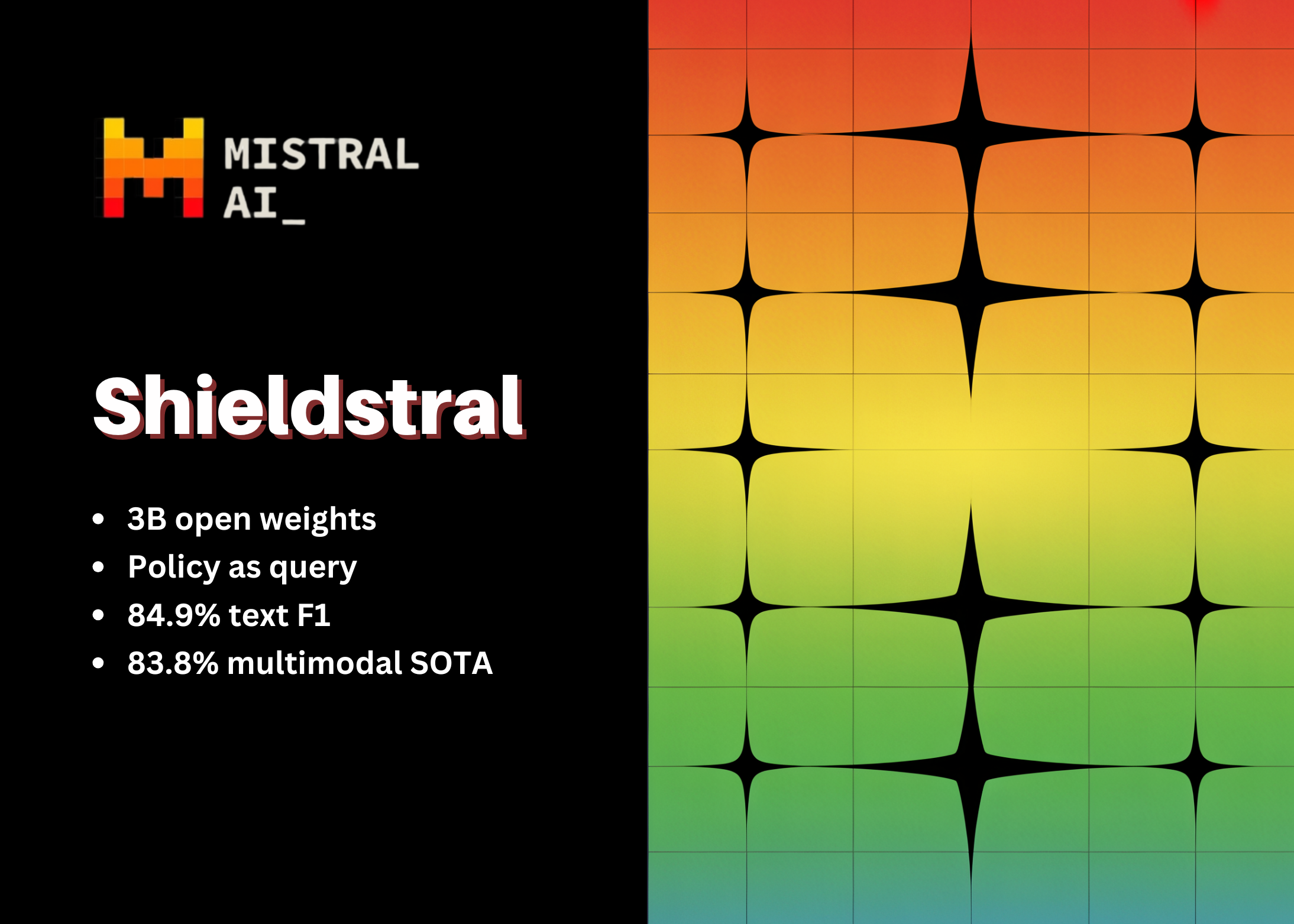
Mistral AI Releases Shieldstral 1.0 3B: An Open-Weights Policy-Adaptive Multimodal Safety Classifier Matching Models 7× Its Size
Mistral AI has released Shieldstral 1.0 3B, an open-weights, policy-adaptive multimodal safety classifier that treats content moderation as a single yes/no question rather than a fixed taxonomy of harm categories. Most guardrail models bake their category list into the weights, so re-targeting one to a new deployment context means retraining — and the same content can be acceptable on a cybersecurity research tool while being harmful on a mental-health platform. Shieldstral inverts that: operat