Linkup Research Releases SPARSEUP: A 149M-Parameter Open-Source Sparse Embedding Model
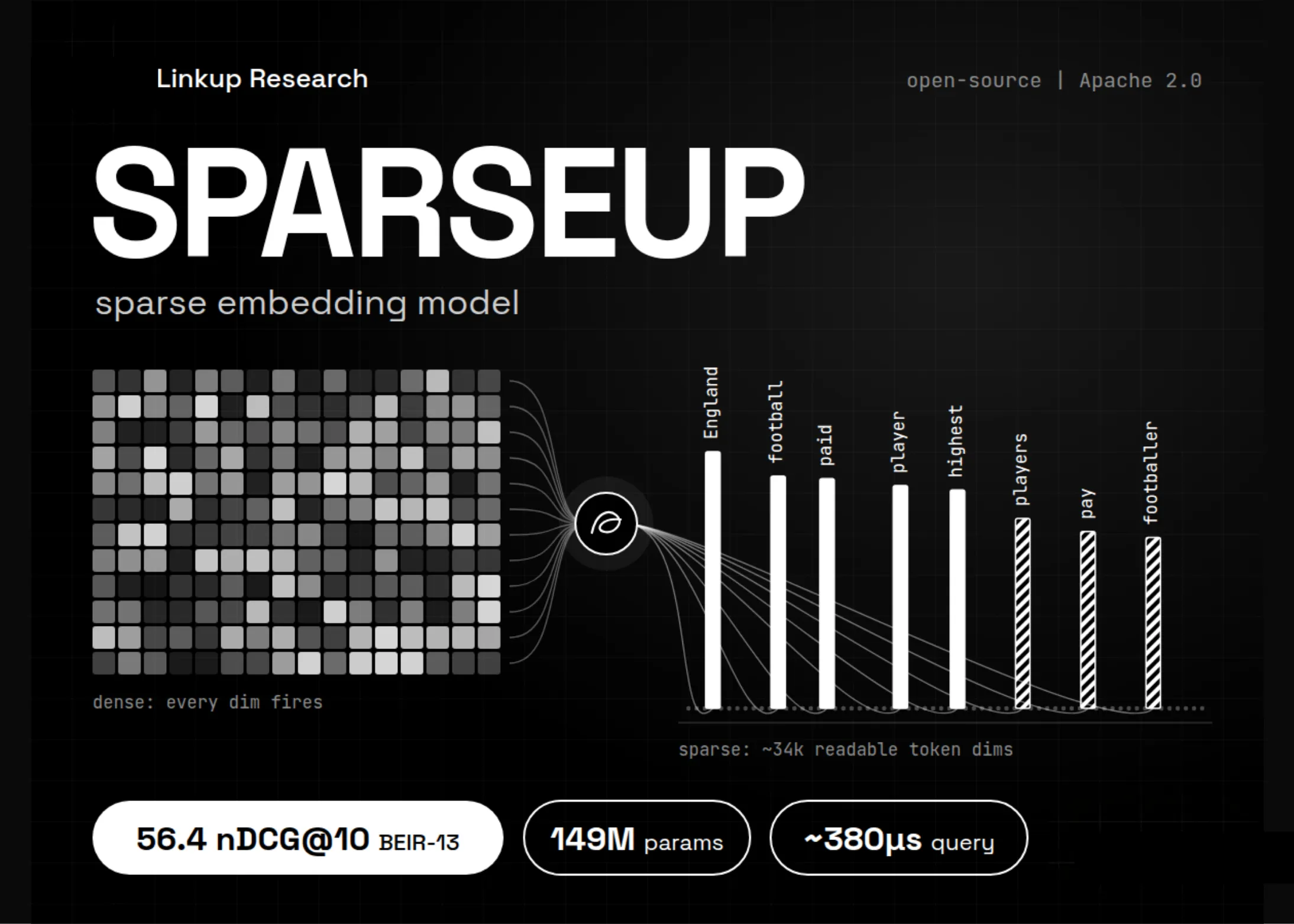
Linkup research team releases SPARSEUP, an open-source learned sparse embedding model. The model runs on a 149M-parameter ModernBERT backbone and ships under Apache 2.0. Linkup team reports 56.4 average nDCG@10 on BEIR-13. It calls this the strongest public vocabulary-based sparse encoder it knows of under 150M parameters. Is it deployable? Yes. The weights are on Hugging Face under Apache 2.0. The model loads through Transformers or Sentence Transformers with trust_remote_code=True. Why
Get smart on it
Linkup Research released an open-source sparse embedding model with 149 million parameters that outputs vocabulary weights rather than single vectors, making it readable and compatible with inverted indexes. The model achieved a benchmark score of 56.4 on BEIR-13, which the team claims is the strongest performance among public sparse encoders under 150 million parameters. Sparse models differ from the more common dense embedding approaches because they can match rare words more effectively and allow each dimension to map to an actual token. The model was built using techniques including logit shifting, per-position top-k filtering, and case folding to prevent the output from becoming overly dense with stopwords.
Related news
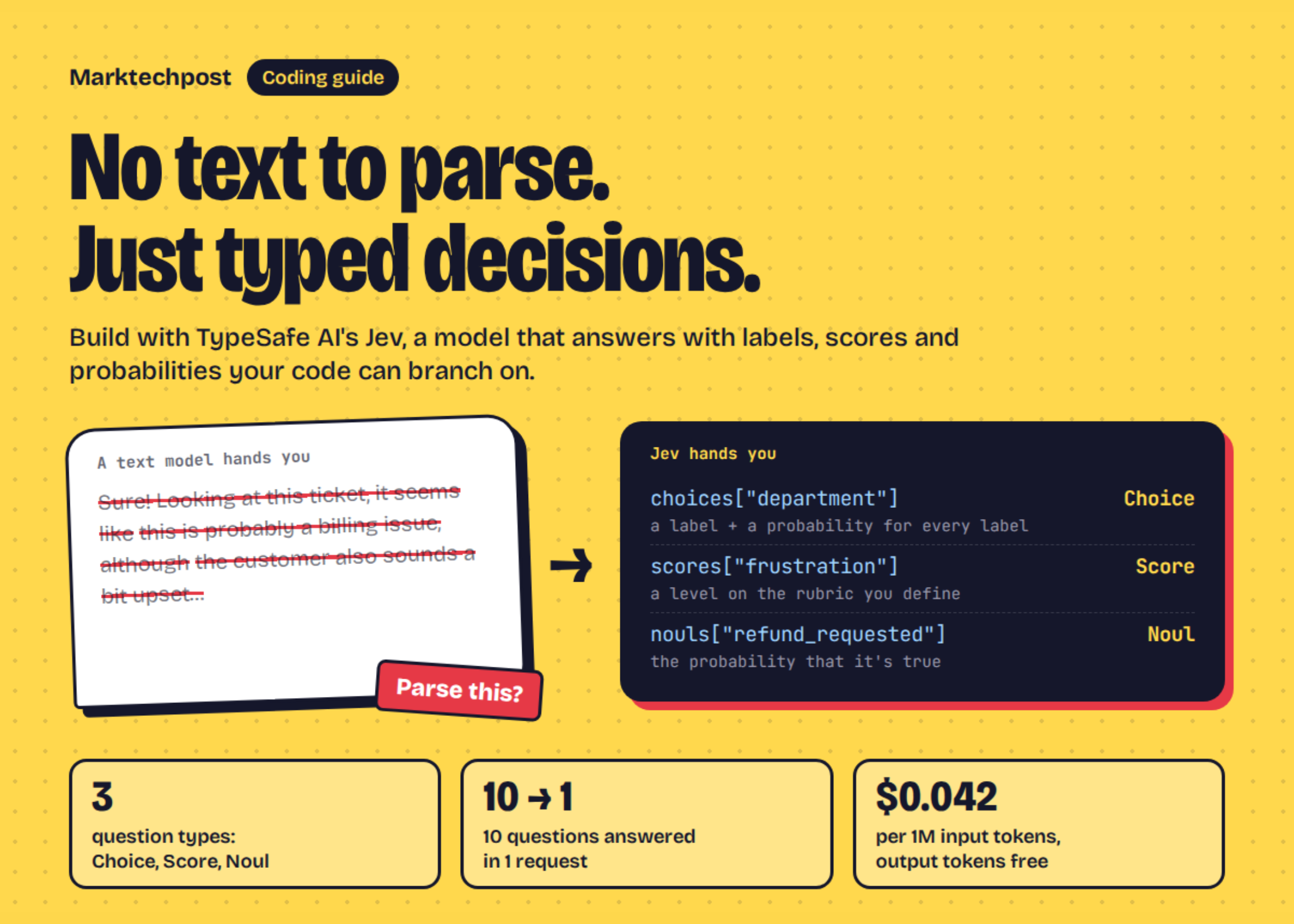
A Coding Guide to TypeSafe AI Jev: Typed Decisions, Calibrated Confidence, and Speculative Fan-Out with a System One Model
In this tutorial, we work with Jev, TypeSafe AI’s first System One model, which does not generate text at all: we send it a piece of program state and a set of typed questions, and it returns choices, scores, and yes/no probabilities that our code can branch on directly. We install the official Python SDK, make a first call that uses all three question primitives at once, and look at how the shape of the state changes what the model can know. We then recompute the published confidence sta
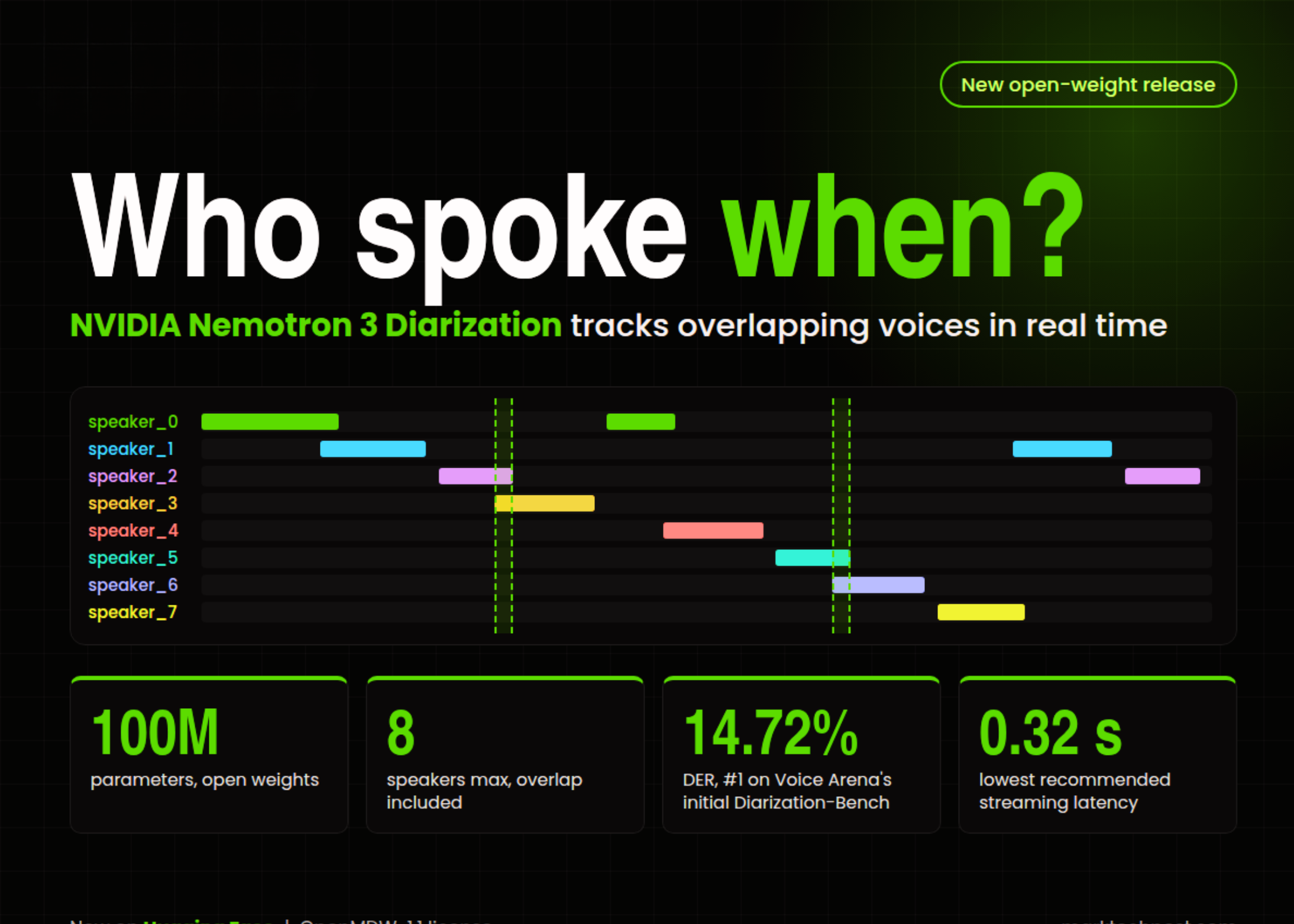
NVIDIA Releases Nemotron 3 Diarization: A 100M-Parameter Open-Weight Model That Tracks 8 Speakers in Real Time
NVIDIA has released Nemotron 3 Diarization, an open-weight speaker diarization model on Hugging Face. It answers one question about any conversation: who spoke when. The 100M-parameter model tracks up to 8 speakers, including when voices overlap. One checkpoint handles both offline recordings and real-time streaming. Is it deployable? Yes. The weights are released under the OpenMDW License 1.1, which permits commercial use. It runs on Linux through NVIDIA NeMo, using Ampere, Ada Lovelace, Ho