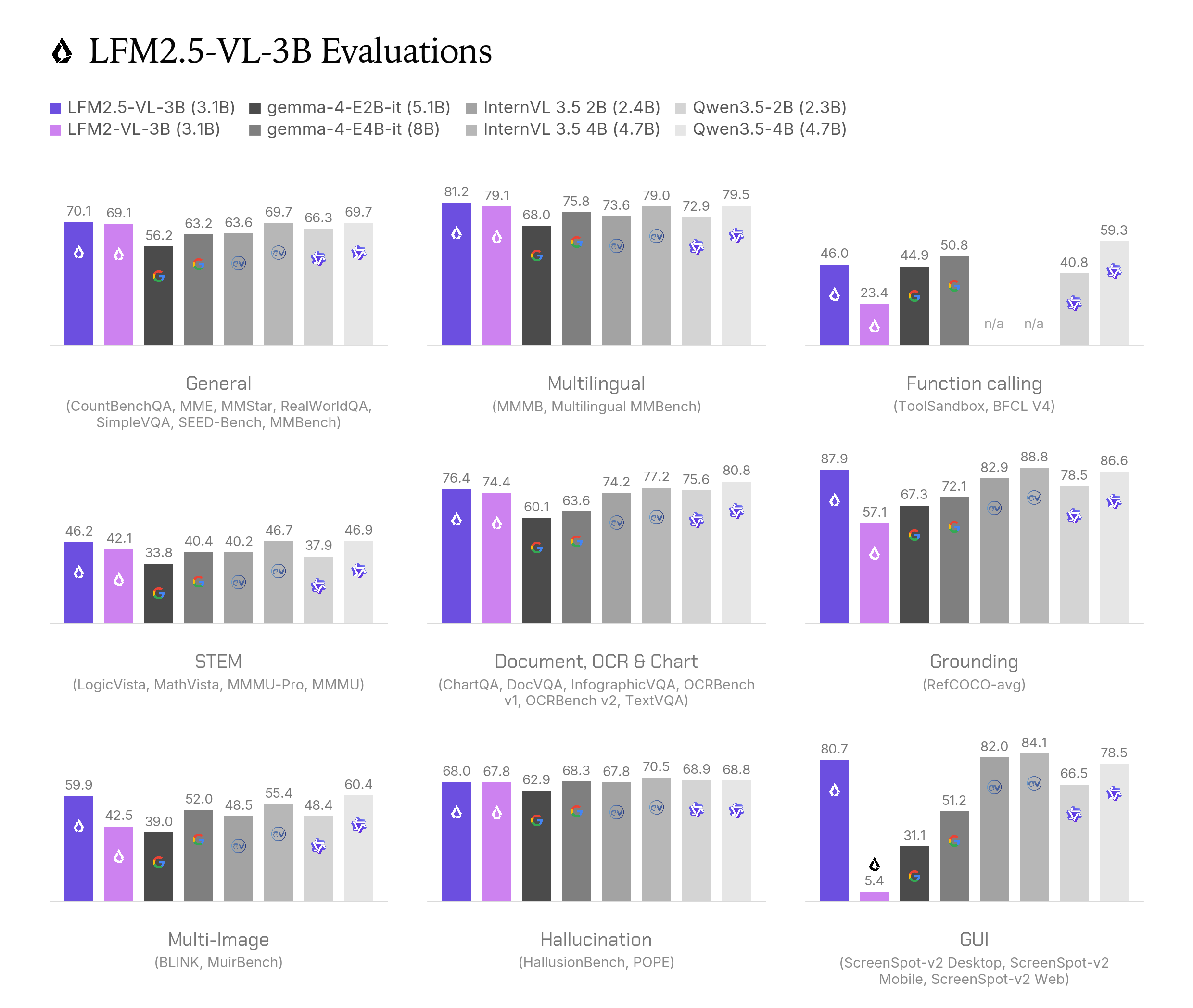
LFM2.5-VL-3B for Better and Faster Vision Capabilities for the Edge
Smaller models that run locally on devices without cloud connectivity could expand AI adoption in resource-constrained environments like remote locations or manufacturing floors.
Get smart on it
LFM2.5-VL-3B is a vision-language model designed to run on personal devices rather than requiring cloud servers, combining the ability to understand both images and text while remaining compact enough to fit in approximately 3 GB of memory. The model matters because it can process visual content like documents, screenshots, and real-world images directly on devices, enabling faster responses for applications that need immediate answers rather than extended reasoning. Key capabilities include understanding digital screens and user interfaces across devices, detecting objects from natural language descriptions, analyzing multiple images together, and calling software functions. The model achieves these functions while maintaining fast processing speeds, decoding at 228 tokens per second on certain laptops and reaching 20 tokens per second even on mobile phones.
Related news
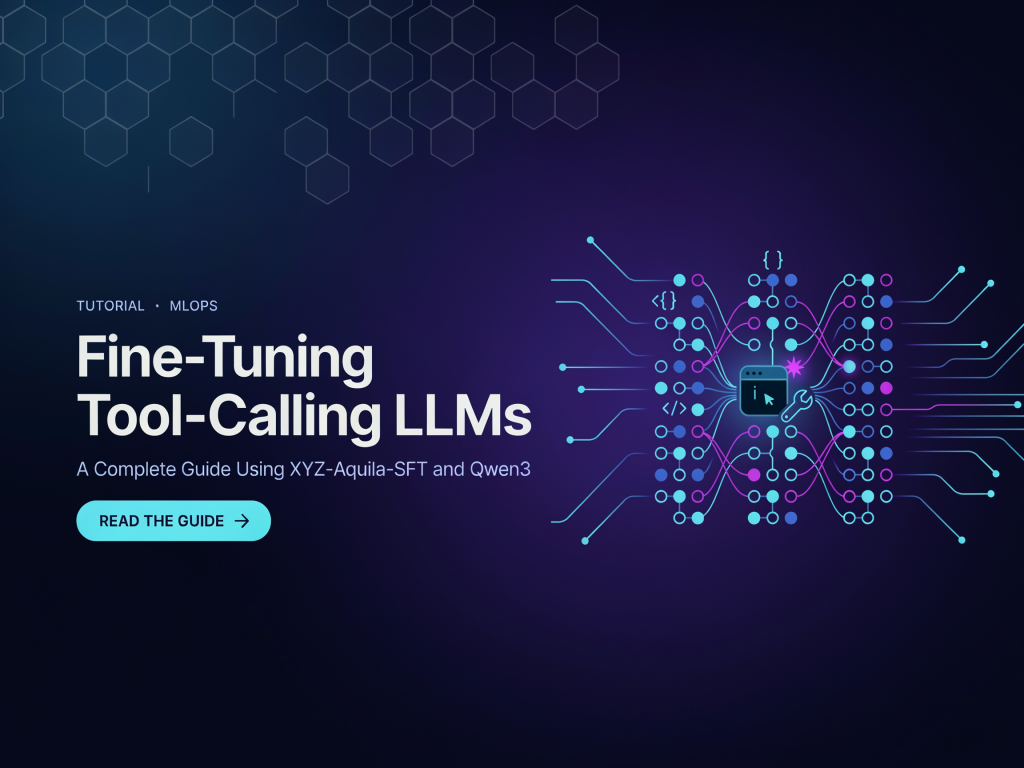
Fine-Tuning Tool-Calling LLMs: A Complete Guide Using XYZ-Aquila-SFT and Qwen3
In this tutorial, we implement an end-to-end supervised fine-tuning pipeline for the XYZ-Aquila-SFT dataset, Hugging Face Transformers, PyTorch, and PEFT. We stream and inspect the dataset, parse multi-turn tool-use trajectories, extract structured tool calls, analyze corpus characteristics, and preserve embedded reasoning and observation patterns. We then convert tool schemas between message-embedded and structured formats, render Qwen-compatible ChatML with assistant-only loss masking, prepar

Meta’s ‘open’ AI, and a $250M deal gone very wrong
Meta released Glimmer this week, an open-weight AI model anyone can download and run on their own hardware — a contrast to Muse Spark, the company’s more powerful model that stays locked behind its own APIs. The release landed alongside a letter from Mark Zuckerberg arguing AI should be “for everyone” rather than controlled by a handful of labs, but as Equity’s […]