Kimi AI and kvcache-ai Open Sources ‘AgentENV’: A Distributed System that Powers Agentic Reinforcement Learning (RL) Training for Kimi K3
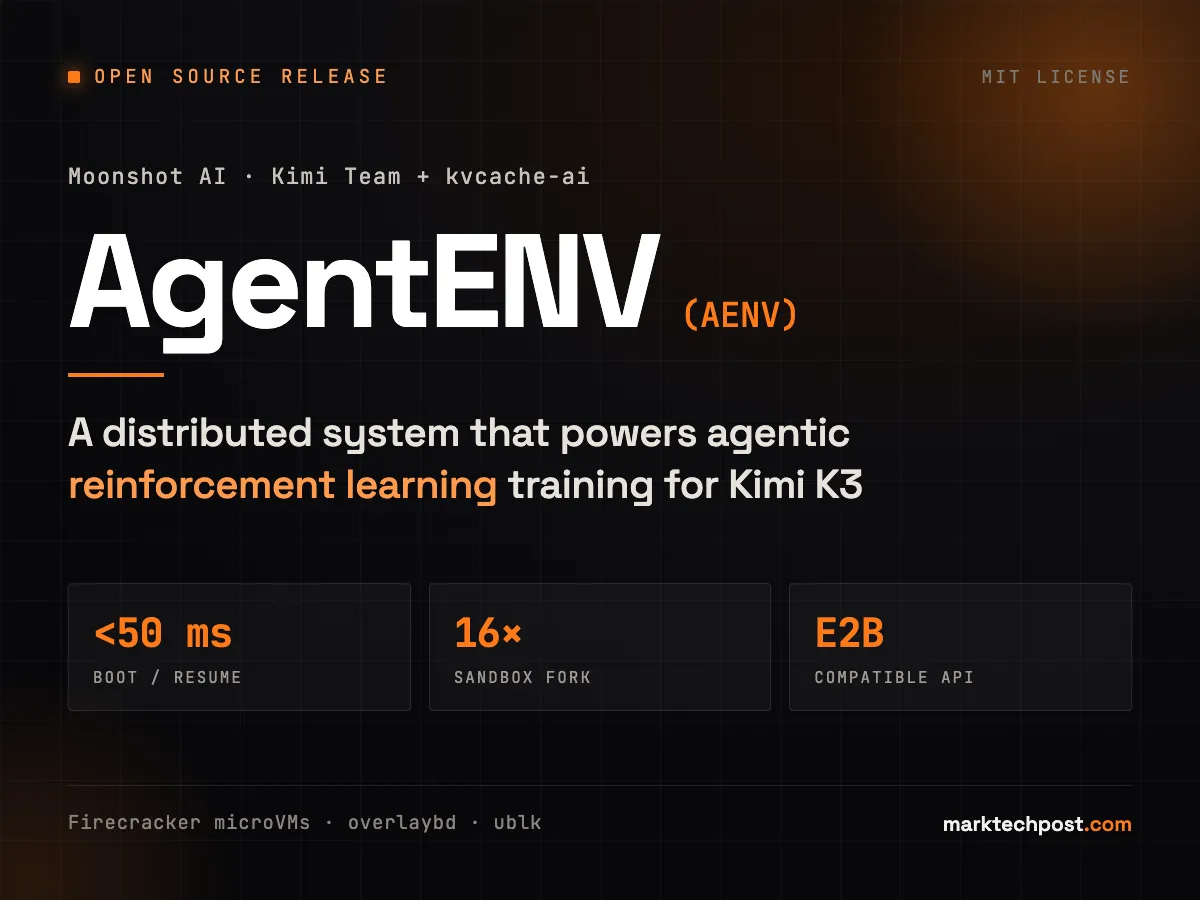
Moonshot AI’s Kimi team and kvcache-ai have open-sourced AgentENV (AENV), a distributed platform for running agent environments at scale. AgentENV powers agentic reinforcement learning (RL) training for Kimi K3, Moonshot’s 2.8-trillion-parameter Mixture-of-Experts model. The code ships under an MIT license. Why Environment Infra Holds Back Agentic RL Agentic RL does not just sample text. It requires the model to act inside a real computer. Every rollout needs an isolated Linux
Get smart on it
AgentENV is a distributed system for running isolated computer environments at scale, designed to support reinforcement learning training where AI models take actions inside real operating systems rather than just generating text. The system uses Firecracker microVMs, which provide kernel-level isolation while remaining lightweight enough for training, and includes features like rapid snapshots, pausing, resuming, and forking that allow expensive setup steps to run once and then branch into parallel training runs. This addresses a fundamental trade-off in agent training: containers are fast but lack proper isolation, while full virtual machines isolate well but start slowly and consume memory when idle. The system is compatible with existing E2B APIs, meaning teams can run it without rewriting their agent code, and it has been open-sourced under an MIT license.
Related news

Pokee AI Releases Pokee-Isaac 28B: A 10M-Token Context Agentic Model Built to Run Inside the Customer Boundary
Long-horizon agents accumulate context faster than they resolve tasks. Every tool output, observation, and intermediate reasoning step stays in the window, and the two capabilities that matter — holding that context and staying coherent across it — have so far been available almost exclusively from cloud endpoints. That excludes regulated industries, public-sector institutions, and on-device applications, where the data is not permitted to leave the boundary at all. Pokee AI released Pokee-Isaa
Mistral AI Releases Shieldstral 1.0 3B: An Open-Weights Policy-Adaptive Multimodal Safety Classifier Matching Models 7× Its Size
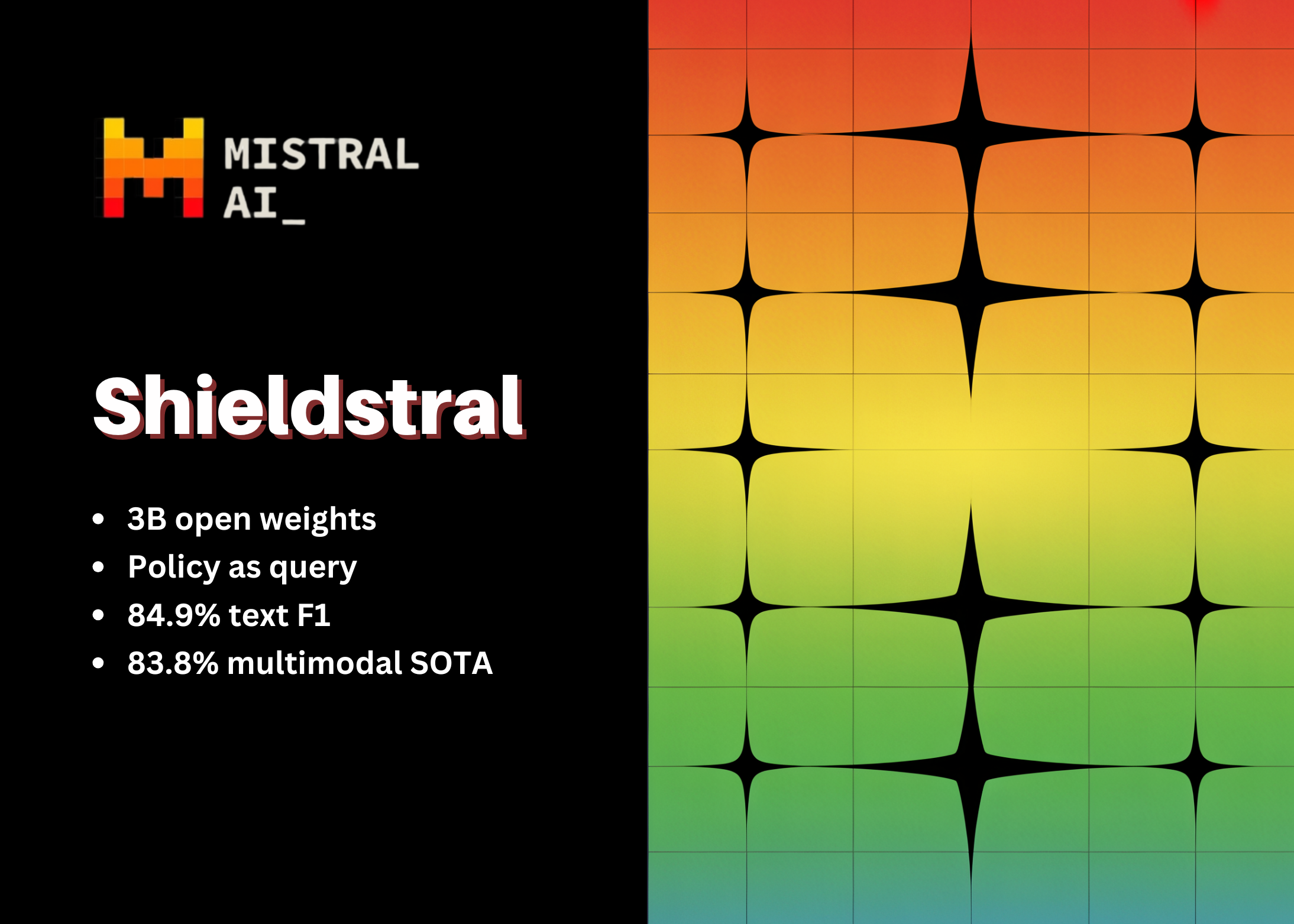
Mistral AI has released Shieldstral 1.0 3B, an open-weights, policy-adaptive multimodal safety classifier that treats content moderation as a single yes/no question rather than a fixed taxonomy of harm categories. Most guardrail models bake their category list into the weights, so re-targeting one to a new deployment context means retraining — and the same content can be acceptable on a cybersecurity research tool while being harmful on a mental-health platform. Shieldstral inverts that: operat