🤗 Kernels: Major Updates
The open-source library's improvements could make AI models faster and more efficient to run on consumer hardware.
Get smart on it
The Kernels project standardizes how custom code modules are packaged, distributed, and used within a computing ecosystem. A new repository type called "kernel" has been introduced to make these modules more discoverable and to show which accelerators, operating systems, and backend versions are supported. Security is a primary concern because kernels execute native code with the same privileges as the Python process that loads them, so the project has added trusted publisher verification and code signing mechanisms to prevent malicious code from being loaded. The project is also establishing foundations for automated kernel development and expanding support across different frameworks and backends.
Related news

OpenAI Releases GPT-Realtime-2.1 and GPT-Realtime-2.1-mini for Low-Latency Voice Agents in the API
OpenAI has released two new Realtime models in its API. They are named gpt-realtime-2.1 and gpt-realtime-2.1-mini. Both target low-latency voice and multimodal experiences. The mini model is the notable part of this release. It is a mini reasoning model for realtime voice. It ships at the same cost as the earlier gpt-realtime-mini. OpenAI also reduced p95 latency by at least 25% across Realtime voice models. That reduction comes from improved caching. What is GPT-Realtime-2.1-mini gpt-rea
Tencent Releases Hy3: An Open 295B Mixture-of-Experts (MoE) Model with 21B Active Parameters and 256K Context
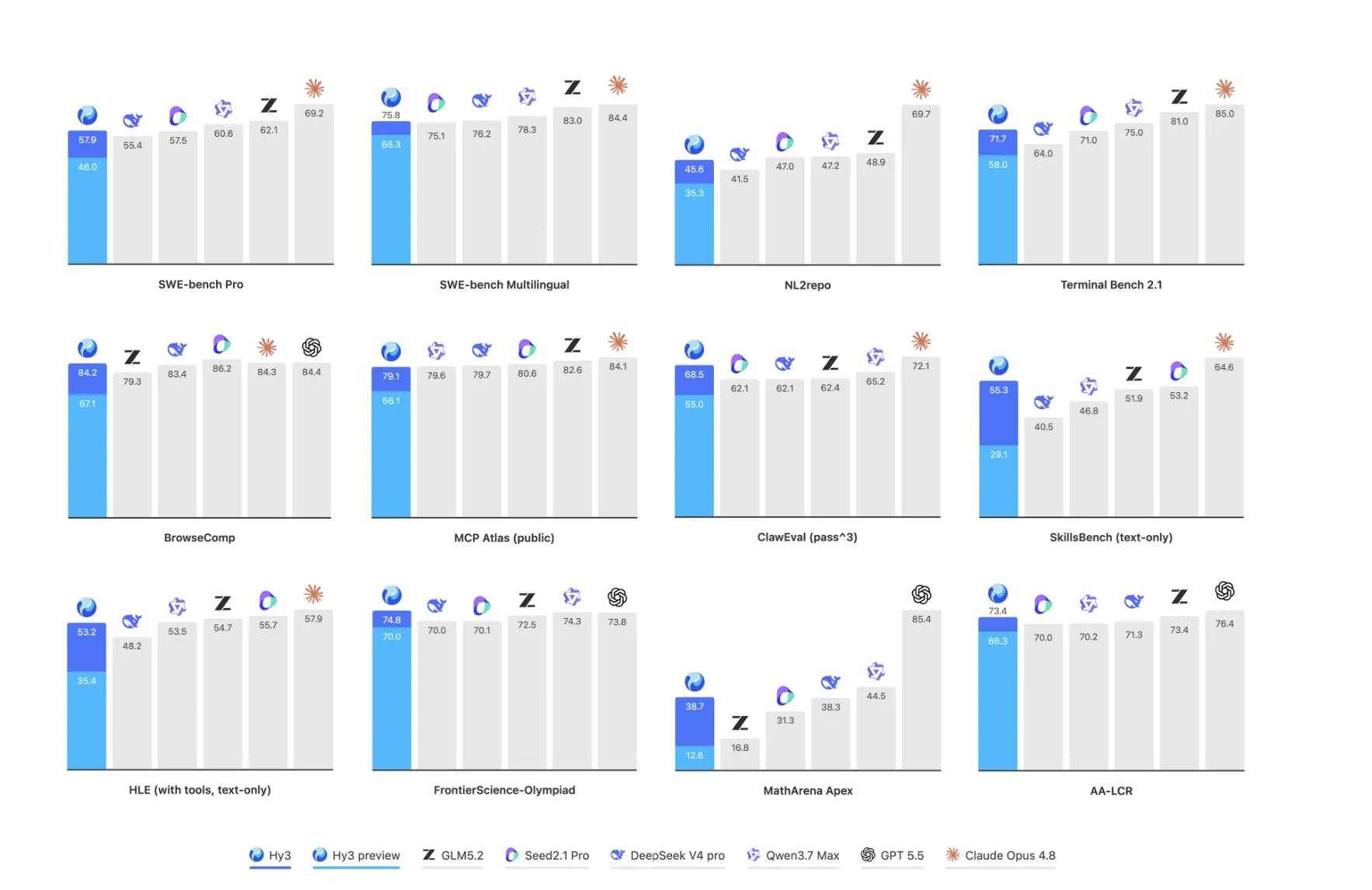
Tencent’s Hy team released Hy3. Hy3 is a 295B-parameter Mixture-of-Experts (MoE) model. It activates only 21B parameters per token. The weights ship under the Apache License 2.0. Hy3 is aimed at reasoning, agentic workflows, and long-context tasks. What is Hy3? Hy3’s architecture contains a sparse MoE with 192 experts and top-8 routing. Only 8 experts fire per token, so compute stays low. The model also uses a Multi-Token Prediction (MTP) layer. MTP predicts several tokens