Jina AI Releases jina-ocr-v1: A 3.4B MoE Document Parser With Built-In Speculative Decoding for Low-Budget GPUs
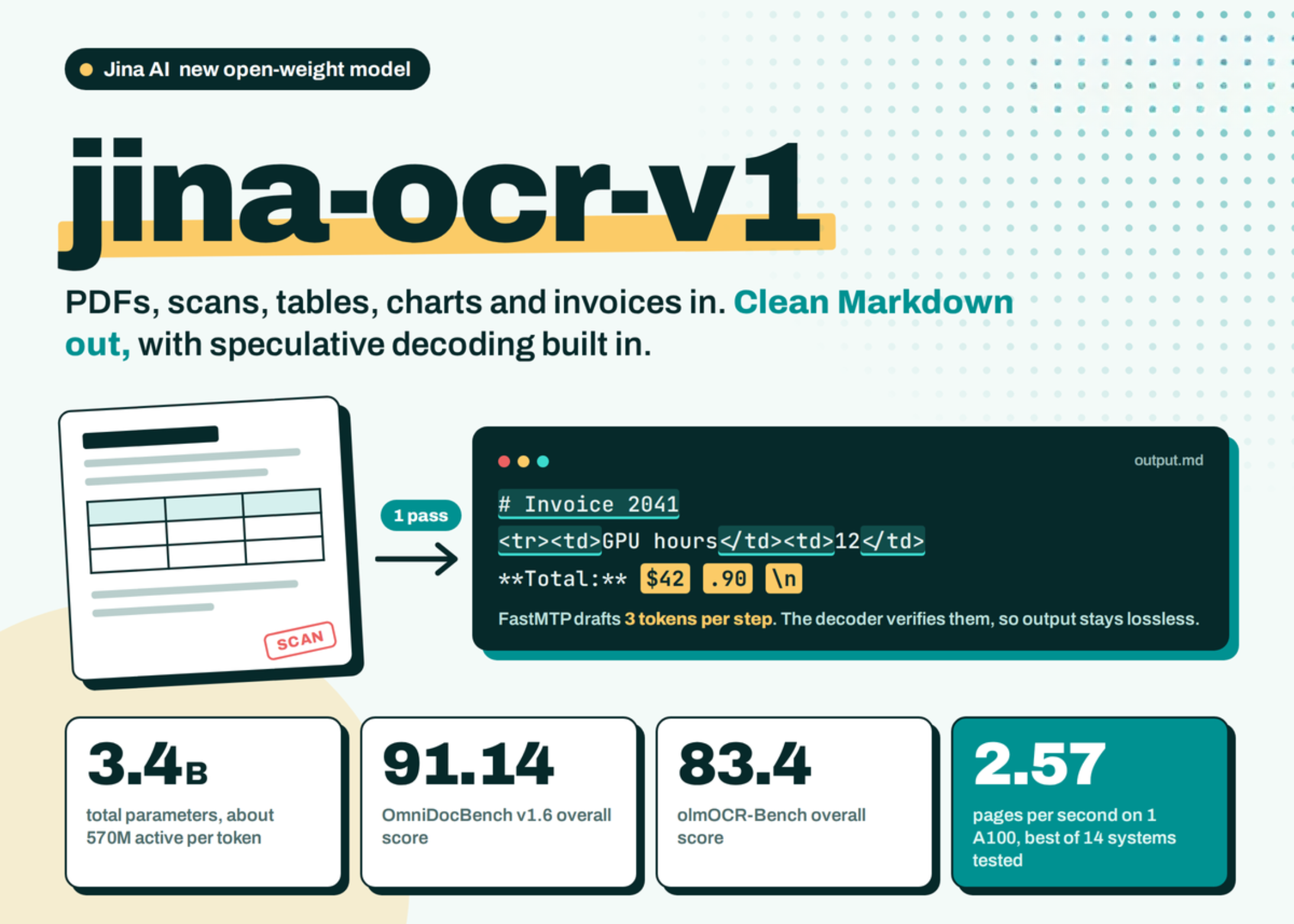
Jina AI, part of Elastic, has released jina-ocr-v1, an end-to-end visual document parser. It takes PDFs, scans, tables, charts or invoices and returns clean Markdown in 1 pass. The model has 3.4B total parameters, with about 570M decoder parameters active per token. A speculative decoding head ships inside the checkpoint. Jina AI built it to serve on low-budget GPUs such as the NVIDIA L4. The technical report lists 91.14 on OmniDocBench v1.6 and 83.4 on olmOCR-Bench. Is it deployable? Yes, f
Get smart on it
Jina AI released jina-ocr-v1, a document parser model that converts PDFs, scans, tables, charts, and invoices into formatted Markdown text in a single pass. The model contains 3.4 billion total parameters with about 570 million active per token and includes a built-in speculative decoding feature designed to run efficiently on lower-cost GPUs. The model scores 91.14 on OmniDocBench v1.6 and 83.4 on olmOCR-Bench, achieving the highest throughput of 2.57 pages per second when measured against 14 other systems. The open weights are available under a CC BY-NC 4.0 license, which permits research and non-commercial use but requires contacting Jina AI for commercial deployment.
Related news
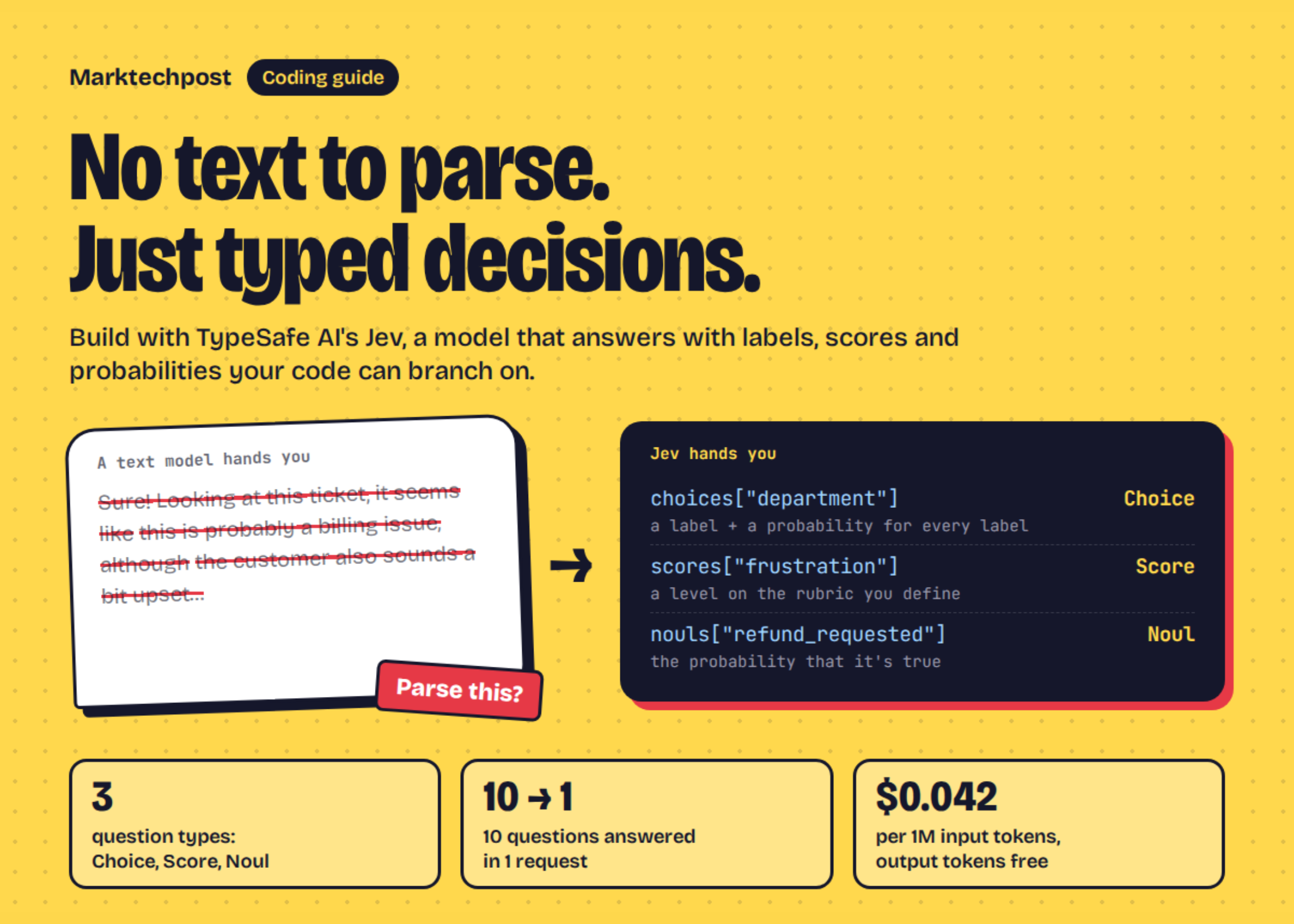
A Coding Guide to TypeSafe AI Jev: Typed Decisions, Calibrated Confidence, and Speculative Fan-Out with a System One Model
In this tutorial, we work with Jev, TypeSafe AI’s first System One model, which does not generate text at all: we send it a piece of program state and a set of typed questions, and it returns choices, scores, and yes/no probabilities that our code can branch on directly. We install the official Python SDK, make a first call that uses all three question primitives at once, and look at how the shape of the state changes what the model can know. We then recompute the published confidence sta
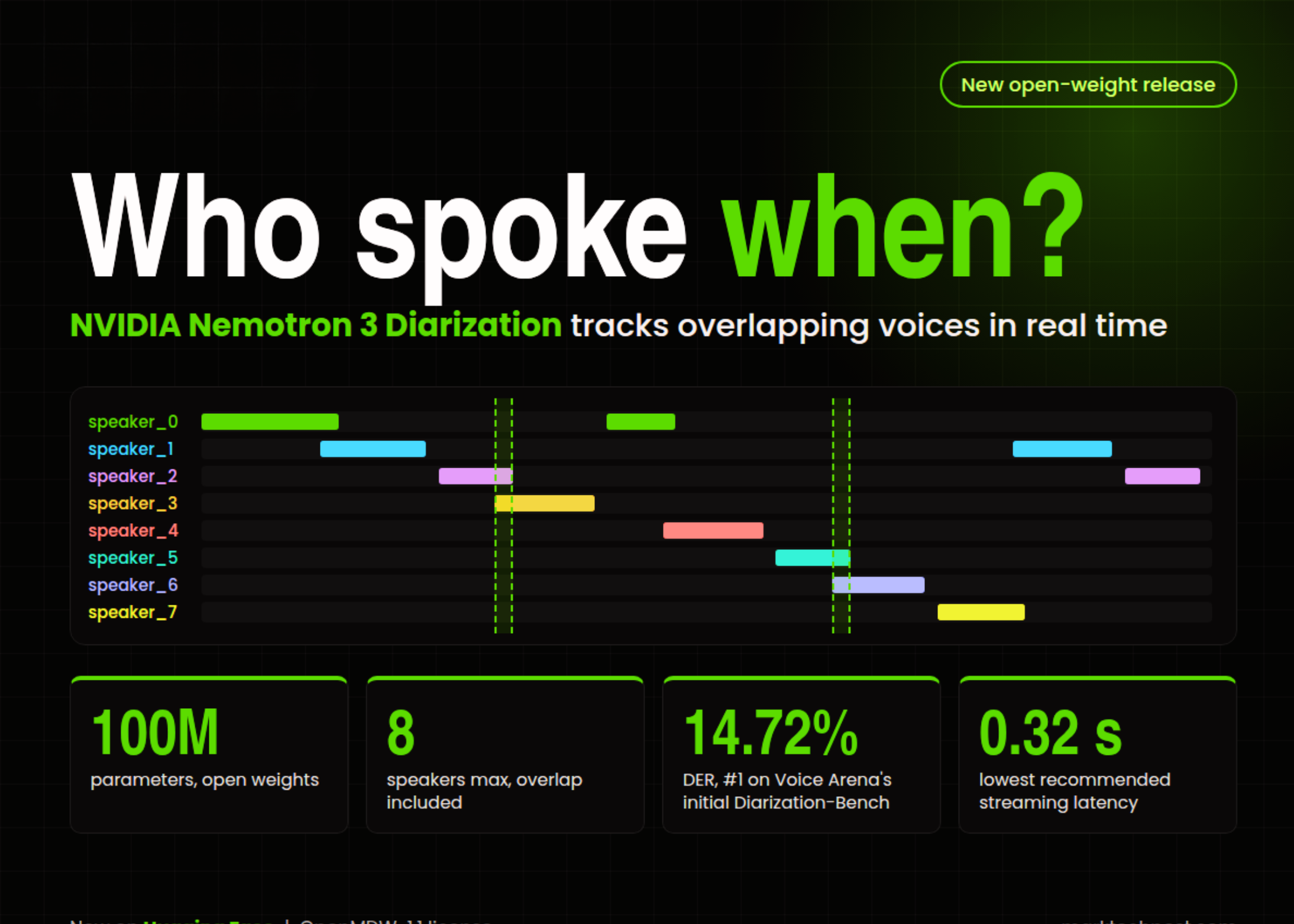
NVIDIA Releases Nemotron 3 Diarization: A 100M-Parameter Open-Weight Model That Tracks 8 Speakers in Real Time
NVIDIA has released Nemotron 3 Diarization, an open-weight speaker diarization model on Hugging Face. It answers one question about any conversation: who spoke when. The 100M-parameter model tracks up to 8 speakers, including when voices overlap. One checkpoint handles both offline recordings and real-time streaming. Is it deployable? Yes. The weights are released under the OpenMDW License 1.1, which permits commercial use. It runs on Linux through NVIDIA NeMo, using Ampere, Ada Lovelace, Ho