How GPT-5.6 fuses frontier intelligence with frontier efficiency
GPT-5.6 improves AI efficiency across models, inference, and agentic workflows, helping deliver more useful intelligence per dollar.
Make your prediction
Will GPT-5.6 appear in the top 10 on the LMArena leaderboard by August 14, 2026?
Resolves by Aug 14, 2026
Your prediction
50% · 50/50 coin flip
NOYES
Get smart on it
OpenAI designed the GPT-5.6 model family to balance capability with cost, offering different versions at various price points and performance levels. The company achieved greater efficiency through optimizations across three areas: the models themselves (trained to accomplish more work per token), the inference system (how models generate outputs through techniques like load balancing and caching), and the agentic harness (which manages how complex tasks are broken into steps). These efficiency improvements matter because as model demand grows faster than computing capacity, serving more output from existing hardware allows the benefits of AI to reach more users and businesses at lower cost.
Related news

Pokee AI Releases Pokee-Isaac 28B: A 10M-Token Context Agentic Model Built to Run Inside the Customer Boundary
Long-horizon agents accumulate context faster than they resolve tasks. Every tool output, observation, and intermediate reasoning step stays in the window, and the two capabilities that matter — holding that context and staying coherent across it — have so far been available almost exclusively from cloud endpoints. That excludes regulated industries, public-sector institutions, and on-device applications, where the data is not permitted to leave the boundary at all. Pokee AI released Pokee-Isaa
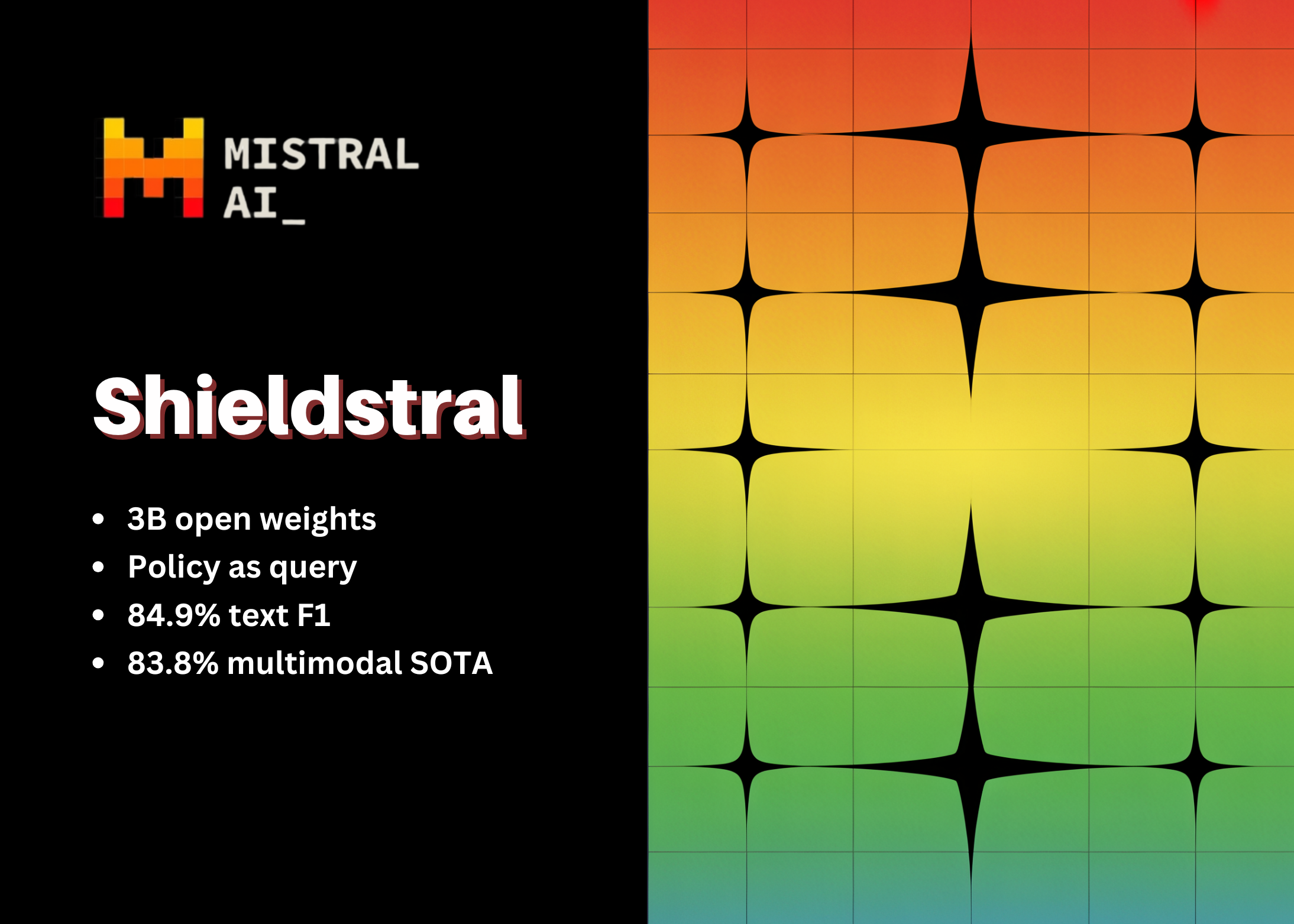
Mistral AI Releases Shieldstral 1.0 3B: An Open-Weights Policy-Adaptive Multimodal Safety Classifier Matching Models 7× Its Size
Mistral AI has released Shieldstral 1.0 3B, an open-weights, policy-adaptive multimodal safety classifier that treats content moderation as a single yes/no question rather than a fixed taxonomy of harm categories. Most guardrail models bake their category list into the weights, so re-targeting one to a new deployment context means retraining — and the same content can be acceptable on a cybersecurity research tool while being harmful on a mental-health platform. Shieldstral inverts that: operat