Google Research Introduces SensorFM: A Wearable Health Foundation Model Pretrained on One Trillion Minutes of Sensor Data
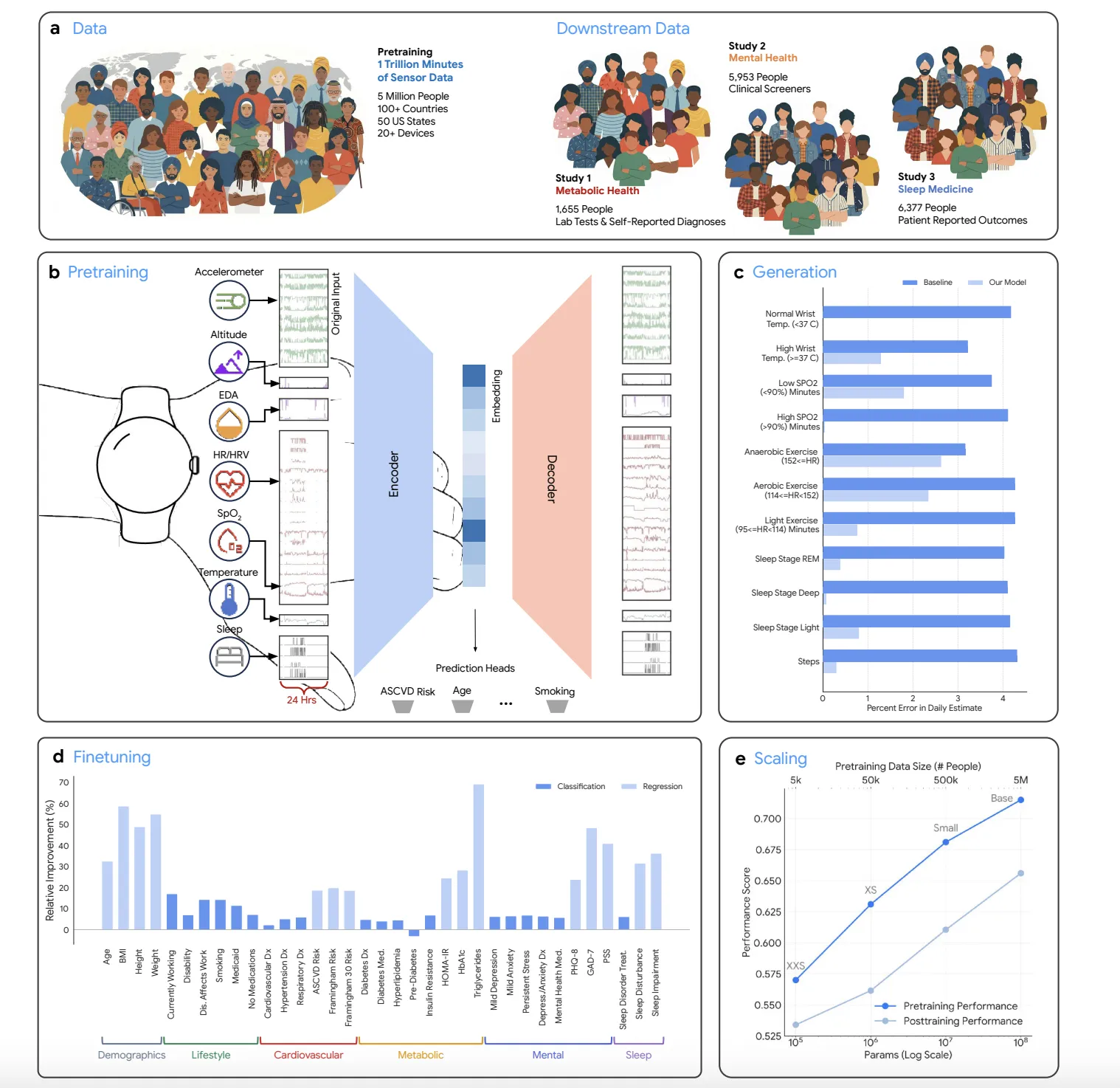
Most wearable health models are built one outcome at a time. That approach breaks down at thirty-five endpoints. Labels are expensive and retrospective annotation is infeasible. Google Research introduced SensorFM, a foundation model for wearable health pre-trained on more than 1 trillion minutes of sensor data from 5 million people. https://arxiv.org/pdf/2605.22759 What is SensorFM? SensorFM is a Large Sensor foundation Model for wearable time-series representation learning. It ing
Get smart on it
A foundation model for wearable health was pretrained on over one trillion minutes of sensor data collected from millions of people across multiple countries and device types. Traditional wearable health models are built separately for each specific health outcome, but this approach becomes impractical when dealing with many different prediction tasks. The new model demonstrates that scaling both the model size and training data proportionally improves performance across 35 different health prediction tasks, including cardiovascular, metabolic, mental health, sleep, and lifestyle indicators. The model handles missing sensor data more effectively than conventional methods by learning to reconstruct gaps that occur during normal device use, and its learned representations can be adapted to new health predictions with minimal additional training.
Related news
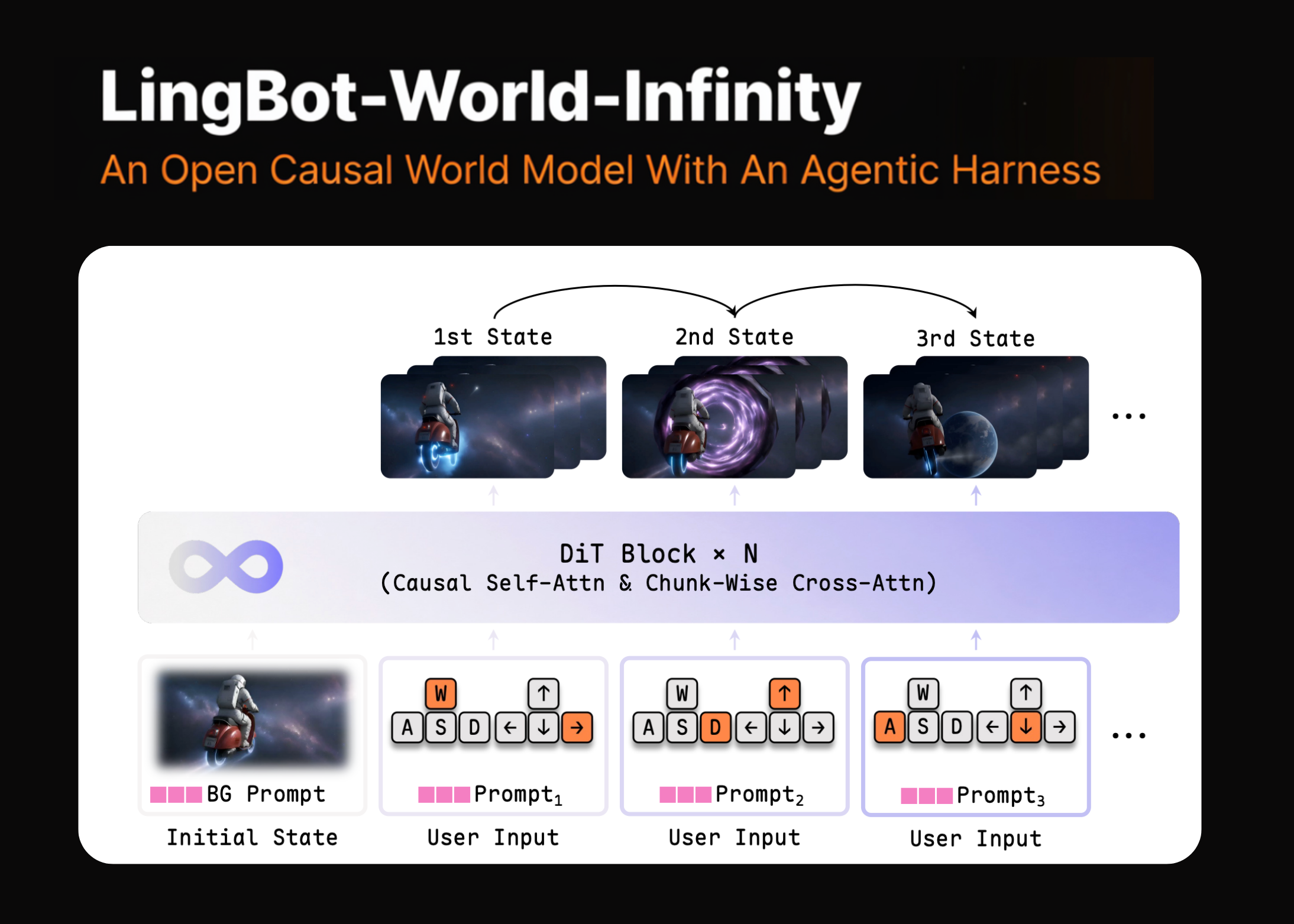
Meet LingBot-World-Infinity: An Open Causal World Model With An Agentic Harness
Robbyant, Ant Group’s embodied-intelligence unit, has released LingBot-World-Infinity (LingBot-World 2.0). It is a causal video generation model that behaves as an interactive world simulator. It is how the team attacks two failure modes: long-horizon drift and interactive latency. What is LingBot-World-Infinity? An interactive world model generates video frame by frame, conditioned on a stream of user actions. Each state depends only on past frames and current input. The research t

OpenAI says GPT 5.6 is the ‘preferred model’ for Microsoft Copilot 365 amid breakup chatter
OpenAI's new family of models will continue to power Microsoft's suite of workplace and productivity apps.