
Google Research Introduces ME-POIs: A Mobility-Informed Framework that Adds “How a Place Is Used” to Text-Based POI Embeddings
A team from Google Research and USC has released Mobility-Embedded POIs (ME-POIs), a framework that folds aggregate human movement into text-based place embeddings. The premise is that language models describe what a place is, but not how it is used. Two coffee shops can share a category, an address block, and a text vector, while one runs commuter turnover and the other holds customers for ninety minutes. ME-POIs encodes each visit as a contextualized vector, then uses contrastive learning to
Make your prediction
Will Google Research publish the ME-POIs framework code or dataset on Hugging Face or GitHub by September 30, 2026?
Resolves by Sep 30, 2026
Your prediction
50% · 50/50 coin flip
NOYES
Get smart on it
A framework called ME-POIs adds information about how places are actually used to text-based descriptions of locations. Language models can describe what a place is through text, but they cannot capture how it functions in practice, such as whether a coffee shop serves commuters or hosts long-stay customers. The framework encodes individual visits as vectors using location, arrival time, and departure time data, then uses machine learning to create a summary vector for each place of interest that reflects its typical usage patterns. Testing on mobility data from two cities showed that adding ME-POIs improved performance on tasks like predicting visit intent and busyness levels, and a version trained only on movement patterns outperformed text-based embeddings on price-level classification.
Related news
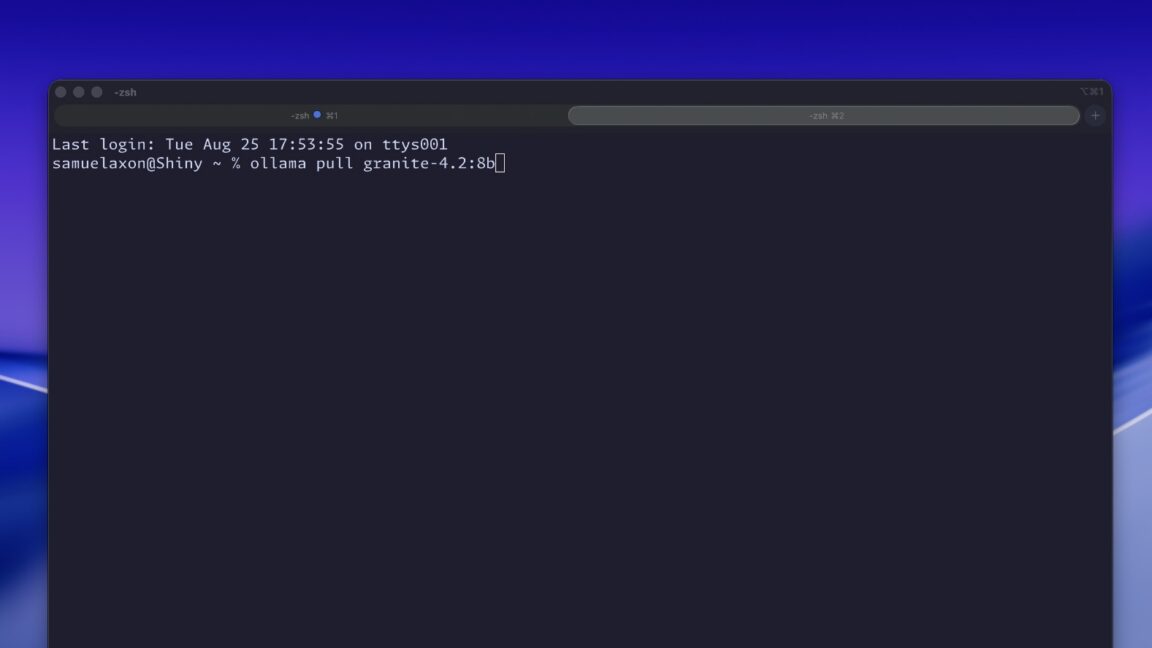
IBM's new Granite 4.2 models ride the wave of interest in local LLMs
IBM has rolled out the newest models in its family of open-weight large language models designed to be downloaded and self-hosted. The newly launched Granite 4.2 comes in 3B, 8B, and 30B parameter variants. Like previous versions, IBM is taking a decoder-only approach here. These new releases offer a 128,000-token context window natively. The 8B and 30B variants (not the 3B one) also go through an agentic reinforcement learning block; they were trained for expanded capabilities like using the t
IBM Releases Granite 4.2: Bringing Native Reasoning and Agentic RL to Open Enterprise Models
IBM has released Granite 4.2, a family of open reasoning language models in 3B, 8B, and 30B parameter sizes. Unlike earlier Granite releases, which were instruction-following assistants, Granite 4.2 is built around explicit reasoning. Every model can emit a chain of thought before answering, and every model exposes a thinking / non-thinking switch plus a low-effort mode that spends a short reasoning budget on easy questions. The models are decoder-only dense transformers, pre-trained from scrat