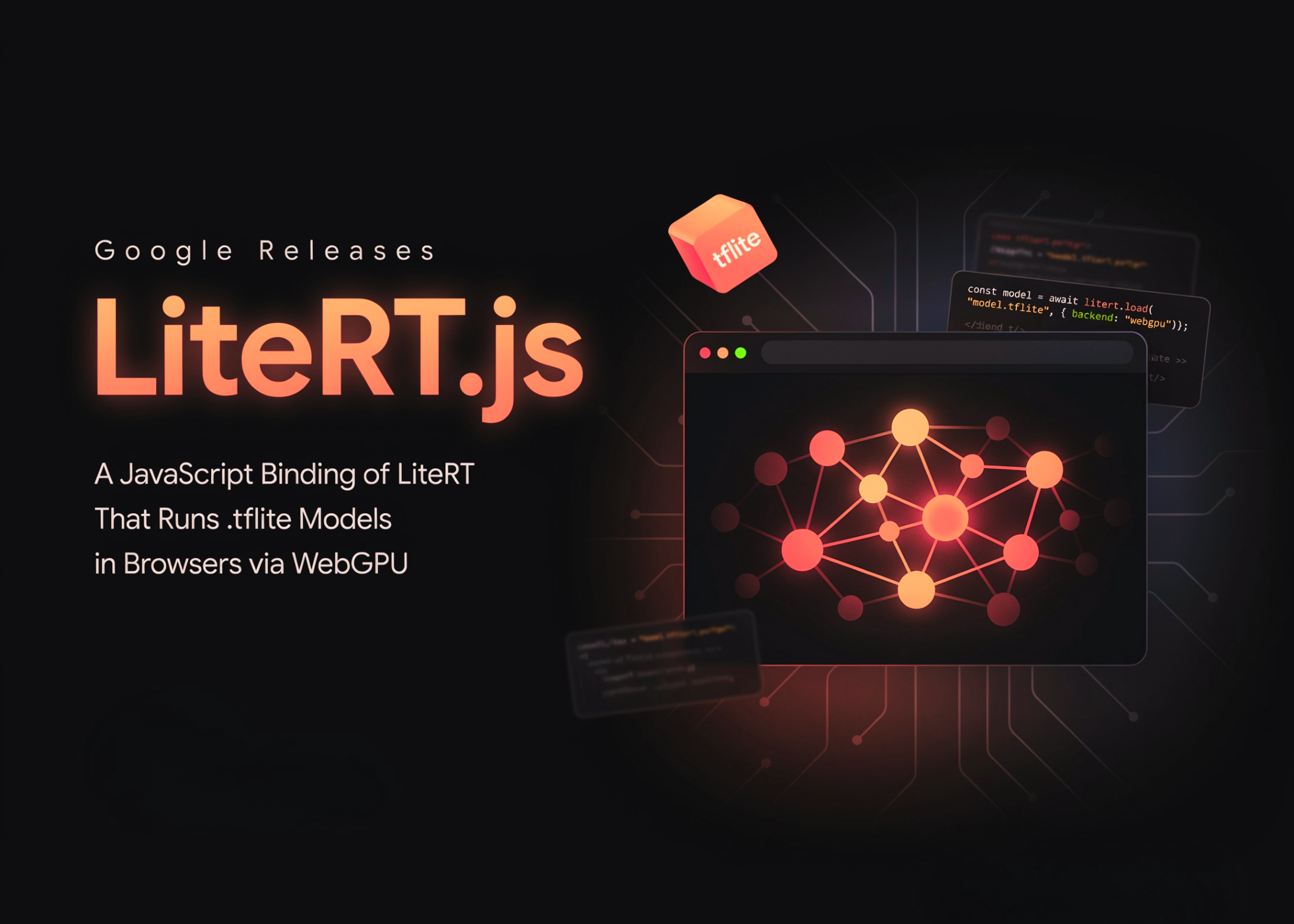
Google Releases LiteRT.js: A JavaScript Binding of LiteRT That Runs .tflite Models in Browsers via WebGPU
Google released LiteRT.js, a JavaScript binding of LiteRT. LiteRT is Google’s on-device inference library, previously called TensorFlow Lite. LiteRT.js runs .tflite models directly inside the browser. Because inference stays local, Google cites enhanced user privacy, zero server costs, and ultra-low latency. What is LiteRT.js? It is not a new model format. Rather, Google compiled its existing native runtime to WebAssembly and exposed it to JavaScript. Earlier web AI solutions,
Get smart on it
Google released LiteRT.js, a JavaScript binding that lets artificial intelligence models run directly inside web browsers using the same model files used on mobile and desktop devices. Because the inference stays local on the user's device rather than sending data to servers, this approach offers enhanced privacy, zero server costs, and low latency. The tool compiles Google's existing native runtime to WebAssembly and supports three different processing backends: CPU through an optimized library, GPU through WebGPU, and experimental neural processing units through the WebNN API. Performance testing showed LiteRT.js runs up to 3 times faster than other web-based AI runtimes for standard computer vision and audio tasks, with GPU or NPU acceleration delivering 5 to 60 times speedup for demanding real-time work.
Related news
NVIDIA AI Releases Nemotron 3 Embed: An Open Embedding Collection Whose 8B Checkpoint Ranks #1 on RTEB
Embedding models decide which passages an agent ever sees. NVIDIA released Nemotron 3 Embed model to work on that layer. It targets production-scale RAG, agentic retrieval, code retrieval, and agent memory. What is Nemotron 3 Embed? The model collection includes three open checkpoints. Nemotron-3-Embed-8B-BF16 is the accuracy-first option. Nemotron-3-Embed-1B-BF16 carries the same design into a smaller footprint. Nemotron-3-Embed-1B-NVFP4 is the Blackwell-optimized 4-bit path. All thre
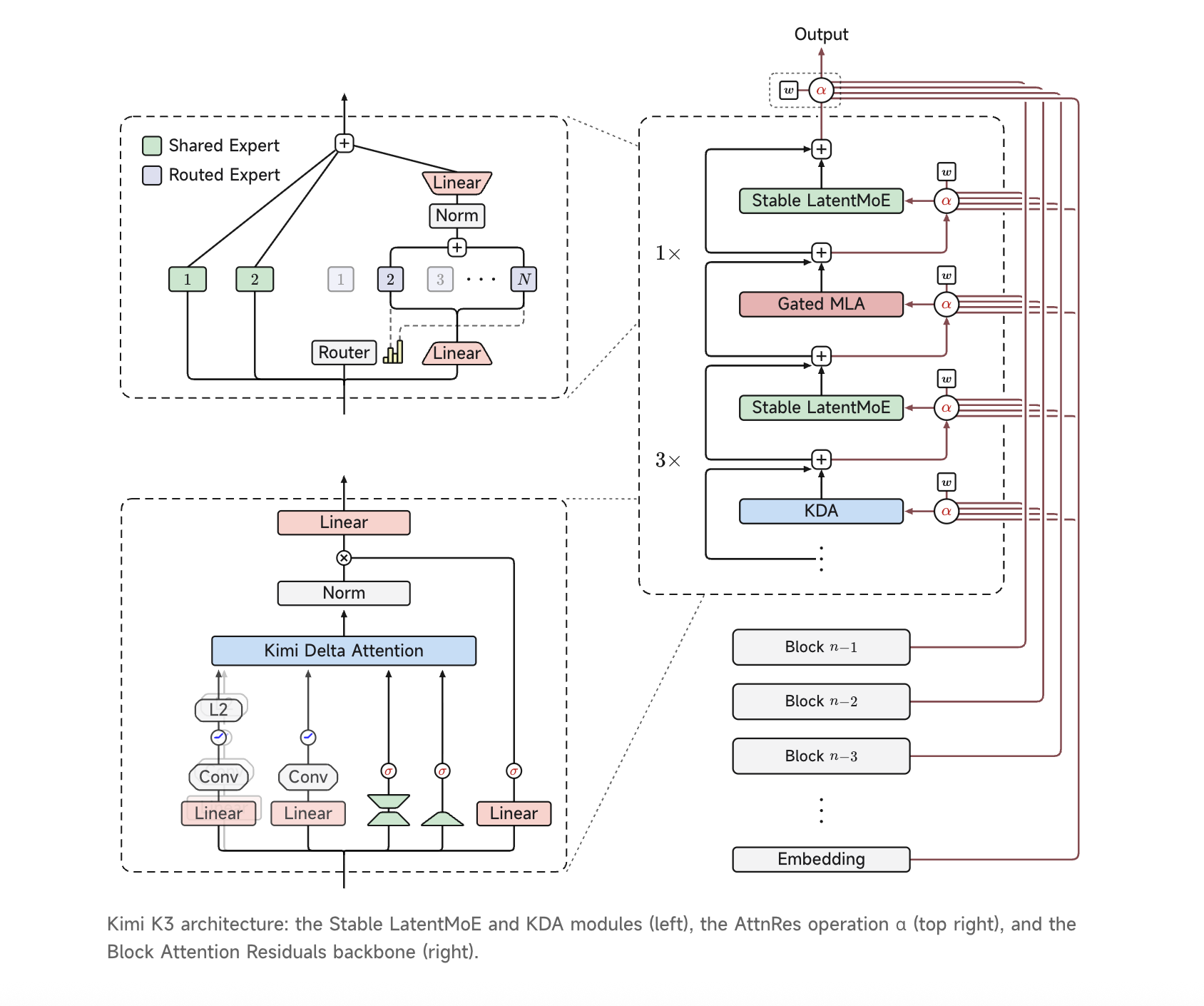
Moonshot AI Releases Kimi K3: A 2.8 Trillion Parameter Open MoE Model With Kimi Delta Attention and 1M Context
Moonshot AI just released Kimi K3. It is a 2.8-trillion-parameter model with native vision and a 1-million-token context window. Moonshot calls it the world’s first open 3T-class model. What is Kimi K3? Kimi K3 is a sparse Mixture-of-Experts (MoE) model built on two architectural updates. Those are Kimi Delta Attention (KDA) and Attention Residuals (AttnRes). Both change how information flows across sequence length and model depth. K3 targets long-horizon coding, knowledge work, an