Google AI Releases TimesFM-3: A 330M Parameter Zero-Shot Foundation Model For Multivariate Time Series Forecasting
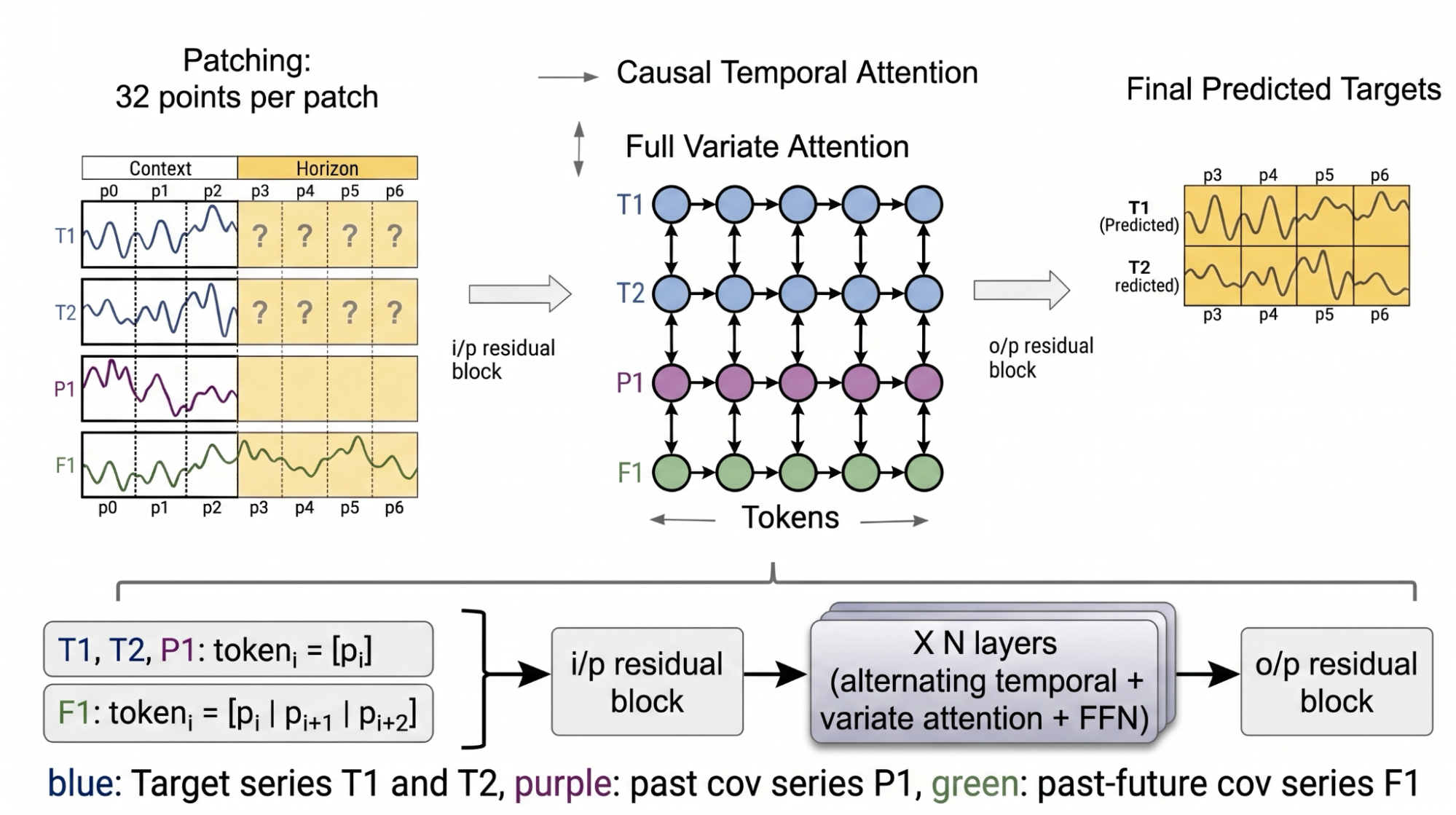
Google Research has released TimesFM-3, a 330 million parameter time series foundation model that forecasts multiple related series in a single forward pass. Every TimesFM checkpoint through 2.5 was univariate: one series, its own history, nothing else. TimesFM-3 is pretrained natively for multivariate forecasting on more than 1 trillion time points, and accepts multiple targets, past covariates, and past-future covariates with no task-specific fine-tuning. It takes the top average rank among p
Make your prediction
Will TimesFM-3 rank first on a public time series forecasting leaderboard by October 1, 2026?
Resolves by Oct 1, 2026
Your prediction
50% · 50/50 coin flip
NOYES
Get smart on it
Google Research released TimesFM-3, a foundation model with 330 million parameters designed to forecast multiple related time series simultaneously, addressing a limitation of earlier versions that could only forecast one series at a time. Previous TimesFM versions were univariate, meaning they forecasted single series from their own history alone, but most real-world forecasting problems involve multiple interconnected factors, such as ice cream sales being influenced by related product sales, foot traffic, weather, promotions, and holidays. TimesFM-3 was pretrained on more than 1 trillion time points and can handle multiple targets, past covariates (historical data), and past-future covariates (known future events) without requiring task-specific fine-tuning, producing the entire forecast in a single forward pass. The model ranks first among pretrained foundation models on three major benchmarks, though its weights are restricted to non-commercial and non-production use only.
Related news
Google DeepMind’s WeatherNext 3 Trains on Weather Station Observations to Deliver 5 km Global Forecasts, Refreshed Every Hour
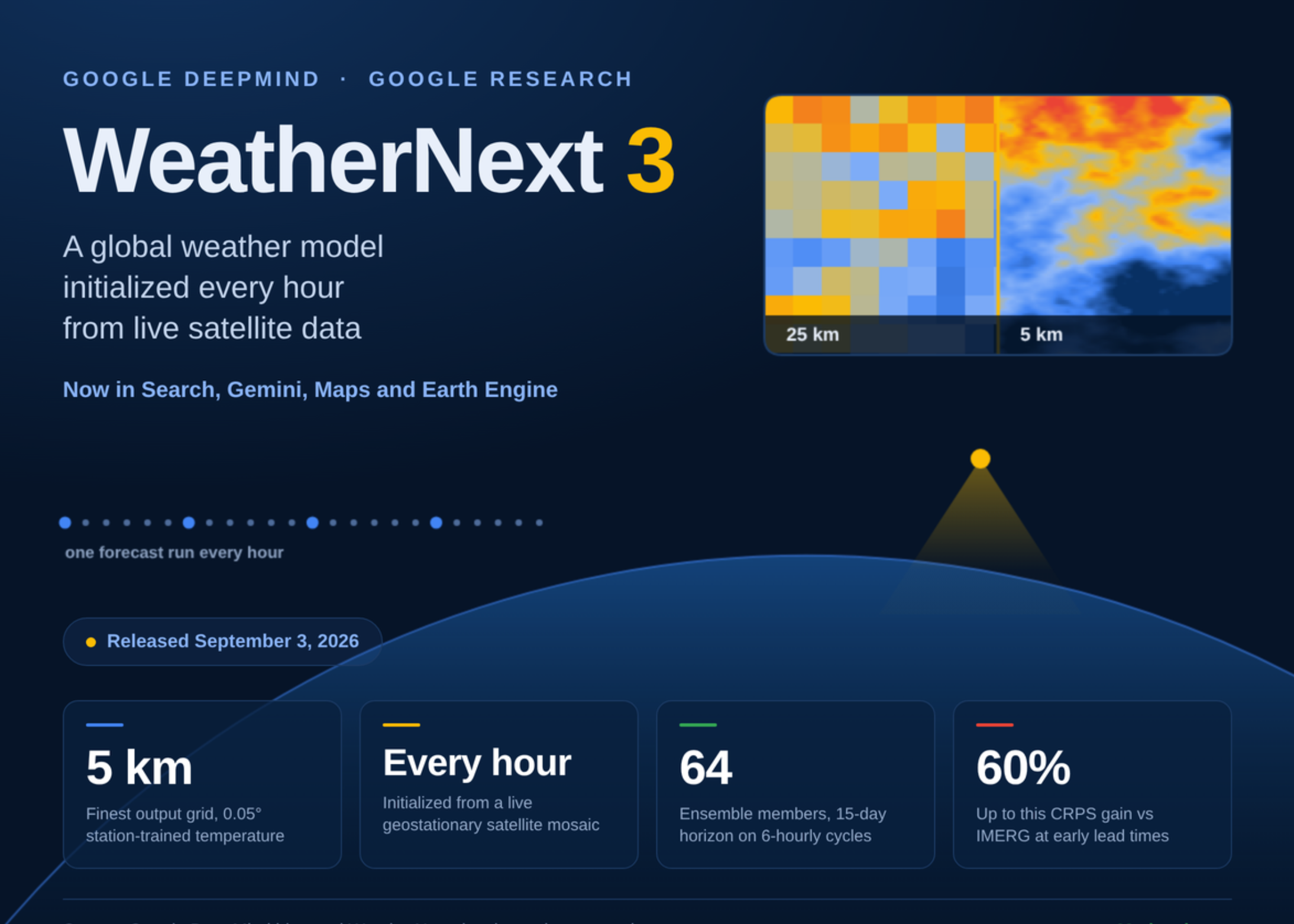
AI weather models have spent three years closing the gap with physics-based forecasting, but two problems stayed open: resolution too coarse for local terrain, and initialization tied to numerical weather prediction (NWP) analysis that arrives about six hours late. WeatherNext 3, released by Google DeepMind and Google Research, attacks both. It takes a live global geostationary satellite mosaic as a direct model input, re-initializes every hour, and emits forecasts down to 0.05° (~5 km) while t

OpenAI Releases GPT-6 Astra: A 1.05M-Context Computer-Use Model Gated Behind a ‘Critical’ Cyber Threshold
Today, OpenAI released GPT-6 Astra. The company calls it its most intelligent and aligned model, and positions it primarily as a computer-use system rather than a chat model. The pitch is that Astra operates software the way a person does, across browsers, spreadsheets, desktop applications and terminals, and finishes multi-step jobs instead of describing how to do them. Is it deployable? Partly, and not on your own hardware. Astra is a closed, hosted model with no released weights, so self