Get smart on it
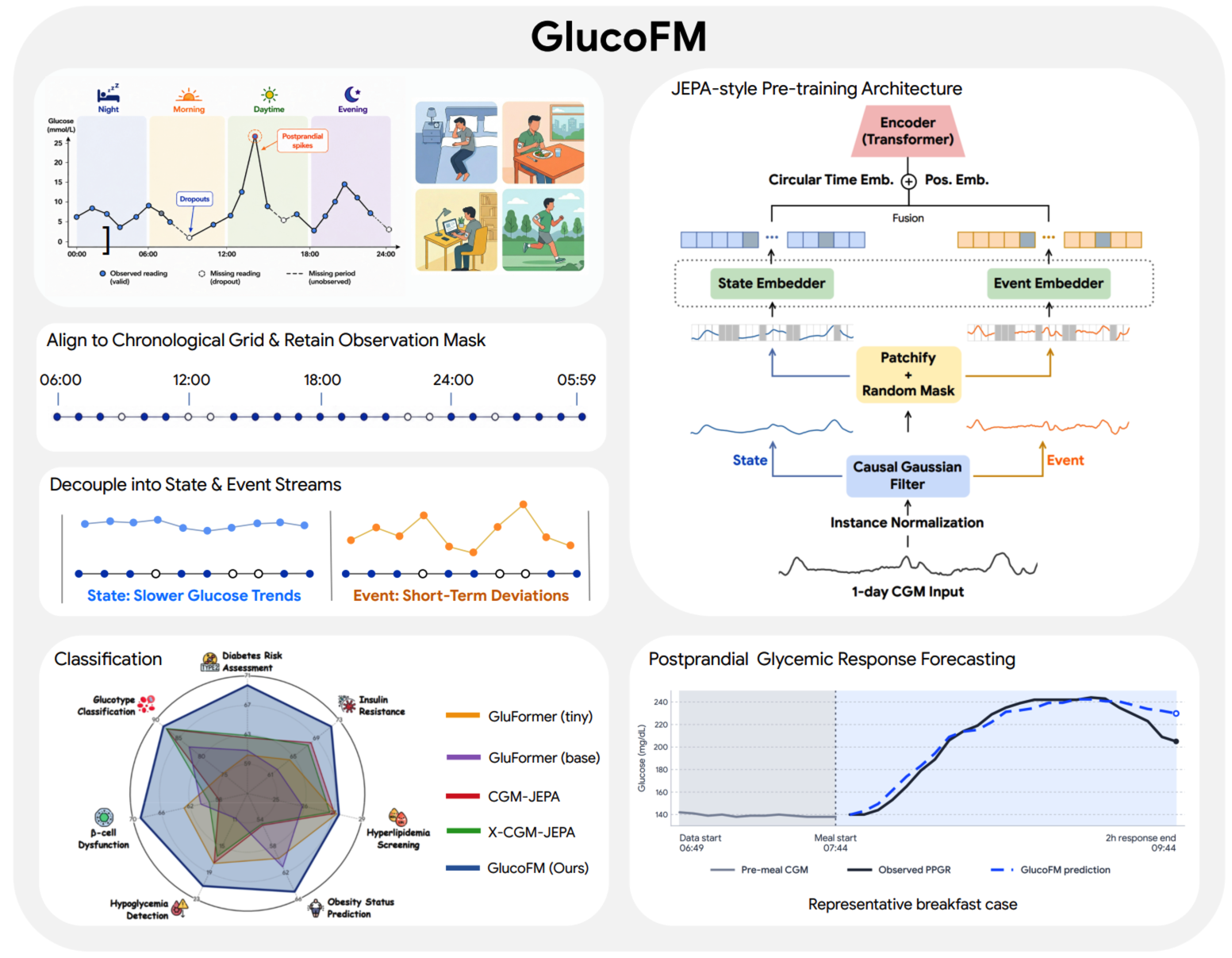
GlucoFM is a foundation model, a type of artificial intelligence system, designed to analyze continuous glucose monitoring data from sensors worn under the skin. The model uses a dual-stream approach that separately tracks slower glucose trends and short-term changes, which allows it to better understand glucose patterns than previous systems that treated all glucose data as a single stream. This matters because understanding glucose dynamics can help assess diabetes risk, insulin resistance, and other metabolic conditions, but high-quality labeled data needed to train such systems is sparse and costly to obtain. The model was pre-trained on over 100,000 hours of unlabeled glucose data and showed stronger performance than existing approaches across multiple prediction tasks and different patient cohorts.
Related news
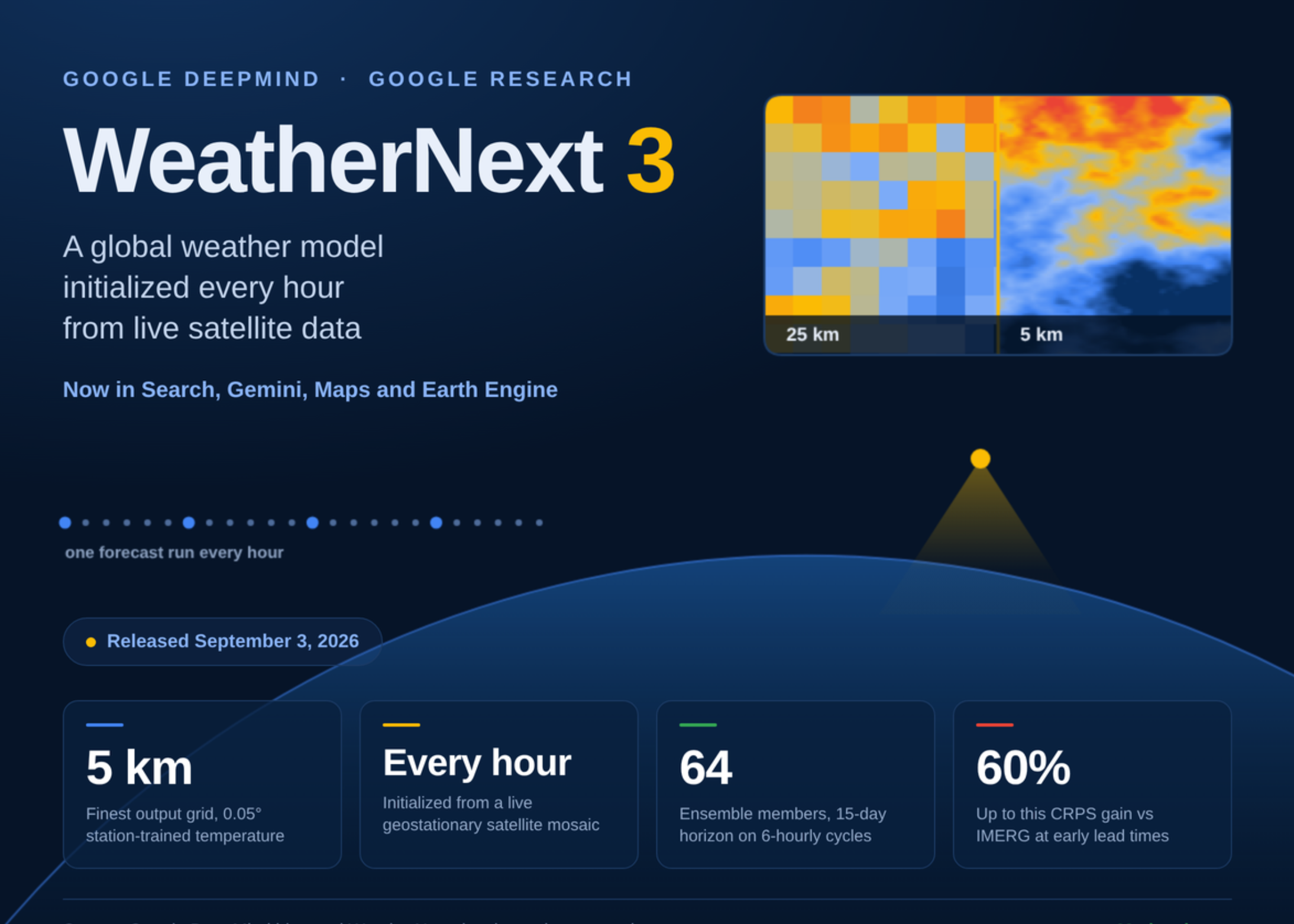
Google DeepMind’s WeatherNext 3 Trains on Weather Station Observations to Deliver 5 km Global Forecasts, Refreshed Every Hour
AI weather models have spent three years closing the gap with physics-based forecasting, but two problems stayed open: resolution too coarse for local terrain, and initialization tied to numerical weather prediction (NWP) analysis that arrives about six hours late. WeatherNext 3, released by Google DeepMind and Google Research, attacks both. It takes a live global geostationary satellite mosaic as a direct model input, re-initializes every hour, and emits forecasts down to 0.05° (~5 km) while t

OpenAI Releases GPT-6 Astra: A 1.05M-Context Computer-Use Model Gated Behind a ‘Critical’ Cyber Threshold
Today, OpenAI released GPT-6 Astra. The company calls it its most intelligent and aligned model, and positions it primarily as a computer-use system rather than a chat model. The pitch is that Astra operates software the way a person does, across browsers, spreadsheets, desktop applications and terminals, and finishes multi-step jobs instead of describing how to do them. Is it deployable? Partly, and not on your own hardware. Astra is a closed, hosted model with no released weights, so self