Generalist AI Releases GEN-1.5: A Robot Foundation Model That Learns New Tasks From One 3–12 Second Demo
Generalist AI has released GEN-1.5, a robot foundation model that learns a new physical task from a single demonstration. Drop 3–12 seconds of sensorimotor data into its 30-second context window, and the robot performs the task. No gradient updates, no fine-tuning, no task-specific programming. Across 10 diverse manipulation tasks, this one-shot in-context prompting averaged 59% success (±10% std. dev.) straight from the pretrained model. Ten gradient steps on five minutes of data per task rais
Make your prediction
Will GEN-1.5 achieve above 70% one-shot success on manipulation tasks in a published follow-up evaluation by November 30, 2026?
Resolves by Nov 30, 2026
Your prediction
50% · 50/50 coin flip
NOYES
Get smart on it
A robot foundation model learns new physical tasks from brief video demonstrations of 3 to 12 seconds by inserting them into its context window, then performing the task without any additional training or programming. The model achieved 59 percent success on diverse manipulation tasks using only the demonstration itself, and 83 percent success after minimal fine-tuning on five minutes of data. The capability to learn from single examples emerged naturally from eight months of pretraining on physical interaction data rather than being explicitly designed in, similar to how one-shot learning emerged in large language models. This is currently a research project without public availability, weights, or a commercial product.
Related news
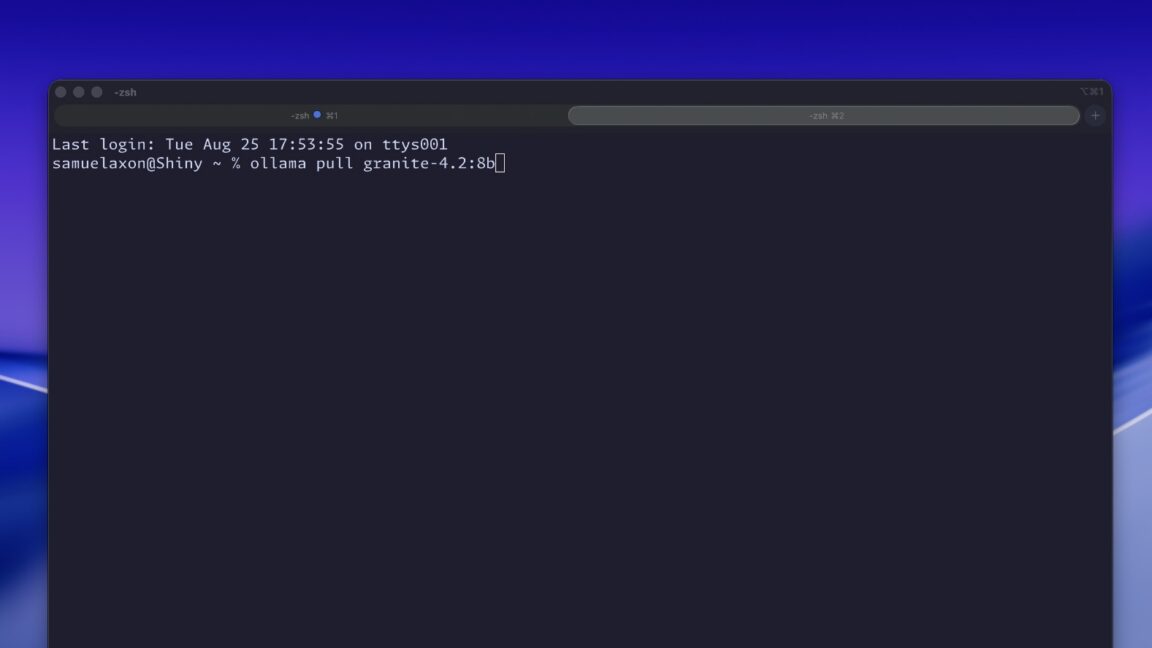
IBM's new Granite 4.2 models ride the wave of interest in local LLMs
IBM has rolled out the newest models in its family of open-weight large language models designed to be downloaded and self-hosted. The newly launched Granite 4.2 comes in 3B, 8B, and 30B parameter variants. Like previous versions, IBM is taking a decoder-only approach here. These new releases offer a 128,000-token context window natively. The 8B and 30B variants (not the 3B one) also go through an agentic reinforcement learning block; they were trained for expanded capabilities like using the t
IBM Releases Granite 4.2: Bringing Native Reasoning and Agentic RL to Open Enterprise Models
IBM has released Granite 4.2, a family of open reasoning language models in 3B, 8B, and 30B parameter sizes. Unlike earlier Granite releases, which were instruction-following assistants, Granite 4.2 is built around explicit reasoning. Every model can emit a chain of thought before answering, and every model exposes a thinking / non-thinking switch plus a low-effort mode that spends a short reasoning budget on easy questions. The models are decoder-only dense transformers, pre-trained from scrat