Flet 1.0 Released: Build Production Web, Desktop and Mobile Apps in Python Only
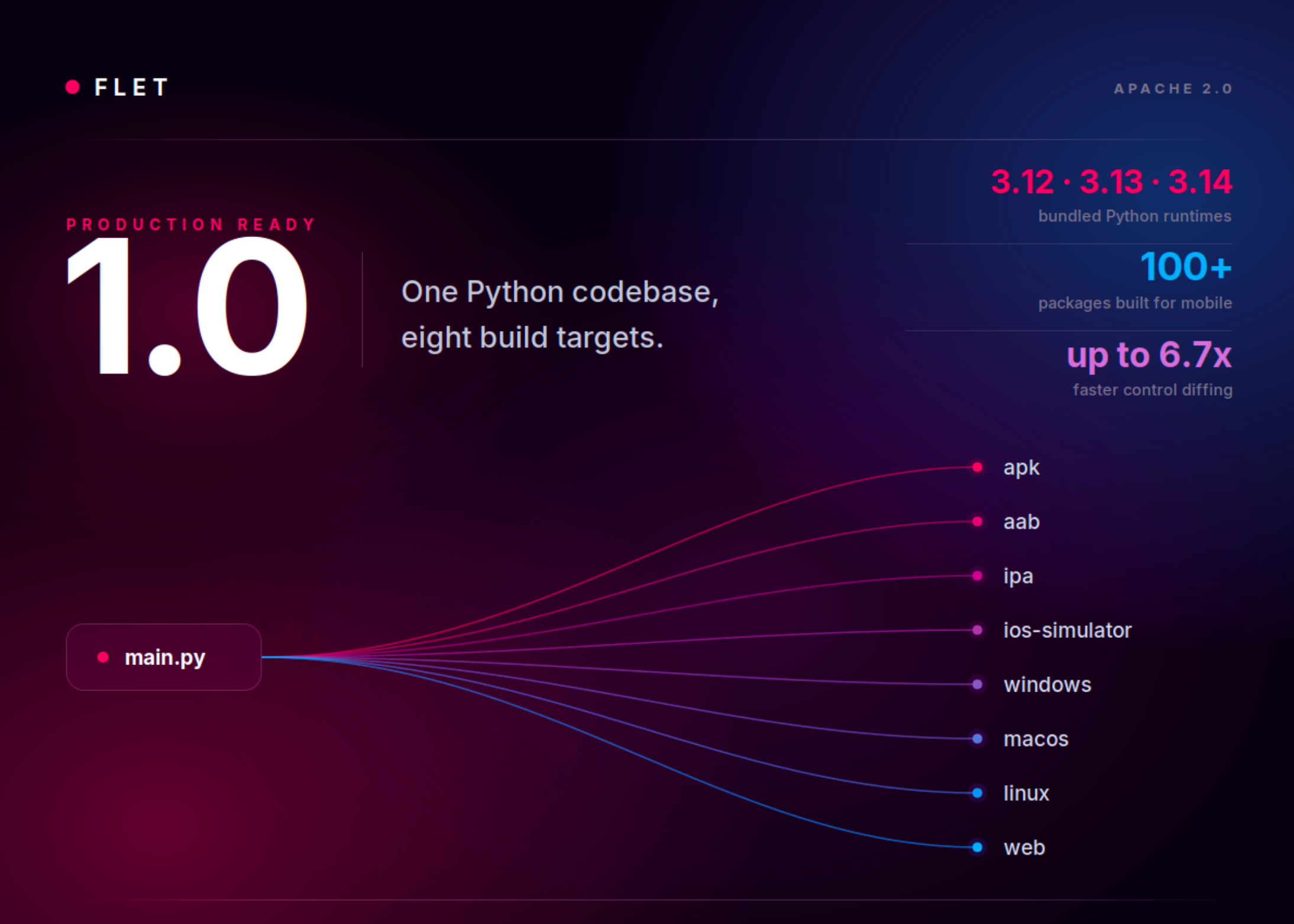
Flet is an open source Python framework that renders its UI with Flutter. You write Python, and Flet draws Material and Cupertino widgets on iOS, Android, Windows, macOS, Linux and the browser. No Dart, Swift, Kotlin or JavaScript required. Last week, the Flet team released Flet 1.0 and declared it ready for building production apps. The release lands roughly four years after the project started. Is it deployable? Yes, today. Flet 1.0.0 is on PyPI under the Apache 2.0 license, requires Py
Get smart on it
Flet is an open source Python framework that allows developers to write applications in Python only while using a system called Flutter to display the user interface across multiple platforms including iOS, Android, Windows, macOS, Linux and web browsers. The framework's version 1.0 release was declared ready for production use, meaning it is now considered stable enough for real-world applications. The framework bundles Python with apps and includes performance improvements such as faster UI updates and direct communication between Python and the underlying system without requiring intermediate network connections. Developers can write tests and build applications for eight different targets using a single codebase, eliminating the need to learn separate programming languages like Dart, Swift, Kotlin or JavaScript.
Related news
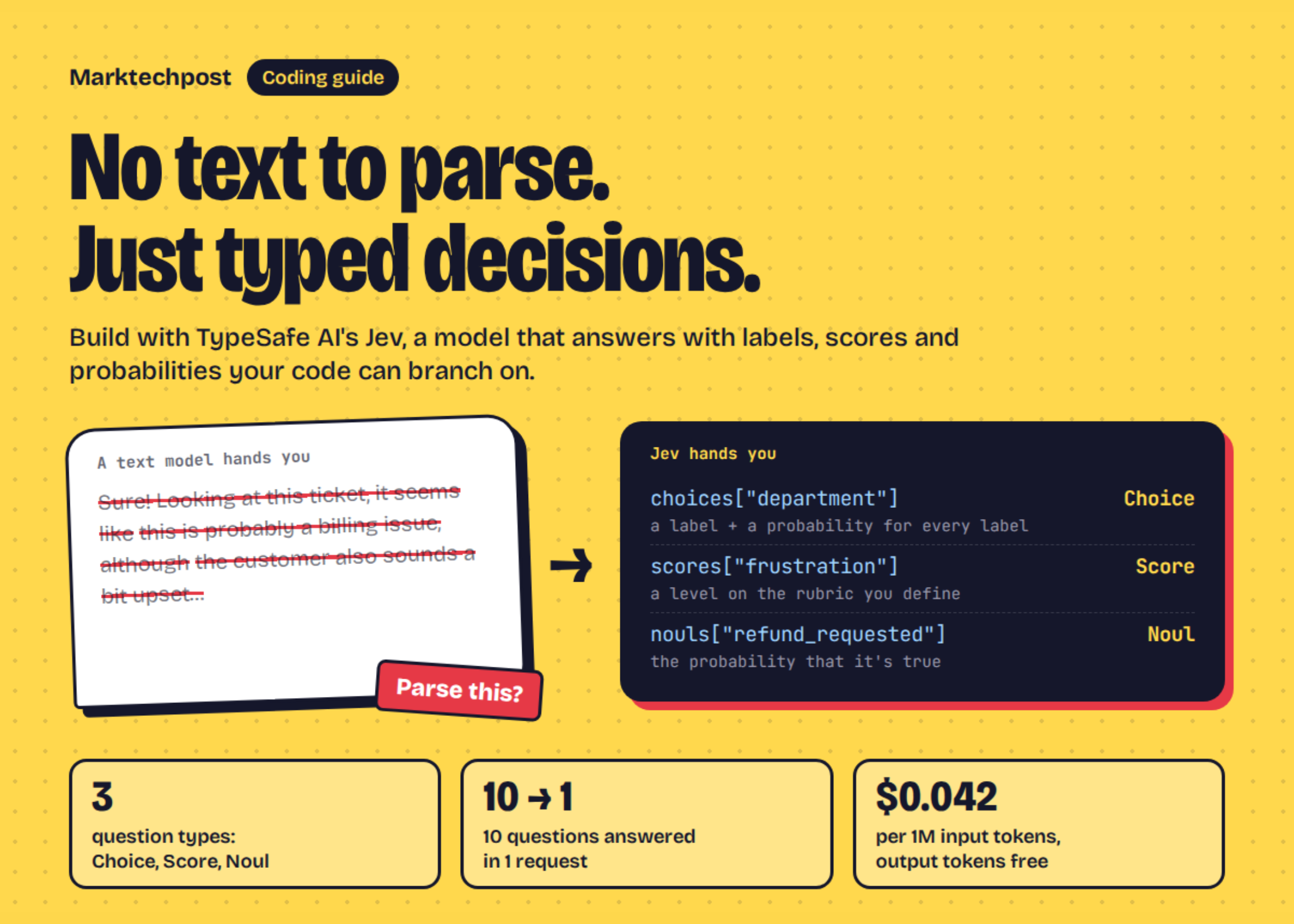
A Coding Guide to TypeSafe AI Jev: Typed Decisions, Calibrated Confidence, and Speculative Fan-Out with a System One Model
In this tutorial, we work with Jev, TypeSafe AI’s first System One model, which does not generate text at all: we send it a piece of program state and a set of typed questions, and it returns choices, scores, and yes/no probabilities that our code can branch on directly. We install the official Python SDK, make a first call that uses all three question primitives at once, and look at how the shape of the state changes what the model can know. We then recompute the published confidence sta
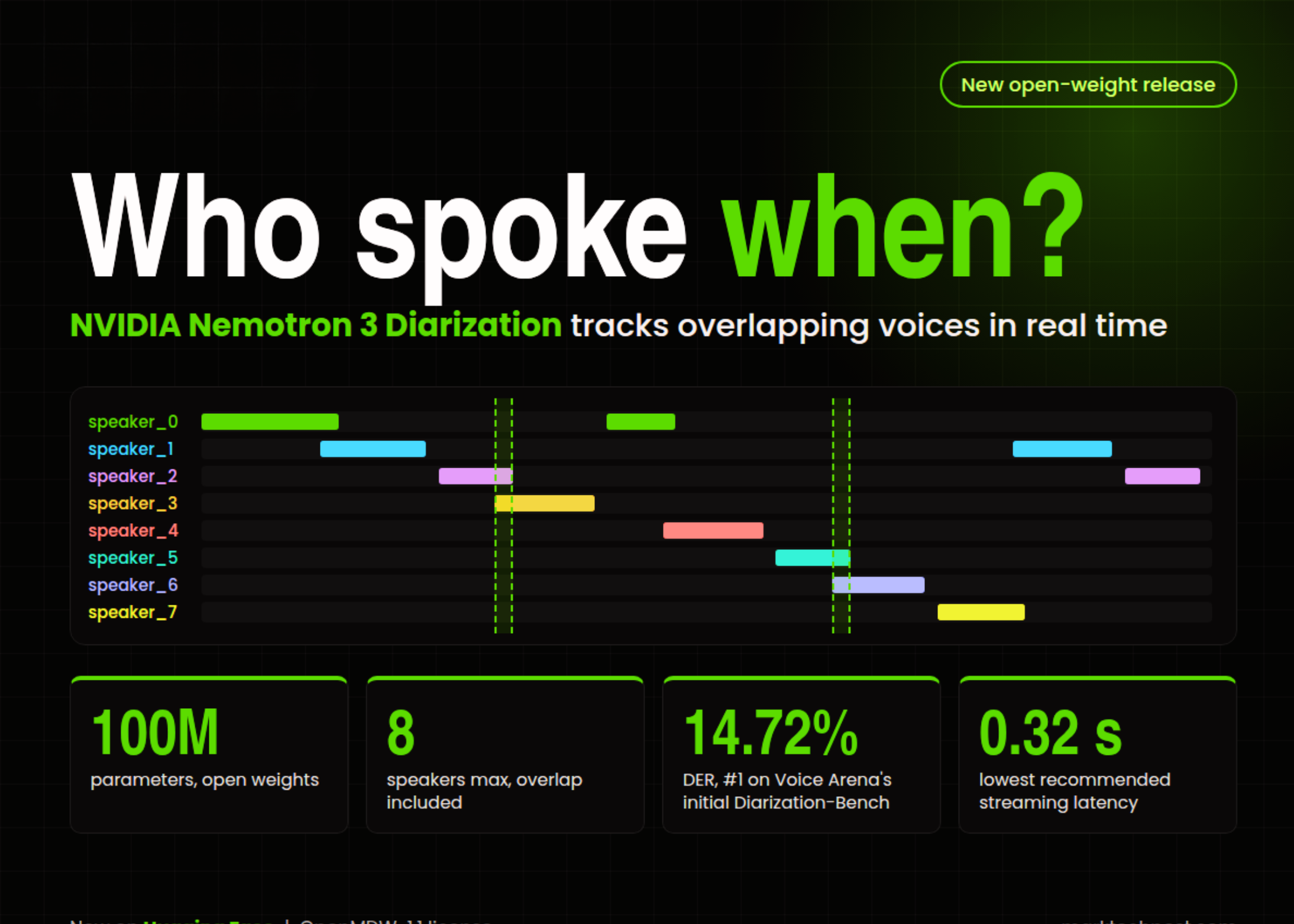
NVIDIA Releases Nemotron 3 Diarization: A 100M-Parameter Open-Weight Model That Tracks 8 Speakers in Real Time
NVIDIA has released Nemotron 3 Diarization, an open-weight speaker diarization model on Hugging Face. It answers one question about any conversation: who spoke when. The 100M-parameter model tracks up to 8 speakers, including when voices overlap. One checkpoint handles both offline recordings and real-time streaming. Is it deployable? Yes. The weights are released under the OpenMDW License 1.1, which permits commercial use. It runs on Linux through NVIDIA NeMo, using Ampere, Ada Lovelace, Ho