Cursor Open-Sources Mixture-of-Kittens (MoK): A Deterministic MoE Training Megakernel for GB300 NVL72 Racks
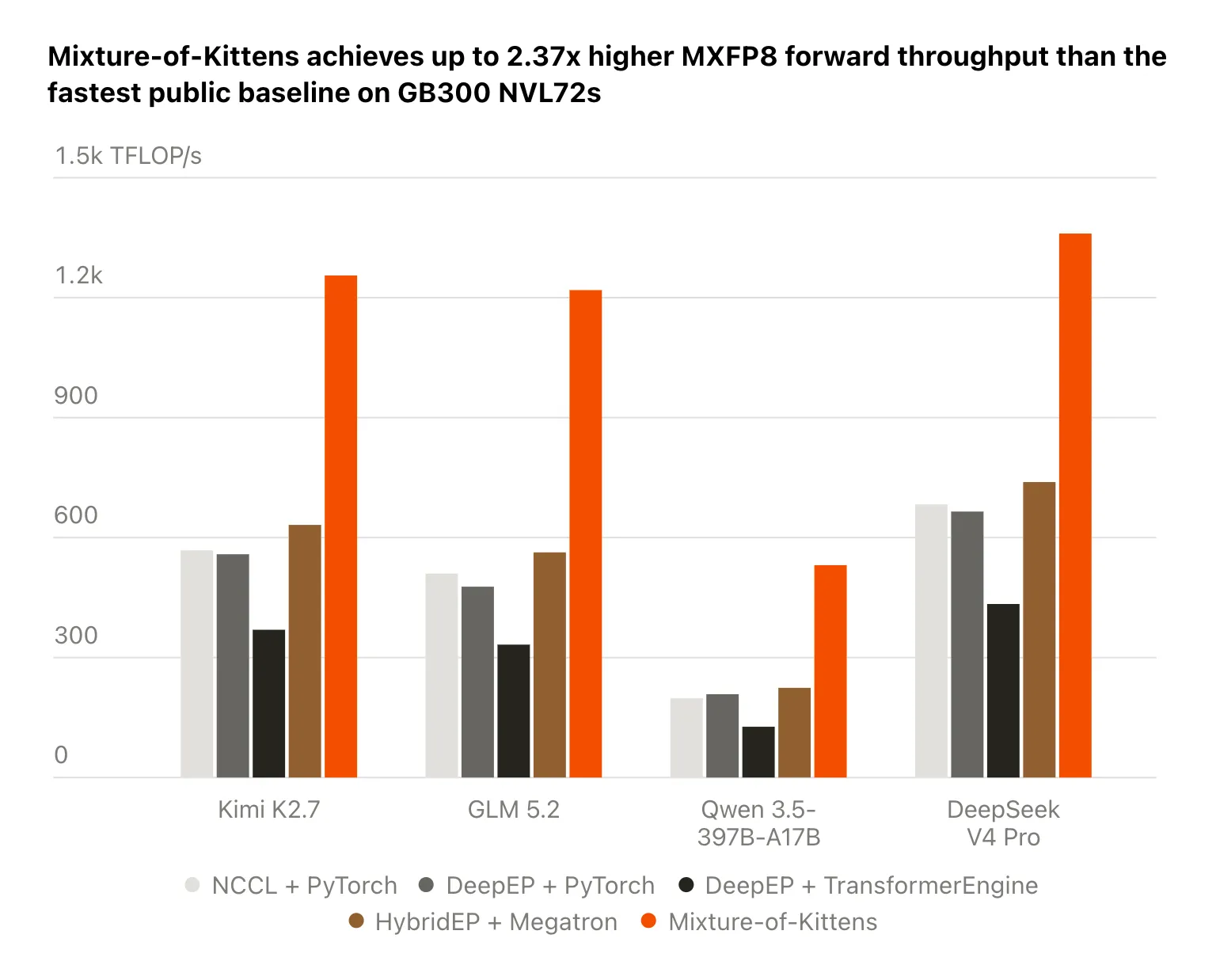
Cursor Research has open-sourced Mixture-of-Kittens (MoK), the mixture-of-experts training megakernel behind its Composer models. MoK fuses every MoE communication and computation step into a single deterministic kernel. Cursor team reports up to 2.37x higher throughput than the strongest public baseline. It already powers Composer training across tens of thousands of GPUs. Is it deployable Yes, but the hardware floor is high. MoK is on GitHub under Apache-2.0. It requires NVIDIA Blackwel
Get smart on it
Mixture-of-Kittens (MoK) is an open-source training system that combines all communication and computation steps for mixture-of-experts models into a single deterministic kernel, achieving up to 2.37x higher throughput than existing public alternatives. The system addresses a critical bottleneck where the MoE layer can consume more than half of end-to-end training time by using pull-based dispatch and a ring token buffer to minimize CPU-GPU synchronization. Deployment is limited to organizations with access to specific high-end hardware, namely NVIDIA Blackwell GPUs in NVL72 racks, making it practical only for frontier labs, funded startups, GPU cloud providers, and national computing centers. The technology is relevant for training large mixture-of-experts models and on-policy reinforcement learning applications.
Related news

Pokee AI Releases Pokee-Isaac 28B: A 10M-Token Context Agentic Model Built to Run Inside the Customer Boundary
Long-horizon agents accumulate context faster than they resolve tasks. Every tool output, observation, and intermediate reasoning step stays in the window, and the two capabilities that matter — holding that context and staying coherent across it — have so far been available almost exclusively from cloud endpoints. That excludes regulated industries, public-sector institutions, and on-device applications, where the data is not permitted to leave the boundary at all. Pokee AI released Pokee-Isaa
Mistral AI Releases Shieldstral 1.0 3B: An Open-Weights Policy-Adaptive Multimodal Safety Classifier Matching Models 7× Its Size
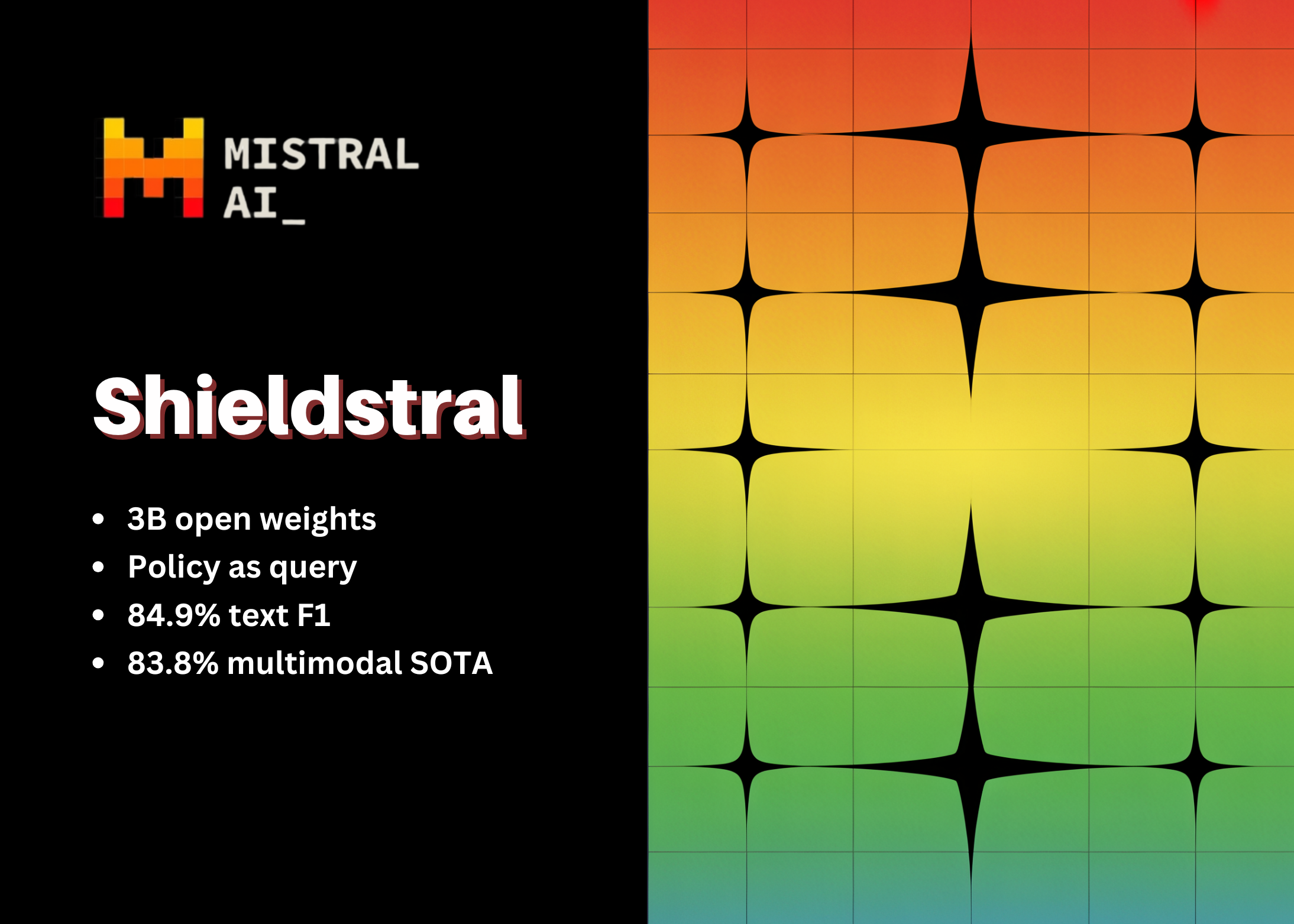
Mistral AI has released Shieldstral 1.0 3B, an open-weights, policy-adaptive multimodal safety classifier that treats content moderation as a single yes/no question rather than a fixed taxonomy of harm categories. Most guardrail models bake their category list into the weights, so re-targeting one to a new deployment context means retraining — and the same content can be acceptable on a cybersecurity research tool while being harmful on a mental-health platform. Shieldstral inverts that: operat