Cohere Releases Parse 5 (parse-v5.0): A 2.3B Vision Language Model That Turns Enterprise Documents Into Markdown
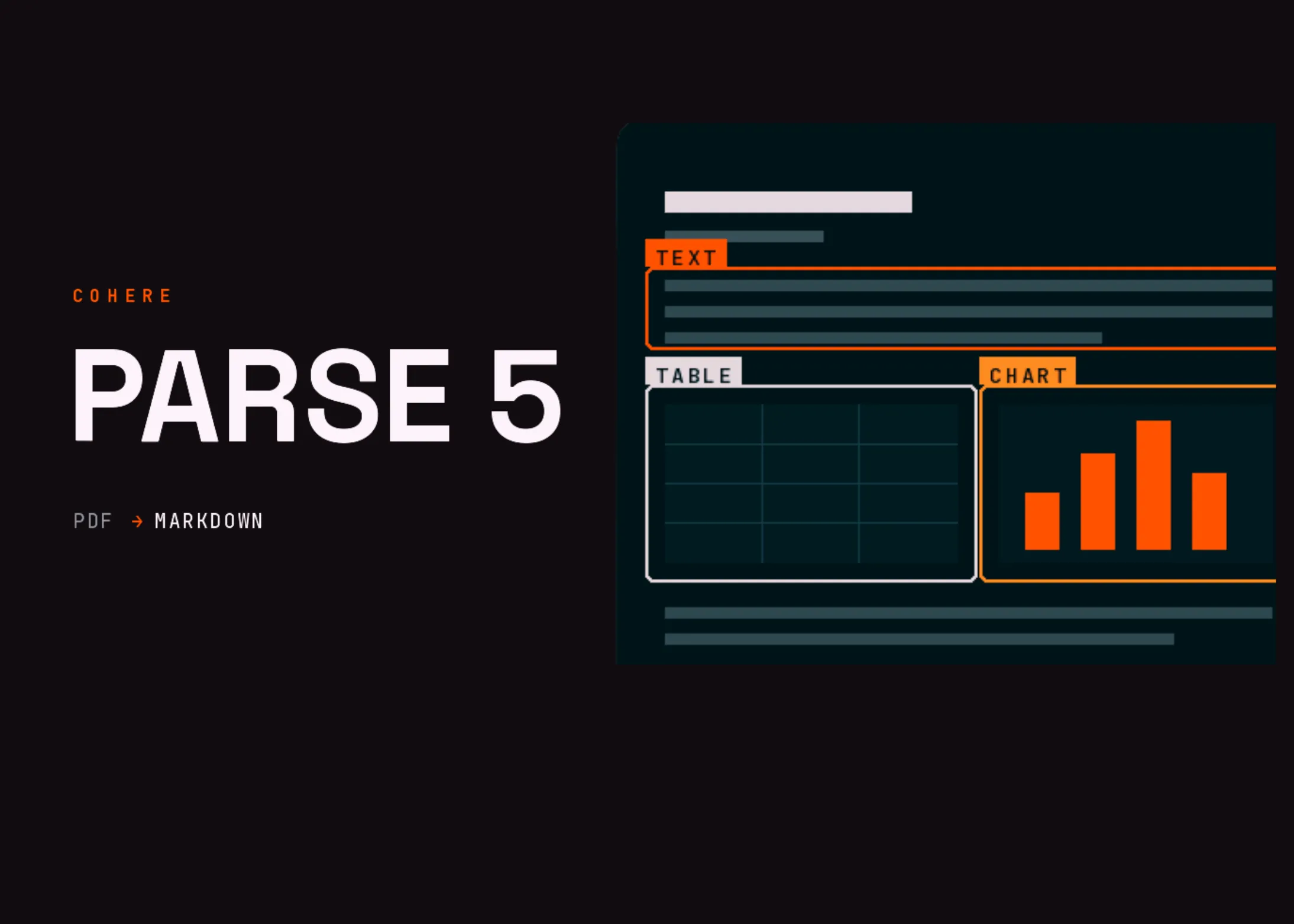
Cohere has released Parse (parse-v5.0), a document parsing model aimed at high-volume enterprise ingestion. It is a 2.3B-parameter vision language model with an 8,192-token context window and a ~4.6GB footprint, built on Cohere Labs’ North-Micro-Vision-Instruct architecture. Parse takes a PDF, PPT or JPEG page as a base64-encoded data URI and returns Markdown containing text in reading order, tables rendered as HTML, lists, form key-value pairs, image descriptions and bounding box coordin
How it resolved
Will Cohere's parse-v5.0 model page appear on Hugging Face by September 4, 2026?
VoidedDeadline Sep 4, 2026
This prediction was voided because the outcome could not be settled from the source.
Get smart on it
Cohere released Parse, a vision language model that converts enterprise documents like PDFs and images into formatted Markdown text with tables, lists, and coordinate information. The model operates without a separate optical character recognition stage, handling text extraction and layout analysis in a single pass across nine languages. Parse is available through multiple deployment options including a metered API priced at $1.50 per 1,000 pages and dedicated cloud instances, with the company positioning it as a cost-effective solution for document-heavy industries like financial services, insurance, and healthcare. The reported performance score of 79.2 on ParseBench measures three of five benchmark dimensions, with the company noting that dedicated capacity becomes more economical than per-page API pricing above approximately 1.67 million pages per month.
Related news
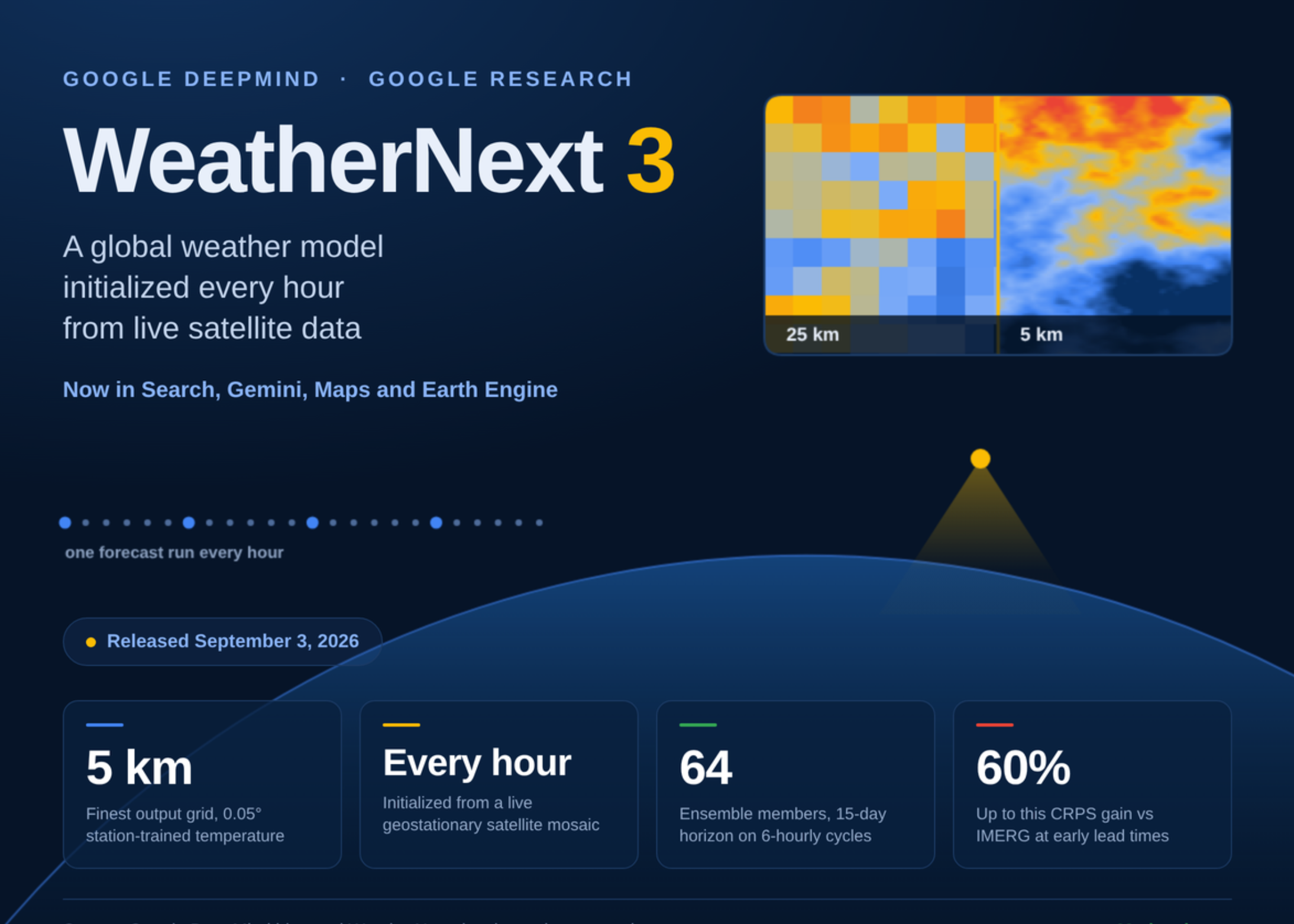
Google DeepMind’s WeatherNext 3 Trains on Weather Station Observations to Deliver 5 km Global Forecasts, Refreshed Every Hour
AI weather models have spent three years closing the gap with physics-based forecasting, but two problems stayed open: resolution too coarse for local terrain, and initialization tied to numerical weather prediction (NWP) analysis that arrives about six hours late. WeatherNext 3, released by Google DeepMind and Google Research, attacks both. It takes a live global geostationary satellite mosaic as a direct model input, re-initializes every hour, and emits forecasts down to 0.05° (~5 km) while t

OpenAI Releases GPT-6 Astra: A 1.05M-Context Computer-Use Model Gated Behind a ‘Critical’ Cyber Threshold
Today, OpenAI released GPT-6 Astra. The company calls it its most intelligent and aligned model, and positions it primarily as a computer-use system rather than a chat model. The pitch is that Astra operates software the way a person does, across browsers, spreadsheets, desktop applications and terminals, and finishes multi-step jobs instead of describing how to do them. Is it deployable? Partly, and not on your own hardware. Astra is a closed, hosted model with no released weights, so self