Black Forest Labs Releases FLUX 3: A Multimodal Flow Model for Image, Video, Audio and Robot Action Prediction
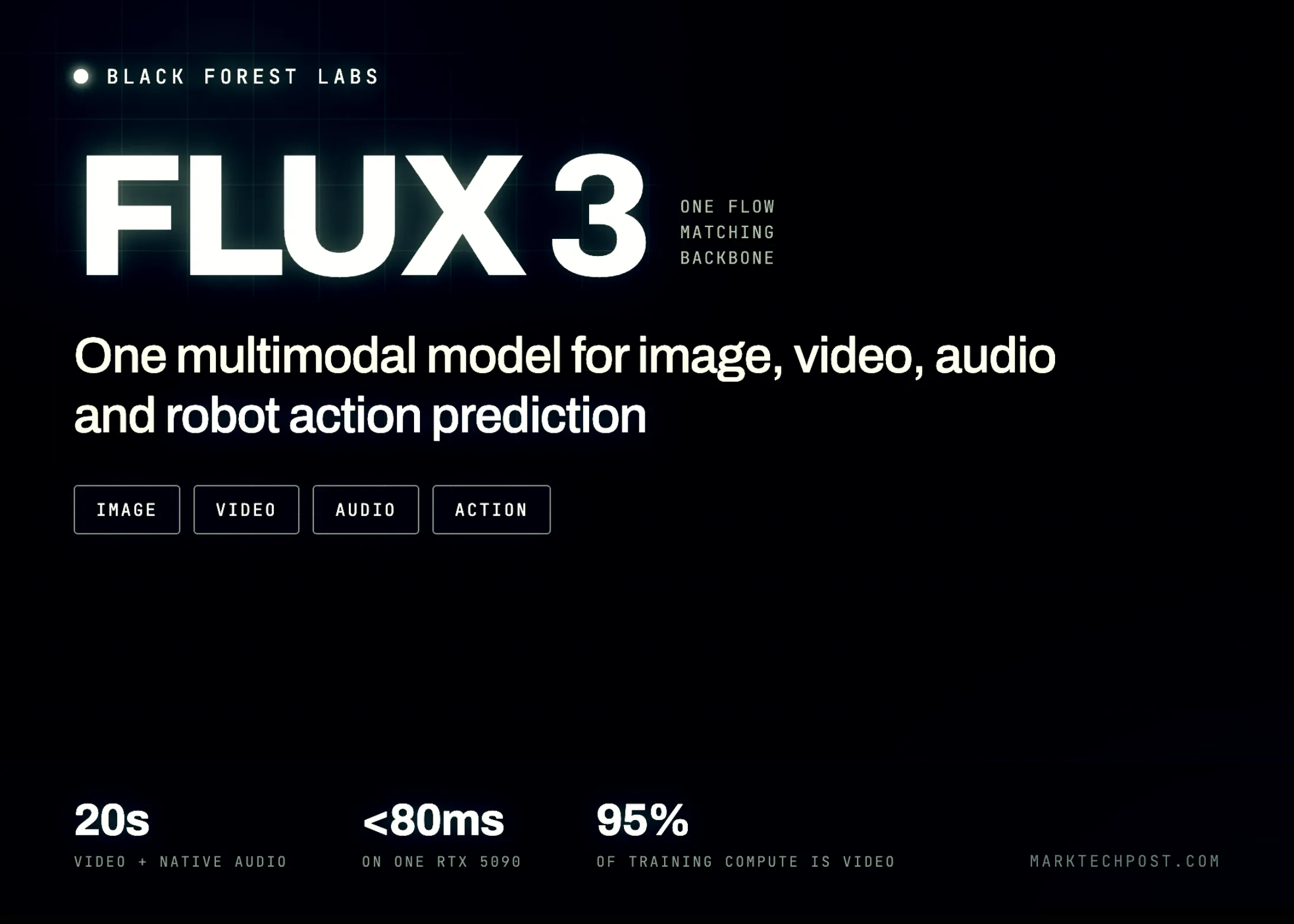
Black Forest Labs (BFL) has released FLUX 3, a multimodal foundation model that learns from images, videos and audio inside a single architecture. It is also the first FLUX model to ship video, audio and action prediction from one set of weights. The Black Forest Labs (BFL) research team argues that no single modality gives a complete description of the world. Images capture spatial structure at one instant. Video restores time and exposes physical dynamics. Audio reveals causal relationship
Get smart on it
A multimodal foundation model has been released that learns from images, videos, and audio within a single architecture, treating each modality as a different view of the same underlying reality. The model can generate video clips up to 20 seconds long with native audio, and also predict robot actions, all from one set of weights. The significance lies in the approach of training all modalities together so their mutual constraints supervise each other, meaning sound must match physical impacts and motion must obey mass. The model was built by scaling up compute and data resources using a method called Self-Flow, which combines flow matching with self-supervised feature reconstruction.
Related news

Pokee AI Releases Pokee-Isaac 28B: A 10M-Token Context Agentic Model Built to Run Inside the Customer Boundary
Long-horizon agents accumulate context faster than they resolve tasks. Every tool output, observation, and intermediate reasoning step stays in the window, and the two capabilities that matter — holding that context and staying coherent across it — have so far been available almost exclusively from cloud endpoints. That excludes regulated industries, public-sector institutions, and on-device applications, where the data is not permitted to leave the boundary at all. Pokee AI released Pokee-Isaa
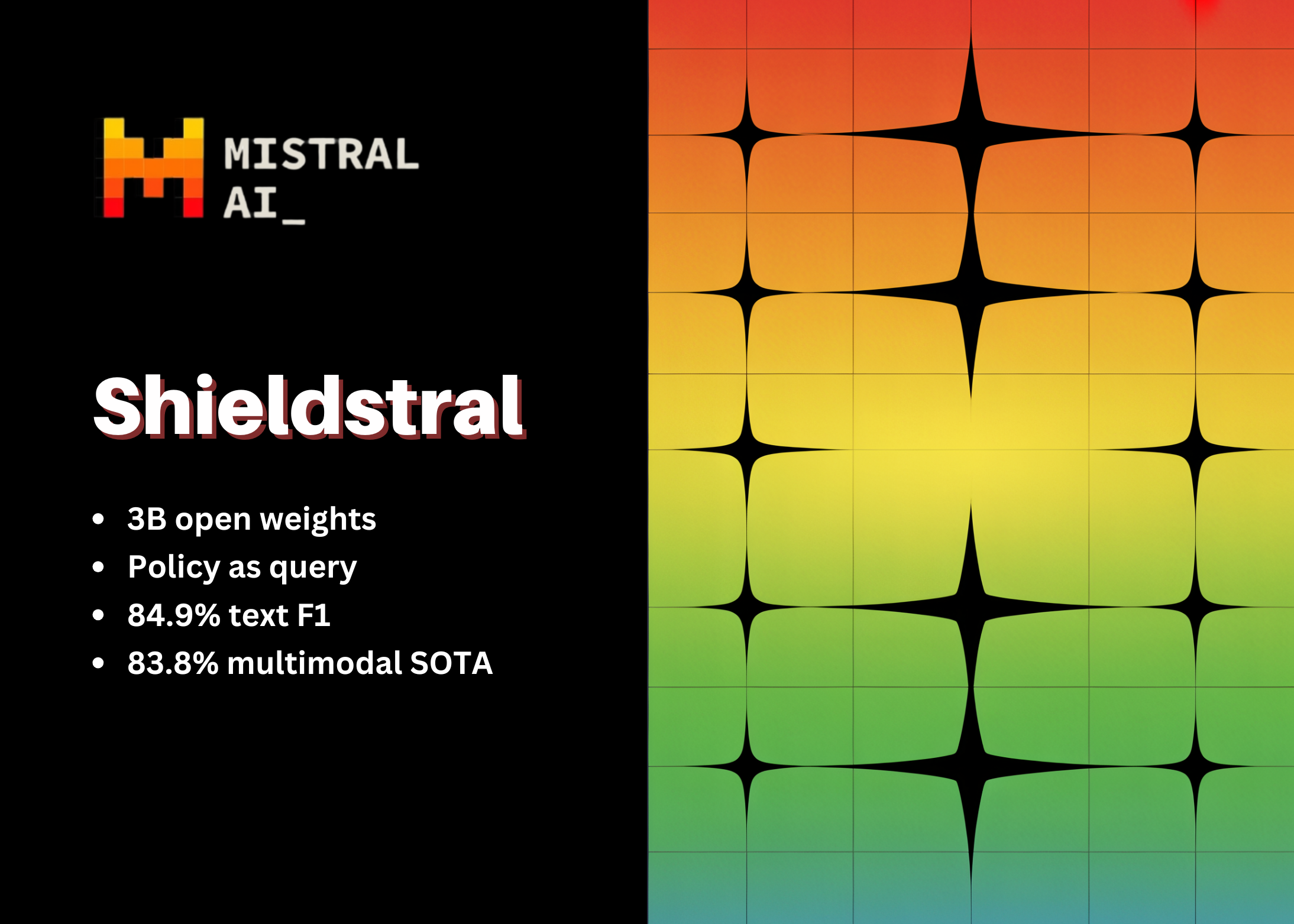
Mistral AI Releases Shieldstral 1.0 3B: An Open-Weights Policy-Adaptive Multimodal Safety Classifier Matching Models 7× Its Size
Mistral AI has released Shieldstral 1.0 3B, an open-weights, policy-adaptive multimodal safety classifier that treats content moderation as a single yes/no question rather than a fixed taxonomy of harm categories. Most guardrail models bake their category list into the weights, so re-targeting one to a new deployment context means retraining — and the same content can be acceptable on a cybersecurity research tool while being harmful on a mental-health platform. Shieldstral inverts that: operat