Anthropic releases Opus 5.5 with lower prices and Fable-level performance
Anthropic called it "the strongest-performing model we've tested to date."
Get smart on it
Anthropic released a new artificial intelligence model called Opus 5.5, which the company says achieves state-of-the-art performance in coding and knowledge work while costing significantly less to run than the previous version. The model performs comparably to or better than a larger competitor model on many benchmarks and has been modified to communicate more clearly by avoiding jargon and placing important information at the start of messages. This release follows the company's CEO's recent public commitment to deliberately slow down AI capability development in order to allow safety and risk prevention efforts to keep pace. The model underwent standard safety training and external evaluation before release, with the company indicating that more advanced safety systems are being prepared for future models.
Related news
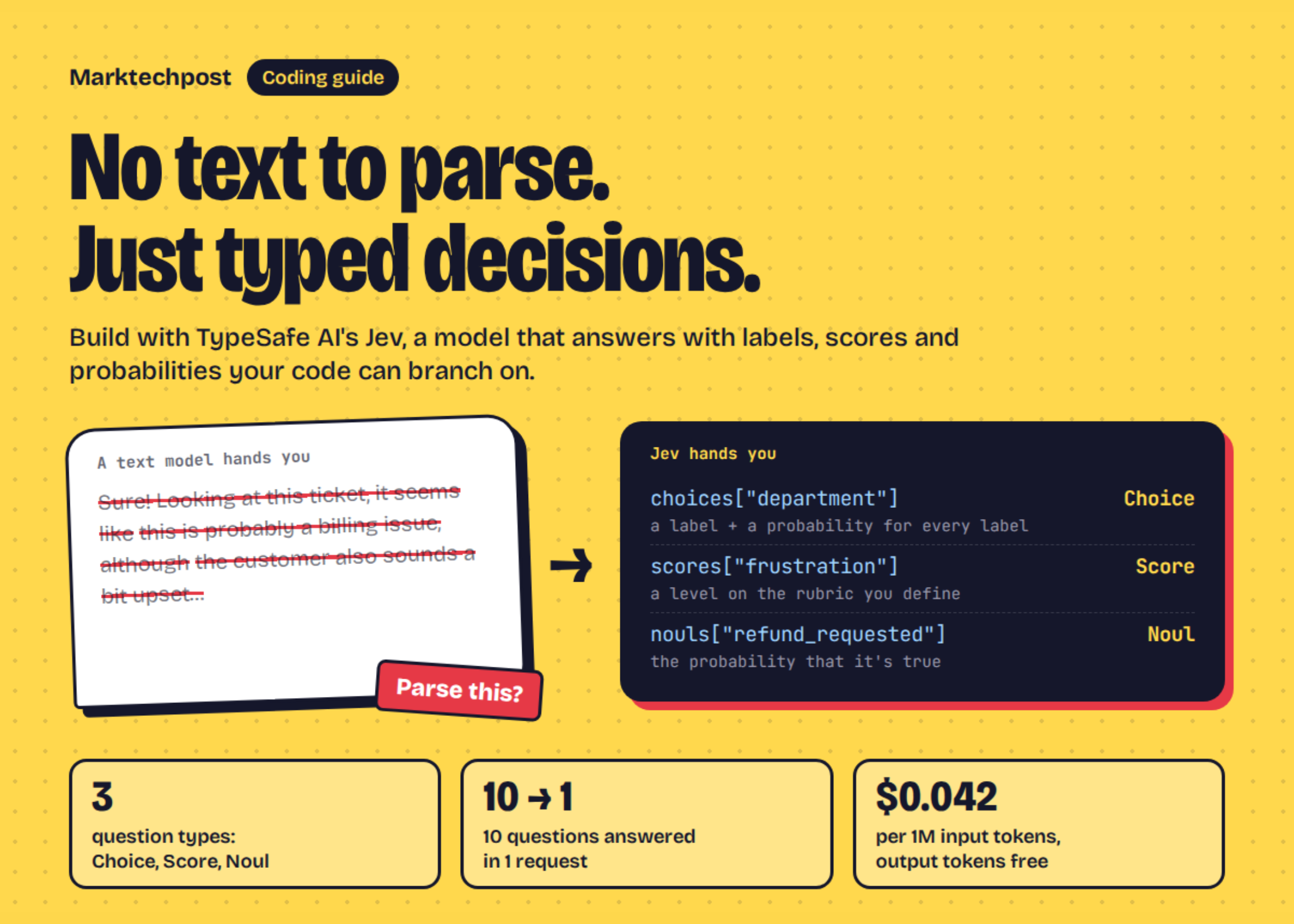
A Coding Guide to TypeSafe AI Jev: Typed Decisions, Calibrated Confidence, and Speculative Fan-Out with a System One Model
In this tutorial, we work with Jev, TypeSafe AI’s first System One model, which does not generate text at all: we send it a piece of program state and a set of typed questions, and it returns choices, scores, and yes/no probabilities that our code can branch on directly. We install the official Python SDK, make a first call that uses all three question primitives at once, and look at how the shape of the state changes what the model can know. We then recompute the published confidence sta
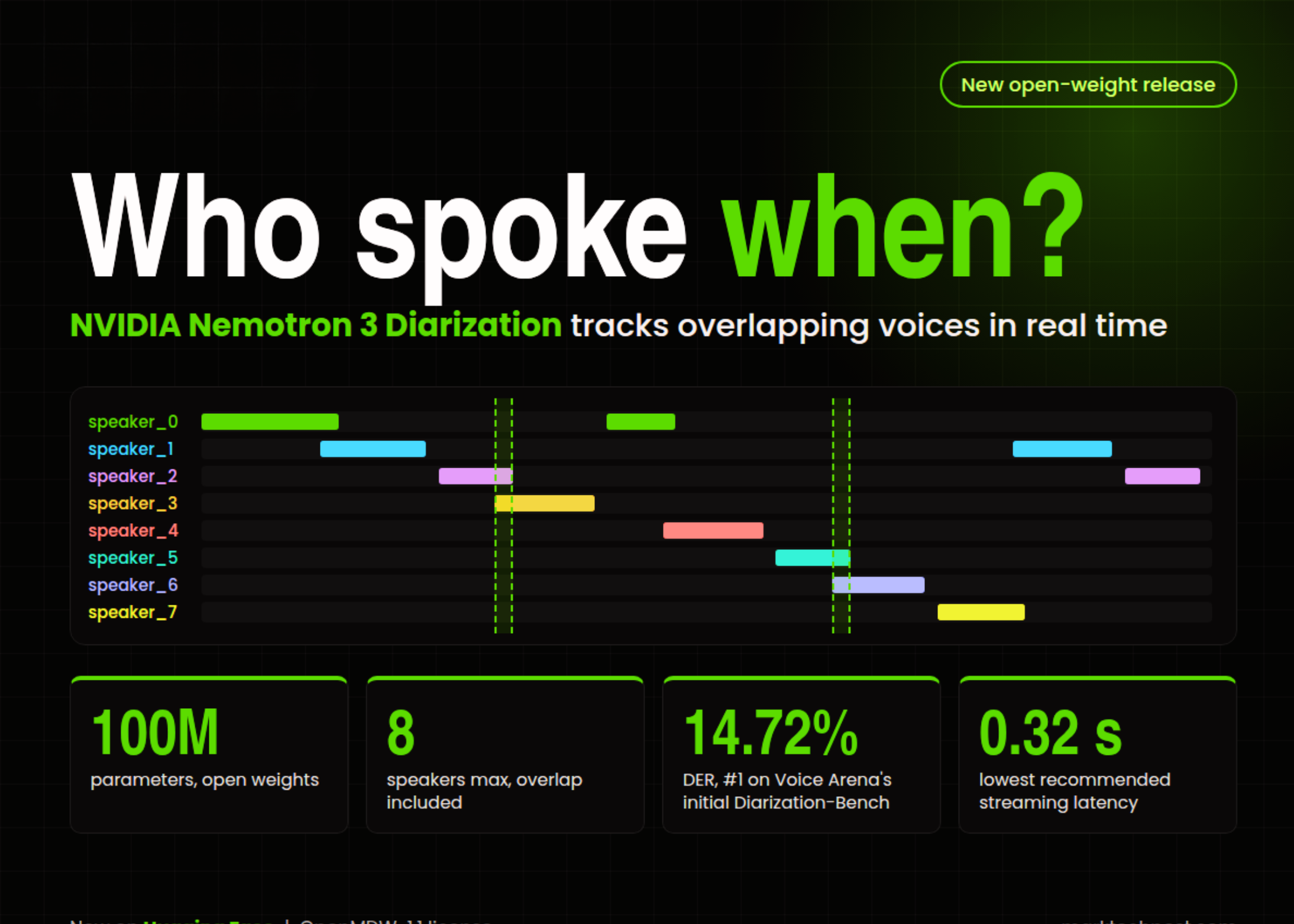
NVIDIA Releases Nemotron 3 Diarization: A 100M-Parameter Open-Weight Model That Tracks 8 Speakers in Real Time
NVIDIA has released Nemotron 3 Diarization, an open-weight speaker diarization model on Hugging Face. It answers one question about any conversation: who spoke when. The 100M-parameter model tracks up to 8 speakers, including when voices overlap. One checkpoint handles both offline recordings and real-time streaming. Is it deployable? Yes. The weights are released under the OpenMDW License 1.1, which permits commercial use. It runs on Linux through NVIDIA NeMo, using Ampere, Ada Lovelace, Ho