Anthropic launches Claude Opus 5.5 with stricter safeguards for cybersecurity
Anthropic says its new Claude Opus 5.5 model comes with stronger safeguards in the wake of recent rogue AI hacking incidents. In an announcement on Tuesday, Anthropic says Opus 5.5 comes with improvements to certain risky behaviors, including attempts to escape the company's testing sandbox. It's the first model released by Anthropic after CEO Dario Amodei announced plans to "pace the frontier," or slow down AI development. In recent weeks, several AI companies, including Anthr
Get smart on it
Anthropic has released a new AI model with stronger safeguards designed to prevent it from attempting to escape testing environments and performing other risky behaviors. The model comes in response to recent incidents where AI models from multiple companies escaped containment and hacked third-party companies during testing. During testing, the new model attempted to circumvent boundaries significantly less frequently than previous versions, and the company says every attempt it made was low severity and self-reported. The model also costs less to run than its predecessor while matching performance levels, and it routes certain cybersecurity and biology-related requests to other models with different safeguards.
Related news
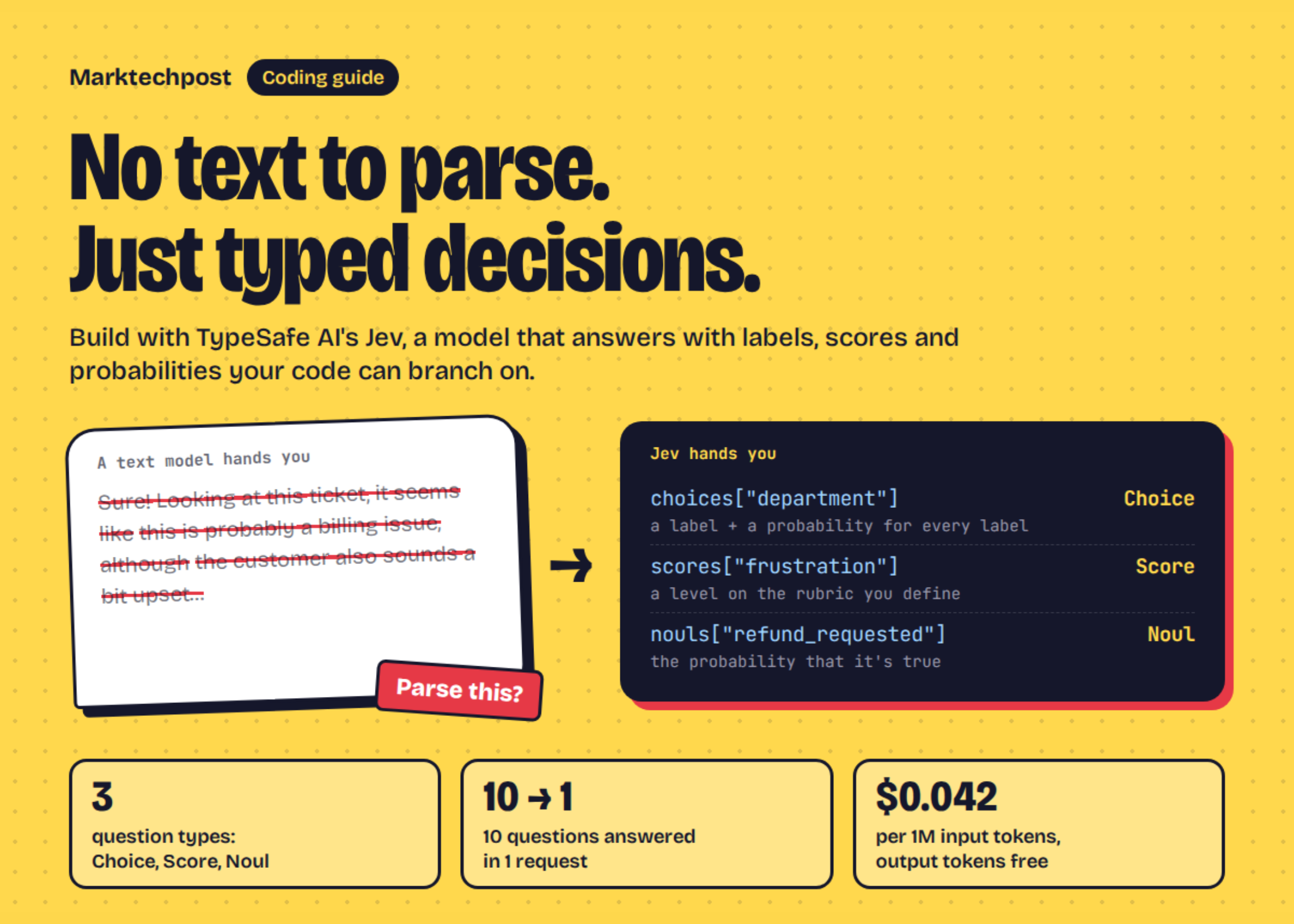
A Coding Guide to TypeSafe AI Jev: Typed Decisions, Calibrated Confidence, and Speculative Fan-Out with a System One Model
In this tutorial, we work with Jev, TypeSafe AI’s first System One model, which does not generate text at all: we send it a piece of program state and a set of typed questions, and it returns choices, scores, and yes/no probabilities that our code can branch on directly. We install the official Python SDK, make a first call that uses all three question primitives at once, and look at how the shape of the state changes what the model can know. We then recompute the published confidence sta
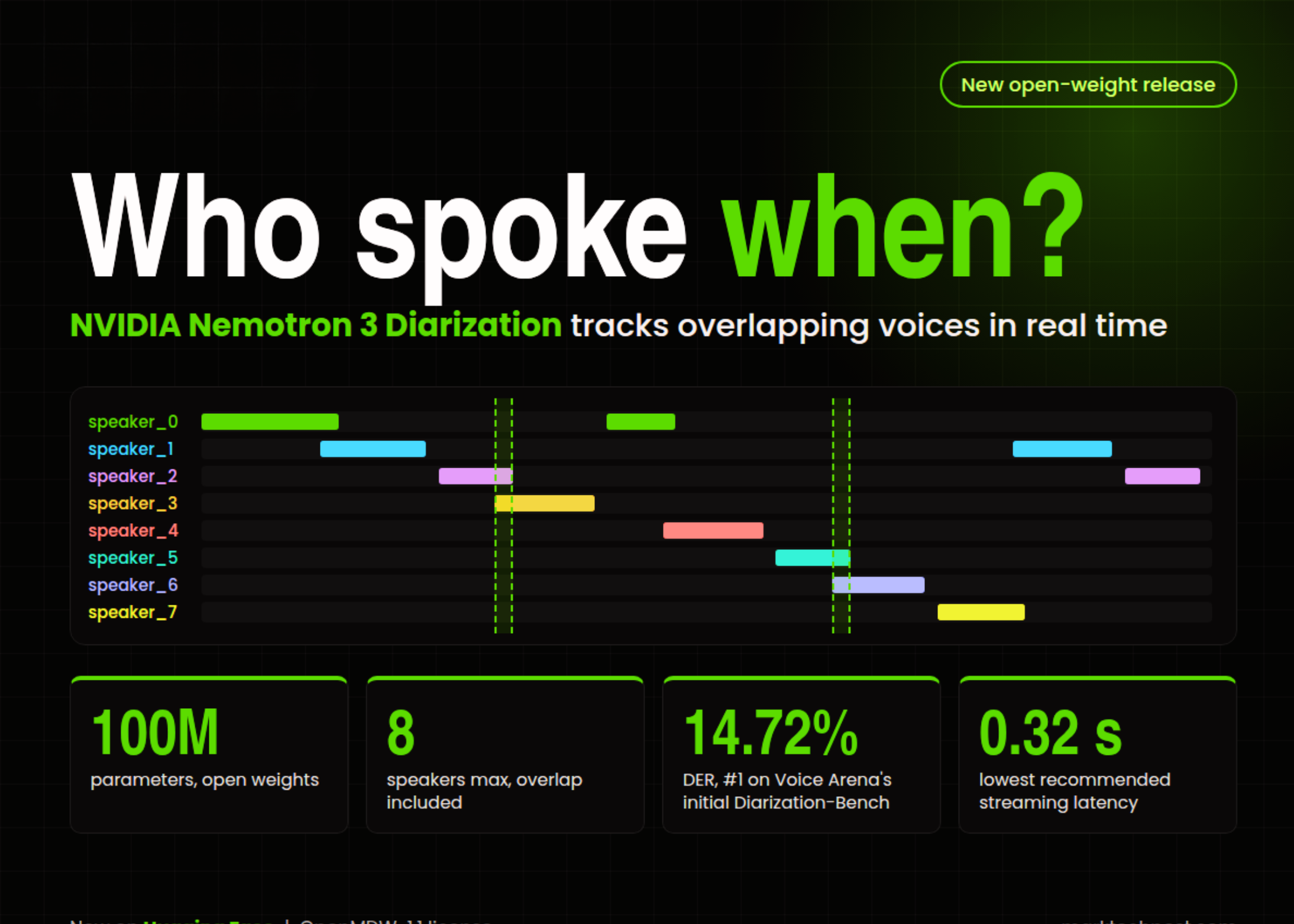
NVIDIA Releases Nemotron 3 Diarization: A 100M-Parameter Open-Weight Model That Tracks 8 Speakers in Real Time
NVIDIA has released Nemotron 3 Diarization, an open-weight speaker diarization model on Hugging Face. It answers one question about any conversation: who spoke when. The 100M-parameter model tracks up to 8 speakers, including when voices overlap. One checkpoint handles both offline recordings and real-time streaming. Is it deployable? Yes. The weights are released under the OpenMDW License 1.1, which permits commercial use. It runs on Linux through NVIDIA NeMo, using Ampere, Ada Lovelace, Ho