Alibaba Qwen Releases Qwen-Image-2.1: A 7B Open-Weight Model for Image Generation and Editing
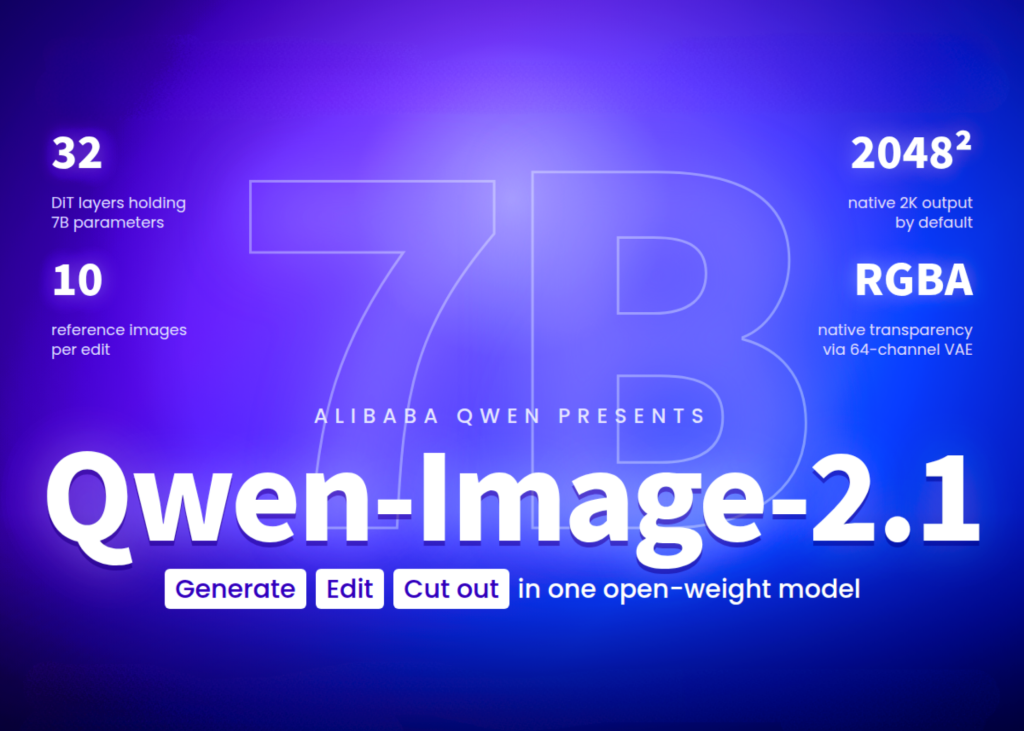
Alibaba’s Qwen team has released Qwen-Image-2.1, a unified text-to-image generation and image editing model. Its visual generation component has 7B parameters across 32 single-stream DiT layers. One checkpoint covers text-to-image, multi-reference editing, local edits, and transparent RGBA output. Is it deployable? Yes, for research and evaluation. Day 0 support covers Diffusers, ComfyUI, vLLM-Omni, SGLang, and LightX2V. Commercial deployment needs a separate license from Qwen. Fro
Get smart on it
Alibaba's Qwen team released a model that handles both text-to-image generation and image editing in a single unified system. The model combines a 7-billion parameter diffusion transformer with an 8-billion parameter text encoder and can generate transparent images, accept up to 10 reference images for editing, and edit specific regions while preserving identity. It achieves this by reusing cached computations across editing steps, reducing the computational cost when working with multiple reference images. The model is available for research use through several deployment frameworks and scores highest among listed open-weight models on Qwen's internal benchmark, though commercial use requires a separate license.
Related news
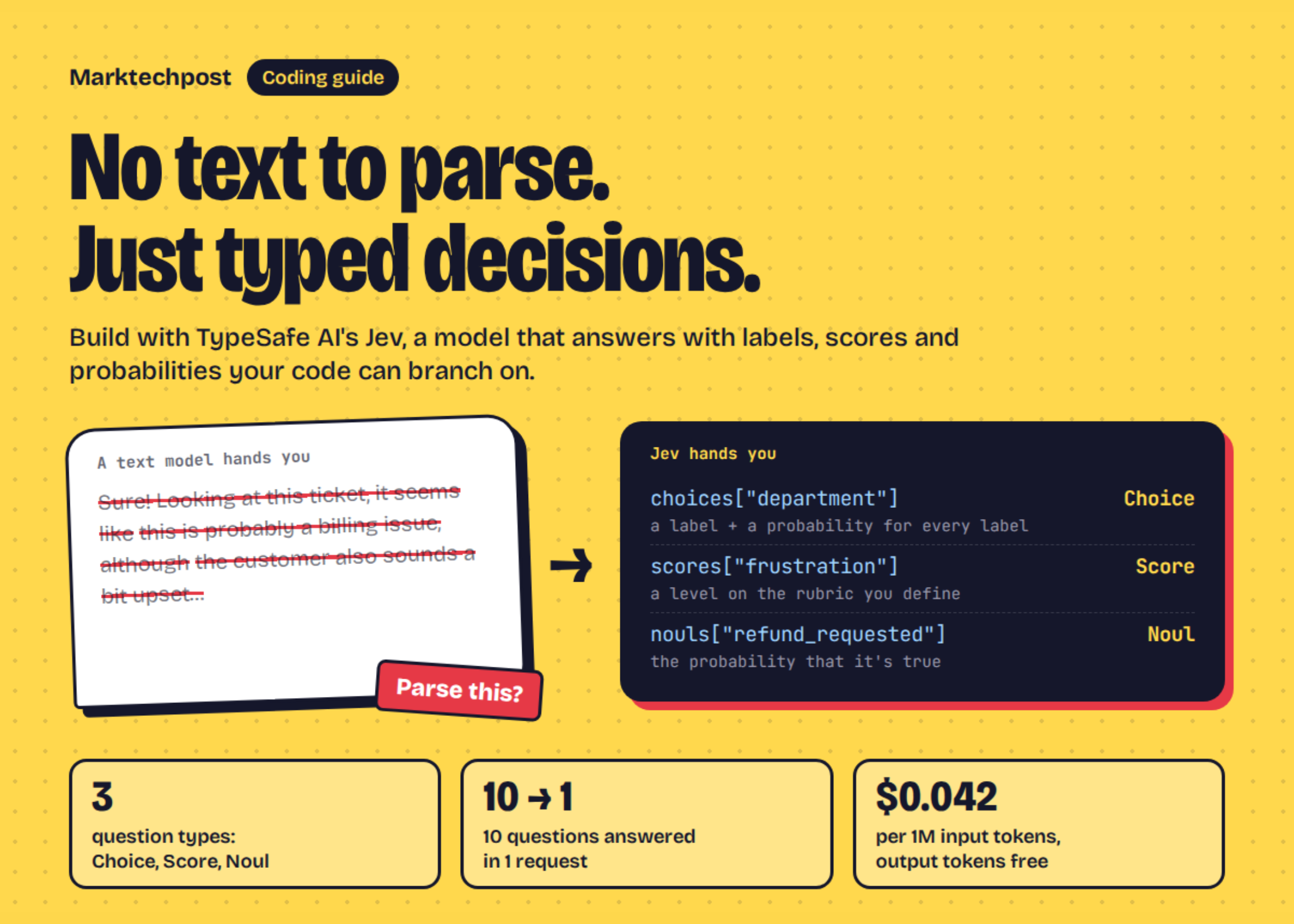
A Coding Guide to TypeSafe AI Jev: Typed Decisions, Calibrated Confidence, and Speculative Fan-Out with a System One Model
In this tutorial, we work with Jev, TypeSafe AI’s first System One model, which does not generate text at all: we send it a piece of program state and a set of typed questions, and it returns choices, scores, and yes/no probabilities that our code can branch on directly. We install the official Python SDK, make a first call that uses all three question primitives at once, and look at how the shape of the state changes what the model can know. We then recompute the published confidence sta
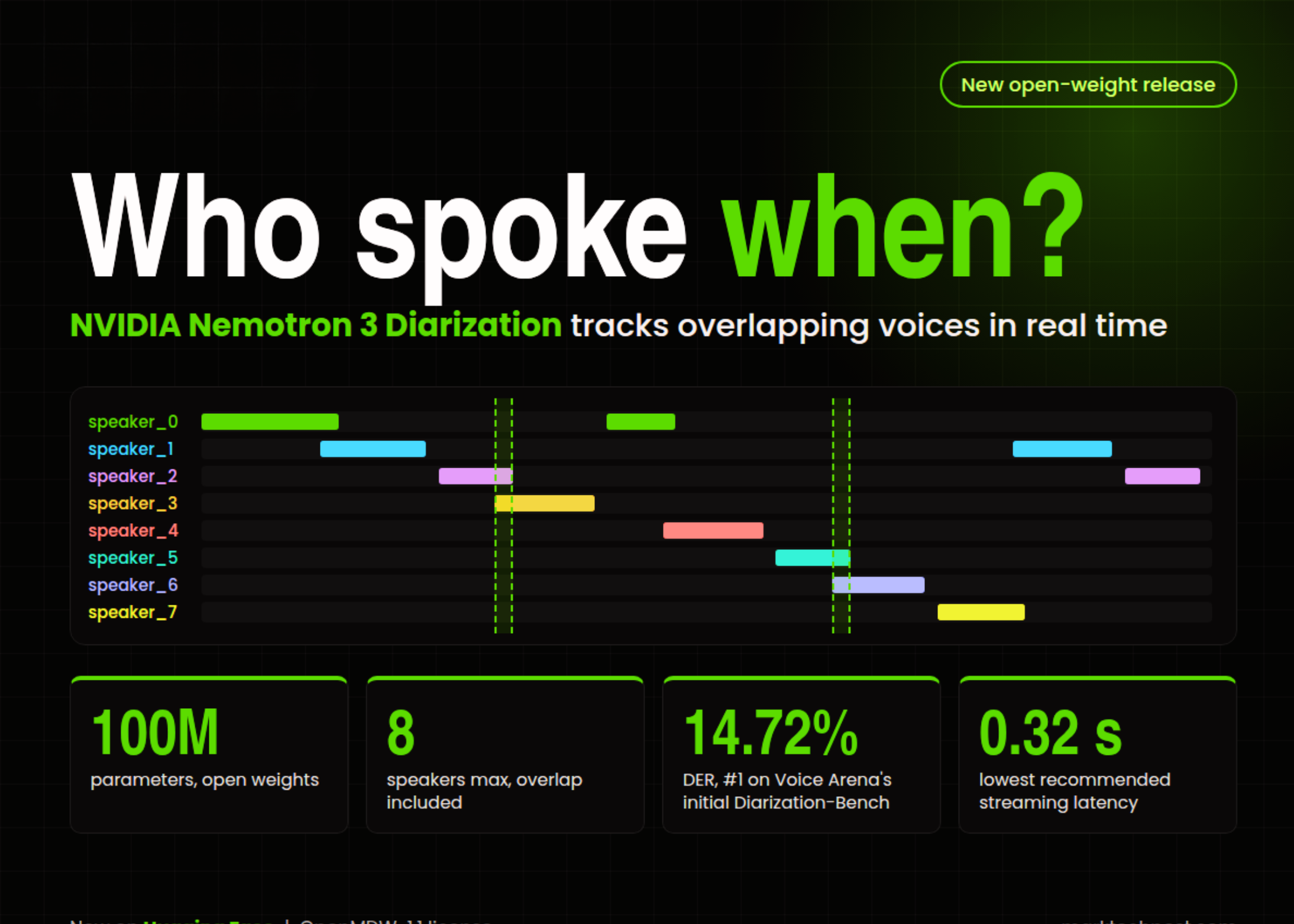
NVIDIA Releases Nemotron 3 Diarization: A 100M-Parameter Open-Weight Model That Tracks 8 Speakers in Real Time
NVIDIA has released Nemotron 3 Diarization, an open-weight speaker diarization model on Hugging Face. It answers one question about any conversation: who spoke when. The 100M-parameter model tracks up to 8 speakers, including when voices overlap. One checkpoint handles both offline recordings and real-time streaming. Is it deployable? Yes. The weights are released under the OpenMDW License 1.1, which permits commercial use. It runs on Linux through NVIDIA NeMo, using Ampere, Ada Lovelace, Ho