What to watch for after Jensen Huang’s Japan visit
Jensen Huang left Tokyo with deals spanning Japan's entire tech ecosystem.
Get smart on it
Nvidia's chief executive visited Japan to announce partnerships focused on physical AI, which refers to AI systems designed to run robots and machines on factory floors. Japan is investing in building its own AI infrastructure and foundation models to reduce dependence on American or Chinese systems, while still relying on Nvidia's chips as the hardware foundation. The country aims to deploy millions of AI-equipped robots across multiple sectors by 2040 and capture a significant share of the global AI robotics market. This visit represents part of a broader strategy by Nvidia's leadership to secure partnerships across Asia's major industrial economies.
Related news

Designing High-Performance GPU Kernels with TileLang: Tensor-Core GEMM, Fused Softmax, FlashAttention, and Autotuning
In this tutorial, we explore TileLang as a high-level Python domain-specific language for designing and compiling performance-oriented GPU kernels through TVM. We begin by validating the CUDA environment and establishing reusable benchmarking and numerical-verification utilities, then progressively implement vector addition, tiled tensor-core matrix multiplication, schedule exploration, fused GEMM epilogues, row-wise softmax, and FlashAttention. Throughout the tutorial, we work directly with Ti

One fallen power line exposed a growing AI data center problem. Here’s how to fix it.
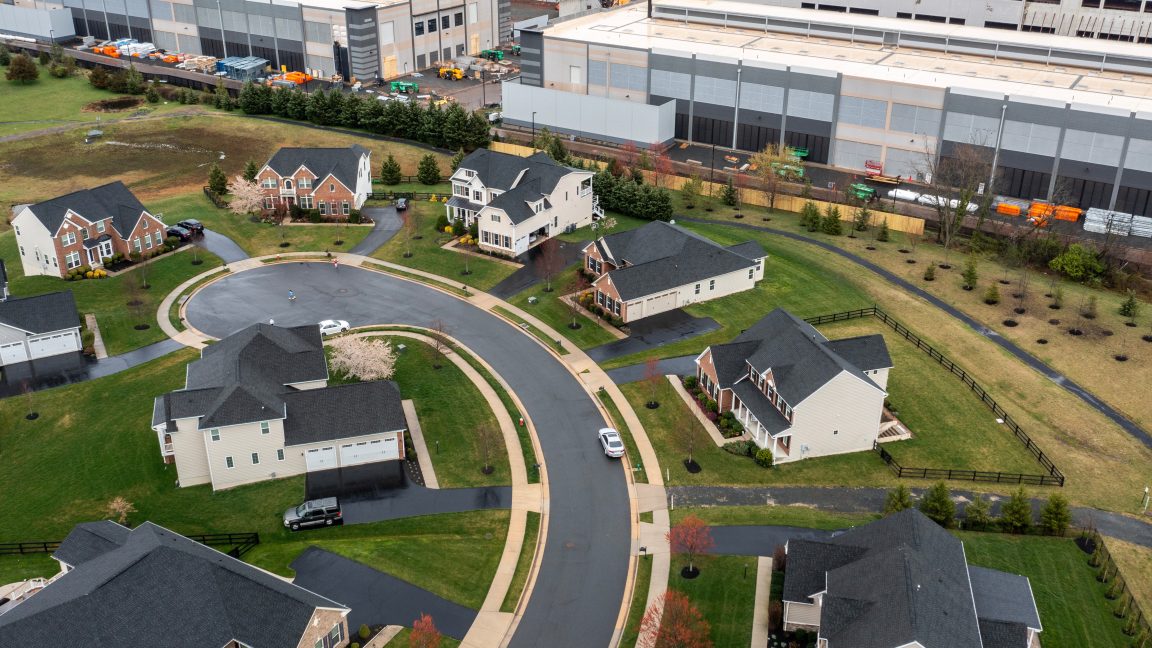
A close call in Northern Virginia revealed just how poorly data centers respond to grid disruptions. Here's how to fix the problem.

.jpg%3Fwidth%3D720%26quality%3D80%26disable%3Dupscale&s=kAmg5aaORKYzlMWL0upGuDAjzwWxVE-6xoVpfMYWKf4)