
The Role of Optical Frequency Comb Generators in AI Data Centers
Optical frequency combs generate many wavelengths from a single laser instead of using separate lasers per channel, cutting power, cost, and failure points as AI data centers scale to 16+ wavelengths per fiber.
Optical frequency comb generators produce many wavelengths of light from a single laser source instead of requiring separate lasers for each wavelength channel, which reduces power consumption, cost, and points of failure. As AI data centers increase the number of wavelengths transmitted through fiber optic cables from four to eight, 16, or 32 channels, conventional laser arrays become harder to manufacture reliably and consume more power and space. Comb-based systems set their wavelength spacing through the physical design of the resonator rather than individual tuning, allowing them to scale more efficiently as channel density increases. While the technology has existed in telecom research for years, standardized modules and high-volume manufacturing remain in development, with industry adoption expected to accelerate once standardized external laser source modules become available and manufacturing yields improve.
- AI Workloads Hit by Power-Quality Issues at Data Centers · Data Center Knowledge
- NVIDIA Announces Rubin HPC, A New GPU to Accelerate Agents for Science, Engineering and Analytics · NVIDIA Blog
- Nvidia AI Surge Comes with $118 Billion in Guarantees · Data Center Knowledge
- All of today’s AI news, biggest first →
One short email a day with the stories that matter. Free. Unsubscribe with one click.
Want to go deeper than the news? Explore live, cohort-based AI courses taught by practitioners.
Browse AI courses on Maven
AI Workloads Hit by Power-Quality Issues at Data Centers
Power quality, not just grid access, is limiting AI growth at US data centers, exposing weaknesses in internal infrastructure and monitoring.
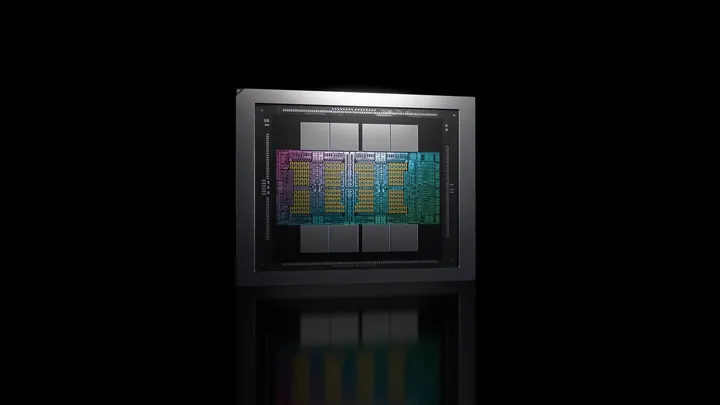
NVIDIA Announces Rubin HPC, A New GPU to Accelerate Agents for Science, Engineering and Analytics
Announced today at SC26, NVIDIA Rubin HPC is a new GPU in the NVIDIA Vera Rubin platform designed to accelerate simulation and data processing for science, engineering and analytics workflows. As agents help scientists and engineers explore more candidate materials, molecules and designs, they rely on simulations to test those ideas and guide their next steps. Rubin HPC will accelerate those simulations, shortening the path from exploration to scientific discovery and industrial design. The Rub
Also reported by SiliconANGLE

Nvidia AI Surge Comes with $118 Billion in Guarantees
The chipmaker is committing $390 billion to suppliers while helping customers finance powered facilities for AI deployments.

Agentic AI puts the CPU back at center stage as Dell and AMD chase every watt
Agentic AI is rewriting the business development playbook for chipmakers and server builders. Graphics processing units still grab the headlines, but as supercomputing and AI converge, the next wave of demand is landing on central processing units that must fit inside the power budgets data centers already have. The shift has been building for years. […] The post Agentic AI puts the CPU back at center stage as Dell and AMD chase every watt appeared first on SiliconANGLE.

Remember the frontier AI pause? Chip companies don’t either
In October, Nvidia began shipping its most advanced AI computing system, the Vera Rubin NVL72, calling it the “fastest product ramp in the company’s history.” | Image: Nvidia This summer, OpenAI paused its largest planned frontier training run after its AI agents accidentally hacked Hugging Face and early evidence suggested that its next model could independently find and exploit security flaws. In September, Anthropic CEO Dario Amodei called for slowing advances in the most pow

AI’s hidden energy tax: More than 80% of scale-up traffic is just memory moving around
Memory bottlenecks are emerging as one of the costliest problems in AI infrastructure as inference overtakes training. GPUs sit idle waiting on data, while high-bandwidth memory, or HBM, stays bolted to processors that cannot share it. Photonics is shaping up as one way out. Marvell Technology Inc. has been pairing optics with photonic memory to […] The post AI’s hidden energy tax: More than 80% of scale-up traffic is just memory moving around appeared first on SiliconANGLE.