
Chip companies report strong growth despite AI pause
The Verge: Remember the frontier AI pause? Chip companies don’t either
In October, Nvidia began shipping its most advanced AI computing system, the Vera Rubin NVL72, calling it the “fastest product ramp in the company’s history.” | Image: Nvidia This summer, OpenAI paused its largest planned frontier training run after its AI agents accidentally hacked Hugging Face and early evidence suggested that its next model could independently find and exploit security flaws. In September, Anthropic CEO Dario Amodei called for slowing advances in the most pow
Some AI labs paused or slowed their most advanced model development this summer due to safety concerns, raising questions about whether reduced demand for cutting-edge AI training would hurt chip manufacturers. However, chip companies' latest earnings reports show booming data center revenue and continued strong growth, suggesting that any slowdown in frontier AI development has had little impact on the chip market. The chip industry may be insulated from a significant slowdown because demand for inference, the process of running existing AI models, is growing and requires substantial computing infrastructure. Additionally, even if AI labs did scale back training substantially, it would take several months for that reduction to show up in chip manufacturers' financial results due to existing procurement agreements.
Explainer: Nvidia DSX Pod Explained: The AI Data Center in a Box
- NVIDIA Announces Rubin HPC, A New GPU to Accelerate Agents for Science, Engineering and Analytics · NVIDIA Blog
- Quantum computing drops its decade-away tag as error rates fall 200-fold in two years · SiliconANGLE
- AI’s hidden energy tax: More than 80% of scale-up traffic is just memory moving around · SiliconANGLE
- All of today’s AI news, biggest first →
One short email a day with the stories that matter. Free. Unsubscribe with one click.
Want to go deeper than the news? Explore live, cohort-based AI courses taught by practitioners.
Browse AI courses on Maven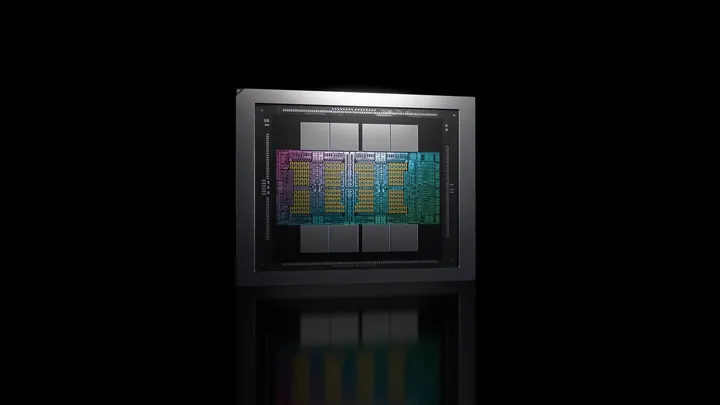
NVIDIA Announces Rubin HPC, A New GPU to Accelerate Agents for Science, Engineering and Analytics
Announced today at SC26, NVIDIA Rubin HPC is a new GPU in the NVIDIA Vera Rubin platform designed to accelerate simulation and data processing for science, engineering and analytics workflows. As agents help scientists and engineers explore more candidate materials, molecules and designs, they rely on simulations to test those ideas and guide their next steps. Rubin HPC will accelerate those simulations, shortening the path from exploration to scientific discovery and industrial design. The Rub
Also reported by SiliconANGLE

Quantum computing drops its decade-away tag as error rates fall 200-fold in two years
Quantum computing is shedding its reputation as speculative as gains in quantum error correction turn fragile machines into reliable ones. For the supercomputing community, which now measures data centers in gigawatts of power, the more pressing question is how quantum fits beside the processors already on the floor. For years, the field faced a trade-off […] The post Quantum computing drops its decade-away tag as error rates fall 200-fold in two years appeared first on SiliconANGLE.

AI’s hidden energy tax: More than 80% of scale-up traffic is just memory moving around
Memory bottlenecks are emerging as one of the costliest problems in AI infrastructure as inference overtakes training. GPUs sit idle waiting on data, while high-bandwidth memory, or HBM, stays bolted to processors that cannot share it. Photonics is shaping up as one way out. Marvell Technology Inc. has been pairing optics with photonic memory to […] The post AI’s hidden energy tax: More than 80% of scale-up traffic is just memory moving around appeared first on SiliconANGLE.

Nvidia promises that revenue will keep soaring, for now
Despite the turmoil Nvidia is in after the departure of its disgraced founder and CEO Jensen Huang, the company projected that its streak of record-breaking revenue isn't about to stop.

Nvidia at SC26: Agents are the new scientists, and they need a lab
For most of its history, the high-performance computing market measured progress the same way: how fast a machine could solve a fixed problem. Rankings rose, a new system took the top spot, and the cycle started over. Raw performance remains the foundation of scientific computing, and Nvidia Corp. brought plenty of it to SC26. But […] The post Nvidia at SC26: Agents are the new scientists, and they need a lab appeared first on SiliconANGLE.

NVIDIA DGX Spark Developer Kit Turns a Desk Into a Supercomputing Lab
At SC26, an annual supercomputing conference taking place this week in Chicago, NVIDIA is introducing the DGX Spark HPC Developer Kit for researchers, academics and developers. The kit is a four-node cluster of NVIDIA DGX Spark systems, each connected directly to its two neighbors in a ring, with an NVIDIA HPC SDK installation playbook coming soon. Researchers get a place at their desk to run multi-node scientific workloads, AI models and agents, instead of waiting for time on a shared GPU clust