
TechCrunch Disrupt 2026: Ricursive Intelligence’s Anna Goldie and Azalia Mirhoseini on when AI starts designing its own hardware
At TechCrunch Disrupt 2026, Ricursive Intelligence co-founders Anna Goldie and Azalia Mirhoseini will take the Disrupt Stage to discuss closing the loop between AI and chip development. Save up to $200 on your pass before today ends.
Ricursive Intelligence is developing AI systems that can design computer chips, learn from each design process, and improve subsequent designs. Currently, chip design takes two to three years, but the company aims to reduce that timeline to weeks. This matters because AI requires increasingly powerful chips to advance, yet chip design itself is a slow bottleneck, so automating and accelerating the process could create a feedback loop where better hardware enables more capable AI systems. The startup's founders previously led a similar project at Google that successfully generated chip layouts in hours rather than through traditional human-led design processes.
Explainer: Replit and Anthropic: What Really Happened and Why It Matters
- NVIDIA Announces Rubin HPC, A New GPU to Accelerate Agents for Science, Engineering and Analytics · NVIDIA Blog
- Nvidia AI Surge Comes with $118 Billion in Guarantees · Data Center Knowledge
- Agentic AI puts the CPU back at center stage as Dell and AMD chase every watt · SiliconANGLE
- All of today’s AI news, biggest first →
One short email a day with the stories that matter. Free. Unsubscribe with one click.
Want to go deeper than the news? Explore live, cohort-based AI courses taught by practitioners.
Browse AI courses on Maven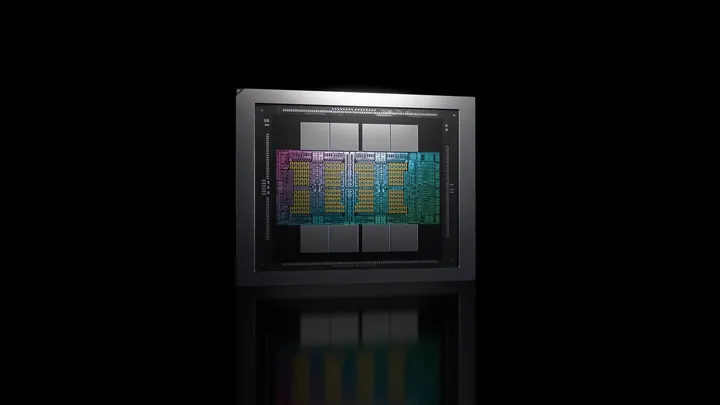
NVIDIA Announces Rubin HPC, A New GPU to Accelerate Agents for Science, Engineering and Analytics
Announced today at SC26, NVIDIA Rubin HPC is a new GPU in the NVIDIA Vera Rubin platform designed to accelerate simulation and data processing for science, engineering and analytics workflows. As agents help scientists and engineers explore more candidate materials, molecules and designs, they rely on simulations to test those ideas and guide their next steps. Rubin HPC will accelerate those simulations, shortening the path from exploration to scientific discovery and industrial design. The Rub
Also reported by SiliconANGLE

Nvidia AI Surge Comes with $118 Billion in Guarantees
The chipmaker is committing $390 billion to suppliers while helping customers finance powered facilities for AI deployments.

Agentic AI puts the CPU back at center stage as Dell and AMD chase every watt
Agentic AI is rewriting the business development playbook for chipmakers and server builders. Graphics processing units still grab the headlines, but as supercomputing and AI converge, the next wave of demand is landing on central processing units that must fit inside the power budgets data centers already have. The shift has been building for years. […] The post Agentic AI puts the CPU back at center stage as Dell and AMD chase every watt appeared first on SiliconANGLE.

Remember the frontier AI pause? Chip companies don’t either
In October, Nvidia began shipping its most advanced AI computing system, the Vera Rubin NVL72, calling it the “fastest product ramp in the company’s history.” | Image: Nvidia This summer, OpenAI paused its largest planned frontier training run after its AI agents accidentally hacked Hugging Face and early evidence suggested that its next model could independently find and exploit security flaws. In September, Anthropic CEO Dario Amodei called for slowing advances in the most pow

AI’s hidden energy tax: More than 80% of scale-up traffic is just memory moving around
Memory bottlenecks are emerging as one of the costliest problems in AI infrastructure as inference overtakes training. GPUs sit idle waiting on data, while high-bandwidth memory, or HBM, stays bolted to processors that cannot share it. Photonics is shaping up as one way out. Marvell Technology Inc. has been pairing optics with photonic memory to […] The post AI’s hidden energy tax: More than 80% of scale-up traffic is just memory moving around appeared first on SiliconANGLE.

Quantum computing drops its decade-away tag as error rates fall 200-fold in two years
Quantum computing is shedding its reputation as speculative as gains in quantum error correction turn fragile machines into reliable ones. For the supercomputing community, which now measures data centers in gigawatts of power, the more pressing question is how quantum fits beside the processors already on the floor. For years, the field faced a trade-off […] The post Quantum computing drops its decade-away tag as error rates fall 200-fold in two years appeared first on SiliconANGLE.