.jpg&s=GbtwIIj5pE3QVWNdNFb64PG-kTagHW-iyMtl8oja8pY)
Nvidia Wants to Own Every Chip Inside AI Data Centers
Nvidia’s Vera Rubin platform combines CPUs and GPUs into a single system, reflecting the company’s growing ambition to power every layer of AI infrastructure.
Get smart on it
Nvidia is promoting its new Vera Rubin chip system, which combines CPUs and GPUs into a single integrated platform designed to power artificial intelligence data centers. The company has traditionally specialized in GPUs, but is now positioning itself as a supplier of complete AI systems that can handle both the computational power needed to train AI models and the orchestration tasks required by more complex AI agents. This matters because the industry is shifting toward more sophisticated AI systems that require CPUs in addition to GPUs, and Nvidia is trying to capture the entire market for AI infrastructure rather than just one component. Nvidia is making this push ahead of competitor AMD's upcoming product event, as both companies compete for large contracts from major AI companies and labs.
Related news
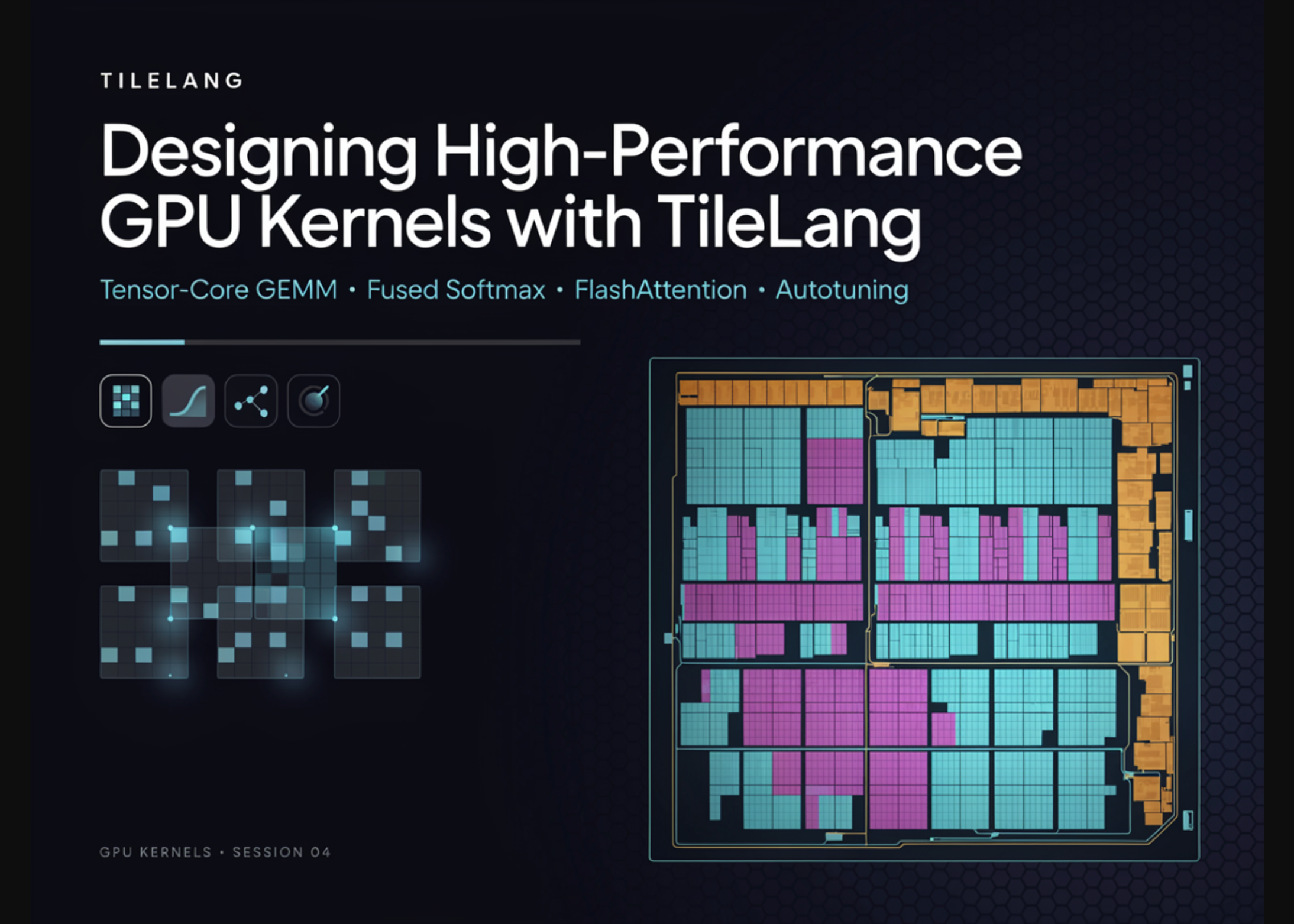
Designing High-Performance GPU Kernels with TileLang: Tensor-Core GEMM, Fused Softmax, FlashAttention, and Autotuning
In this tutorial, we explore TileLang as a high-level Python domain-specific language for designing and compiling performance-oriented GPU kernels through TVM. We begin by validating the CUDA environment and establishing reusable benchmarking and numerical-verification utilities, then progressively implement vector addition, tiled tensor-core matrix multiplication, schedule exploration, fused GEMM epilogues, row-wise softmax, and FlashAttention. Throughout the tutorial, we work directly with Ti

One fallen power line exposed a growing AI data center problem. Here’s how to fix it.
A close call in Northern Virginia revealed just how poorly data centers respond to grid disruptions. Here's how to fix the problem.

.jpg%3Fwidth%3D720%26quality%3D80%26disable%3Dupscale&s=kAmg5aaORKYzlMWL0upGuDAjzwWxVE-6xoVpfMYWKf4)