Nvidia is sending GPUs to the moon
If there's a place in the universe without GPUs, Nvidia is sending them there.
Get smart on it
Nvidia is deploying its GPU chips to the moon through partnerships with private space companies building lunar rovers and satellites. The chips, called Jetson, are designed to be compact and power-efficient, allowing robotic systems to process information from their sensors locally so they can understand and react to their environment more quickly. Operating GPUs on the moon is challenging because the lunar surface is exposed to cosmic radiation and extreme temperature swings, unlike satellites in Earth orbit. This effort supports NASA's campaign to have private companies explore the lunar surface ahead of planned human astronaut missions, with the goal of eventually building a sustained human presence on the moon.
Related news
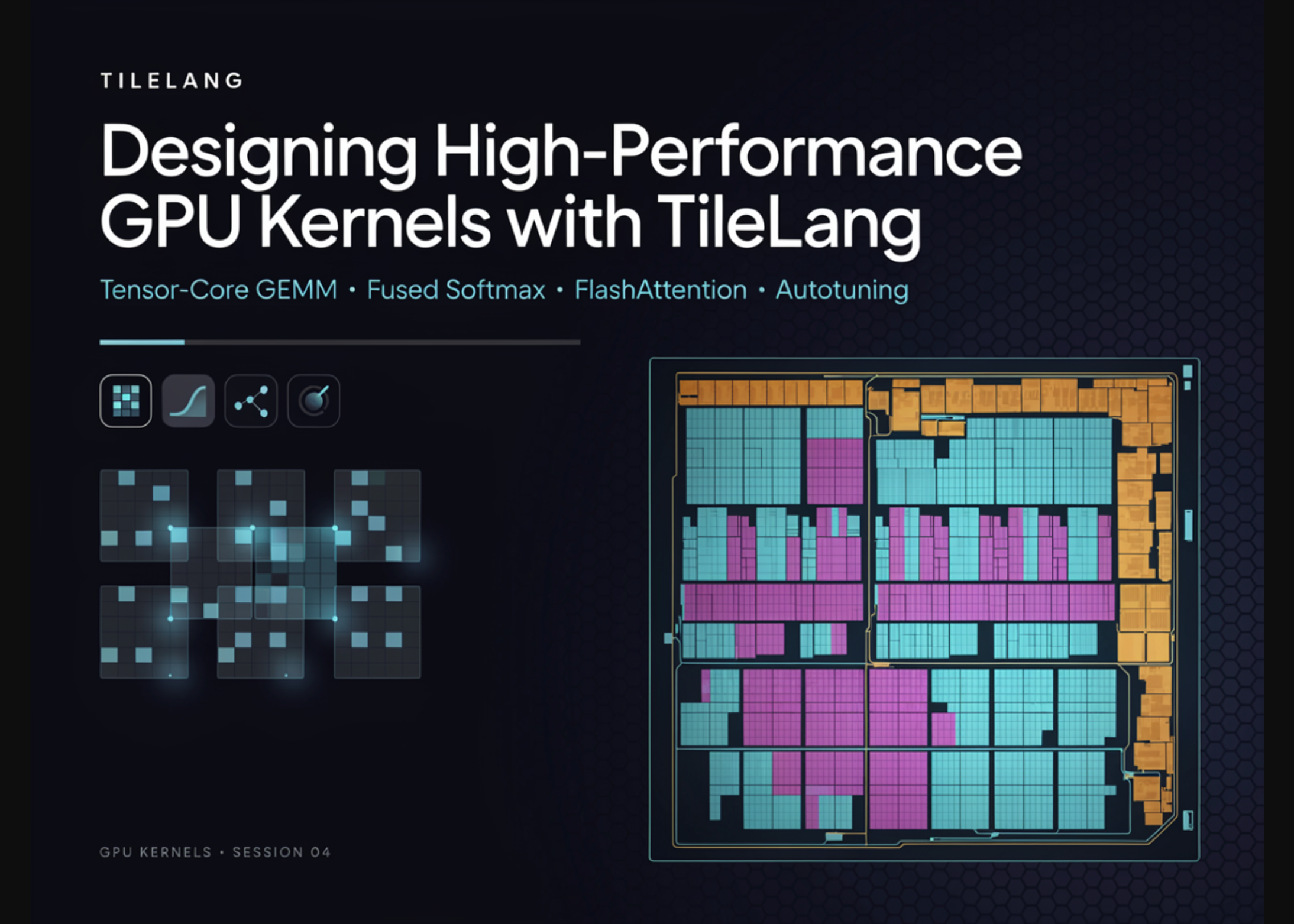
Designing High-Performance GPU Kernels with TileLang: Tensor-Core GEMM, Fused Softmax, FlashAttention, and Autotuning
In this tutorial, we explore TileLang as a high-level Python domain-specific language for designing and compiling performance-oriented GPU kernels through TVM. We begin by validating the CUDA environment and establishing reusable benchmarking and numerical-verification utilities, then progressively implement vector addition, tiled tensor-core matrix multiplication, schedule exploration, fused GEMM epilogues, row-wise softmax, and FlashAttention. Throughout the tutorial, we work directly with Ti

One fallen power line exposed a growing AI data center problem. Here’s how to fix it.
A close call in Northern Virginia revealed just how poorly data centers respond to grid disruptions. Here's how to fix the problem.

.jpg%3Fwidth%3D720%26quality%3D80%26disable%3Dupscale&s=kAmg5aaORKYzlMWL0upGuDAjzwWxVE-6xoVpfMYWKf4)