
Microsoft Maia 300 chip reduces Nvidia reliance
The Verge: Microsoft’s new AI chip makes it less reliant on Nvidia’s GPUs
Microsoft’s Maia 300 chip. | Image: Microsoft Microsoft is announcing its third-generation Maia in-house AI chip today, designed to be the "primary AI inference system" for Microsoft's products and services. Maia 300 not only improves the cost and efficiency of running AI workloads in the cloud, it's also more capable of handling the latest reasoning models and agentic tasks. Maia 300 will start being rolled out to production in 2027, and it has been designed with efficiency in
Microsoft is announcing a new in-house AI chip called Maia 300, designed to serve as the primary AI inference system for the company's products and services. The chip is expected to deliver significant efficiency gains, providing 40 percent more tokens per megawatt compared to leading GPU-based systems and up to 7 times the rack-scale token throughput of its predecessor. This matters because it allows Microsoft to reduce its reliance on AI chips from other manufacturers like Nvidia and AMD, with plans to scale Maia deployments starting in 2027. The chip is built using a new chiplet architecture on TSMC's advanced process node and is designed to handle emerging AI workloads including long-context reasoning, conversational experiences, and multi-step agentic tasks.
One short email a day with the stories that matter. Free. Unsubscribe with one click.
Want to go deeper than the news? Explore live, cohort-based AI courses taught by practitioners.
Browse AI courses on Maven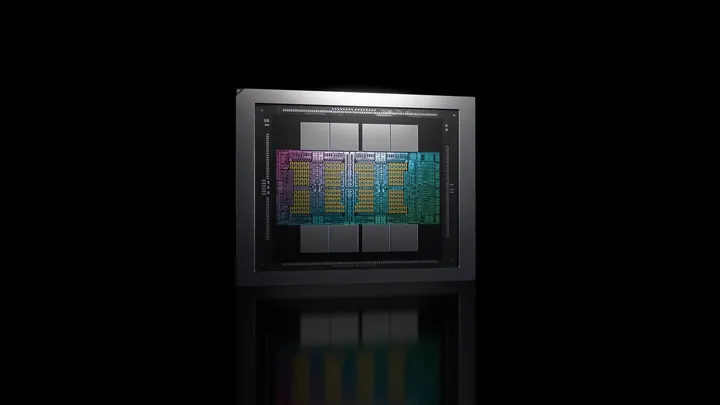
NVIDIA Announces Rubin HPC, A New GPU to Accelerate Agents for Science, Engineering and Analytics
Announced today at SC26, NVIDIA Rubin HPC is a new GPU in the NVIDIA Vera Rubin platform designed to accelerate simulation and data processing for science, engineering and analytics workflows. As agents help scientists and engineers explore more candidate materials, molecules and designs, they rely on simulations to test those ideas and guide their next steps. Rubin HPC will accelerate those simulations, shortening the path from exploration to scientific discovery and industrial design. The Rub
Also reported by SiliconANGLE

Nvidia promises that revenue will keep soaring, for now
Despite the turmoil Nvidia is in after the departure of its disgraced founder and CEO Jensen Huang, the company projected that its streak of record-breaking revenue isn't about to stop.

Nvidia at SC26: Agents are the new scientists, and they need a lab
For most of its history, the high-performance computing market measured progress the same way: how fast a machine could solve a fixed problem. Rankings rose, a new system took the top spot, and the cycle started over. Raw performance remains the foundation of scientific computing, and Nvidia Corp. brought plenty of it to SC26. But […] The post Nvidia at SC26: Agents are the new scientists, and they need a lab appeared first on SiliconANGLE.

NVIDIA DGX Spark Developer Kit Turns a Desk Into a Supercomputing Lab
At SC26, an annual supercomputing conference taking place this week in Chicago, NVIDIA is introducing the DGX Spark HPC Developer Kit for researchers, academics and developers. The kit is a four-node cluster of NVIDIA DGX Spark systems, each connected directly to its two neighbors in a ring, with an NVIDIA HPC SDK installation playbook coming soon. Researchers get a place at their desk to run multi-node scientific workloads, AI models and agents, instead of waiting for time on a shared GPU clust

US data centers now burn more electricity than a midsized country
Fossil fuels are still the biggest source of electricity for hyperscale data centers in the US, a new paper published in the journal Nature Sustainability shows. They likely burn through more electricity collectively than many countries do, resulting in a serious amount of greenhouse gas emissions. The study homes in on hyperscale facilities - the massive structures spanning millions of square feet that developers are racing to build in large part to support generative AI. Rese
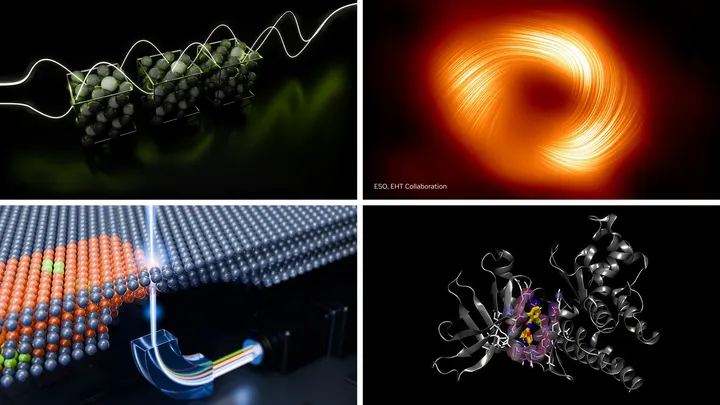
NVIDIA CUDA-X Libraries Give Agents the Tools to Accelerate Scientific Discovery
With expanded NVIDIA CUDA-X libraries, including cuPhoton, cuPotential and cuSpa, researchers can sift through vast amounts of data to accelerate research, from astrophysics and materials science to single-cell biology. The speedups are helping scientists analyze larger datasets and model more complex systems. The new libraries give AI agents the tools to help researchers make discoveries faster than ever. Read All NVIDIA Announcements From SC26 Bringing Black Holes Into Focus Seei