
Google and Blue Origin plan orbital AI compute test
Data Center Knowledge: Google, Blue Origin Plan Orbital AI Compute Test
The 2029 mission will deploy rack-scale computing satellites, with cooling, autonomous recovery, and hardware longevity likely to determine whether orbital infrastructure can support commercial workloads.
Google and Blue Origin are planning to launch solar-powered computing satellites equipped with AI processors into orbit to test whether space-based infrastructure can handle AI workloads at the scale of individual data center racks. The mission, scheduled for the first quarter of 2029, will help determine whether orbital computing can achieve the sustained uptime, autonomous failure recovery, and reliable communications needed for practical use. Key technical challenges include heat rejection through radiators, radiation protection, micrometeorite shielding, and debris avoidance in crowded orbital zones. Commercial viability depends on whether satellites can operate for at least five years before replacement, since the energy advantages of solar power in space must offset the high costs of launches and satellite replacement.
- FCC signs off on SpaceX’s plan to put up to 1 million data center satellites into space · The Verge
- Ars Live recap: Don’t expect military attacks on data centers to stop · Ars Technica
- AI data centers are becoming harder to build, and neoclouds are feeling it · TechCrunch
- All of today’s AI news, biggest first →
One short email a day with the stories that matter. Free. Unsubscribe with one click.
Want to go deeper than the news? Explore live, cohort-based AI courses taught by practitioners.
Browse AI courses on Maven
FCC signs off on SpaceX’s plan to put up to 1 million data center satellites into space
In an announcement on Wednesday, the FCC says it authorized SpaceX to deploy up to 1 million AI chip-equipped satellites as part of the Elon Musk-owned company's "Starmind" initiative. With several others also pursuing the idea of putting AI data centers in space, including Google and Blue Origin, this is the first approval the agency has granted for a full "constellation" of AI satellites. The FCC's approval requires SpaceX to deploy at least one satellite by 2033, and meet th
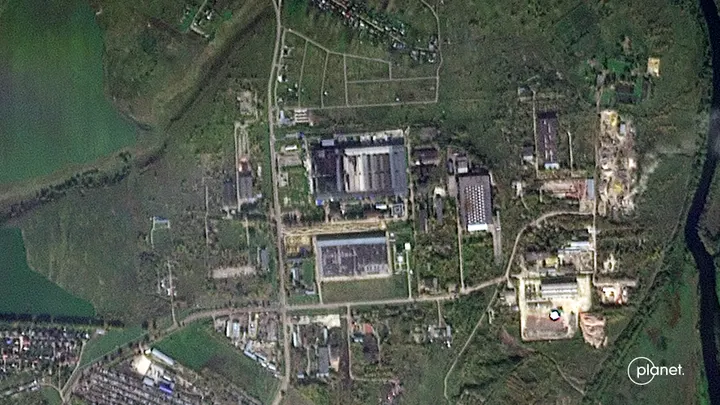
Ars Live recap: Don’t expect military attacks on data centers to stop
Drone attacks on data centers. Amazon data centers came under military attack for the first time ever in the Middle East this year, and Russia and Ukraine exchanged an unprecedented flurry of drone strikes on each other’s data centers. To examine what such attacks on data centers mean for the future of cloud services that all modern societies depend upon, Ars hosted a live discussion. In a conversation with Ars Technica Tech Reporter Jeremy Hsu, Joseph Jarnecki a

AI data centers are becoming harder to build, and neoclouds are feeling it
Nvidia has made clear it won’t backstop an AI data center until it’s nearly ready to run, and that’s landing just as neoclouds report construction delays and more expensive debt. The message to developers is that land, power and a finished building matter more than a pitch deck. Anita Verma-Lallian has been selling exactly that. […]

Anthropic's appetite for compute is pushing xAI toward a rent-over-build strategy
Since May, SpaceXSI has been renting compute to competitors like Anthropic and Google while scaling back its own AI projects. Anthropic pays about $3.1 billion a month, Google $800 million, the New York Times reports. After its June IPO, SpaceXSI disbanded the 60-person Grok Imagine team, among other cuts. The article Anthropic's appetite for compute is pushing xAI toward a rent-over-build strategy appeared first on The Decoder.
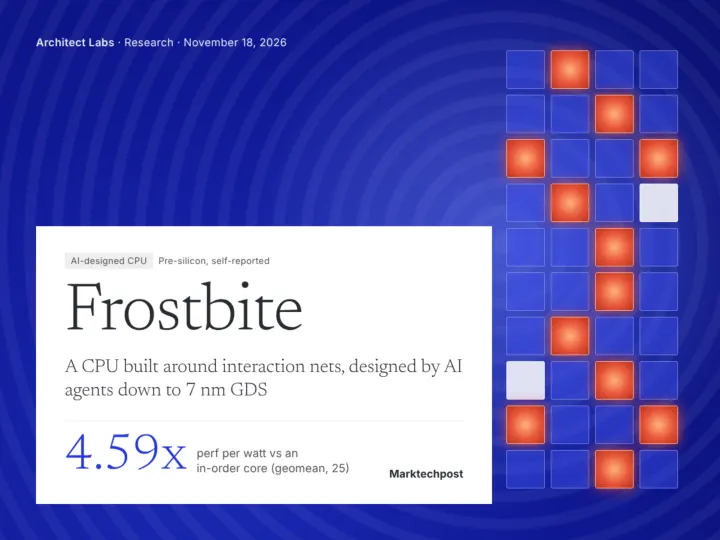
Architect Labs Unveils Frostbite, an Interaction Net CPU Designed by AI
Architect Labs has introduced Frostbite, an AI-designed CPU with a new instruction set built around interaction nets. The company states that its AI agents designed Frostbite from interaction net theory down to final GDS. In pre-silicon tests, it reports 4.59x the performance per watt of a modern in-order CPU core. TL;DR Size: 1 quad (2×2 tiles) plus 4 L3 nodes takes 0.792 mm² on 7 nm. No parameter count (it is a CPU). Runs on: Pre-silicon only. Final GDS closes at 500 MHz on 7
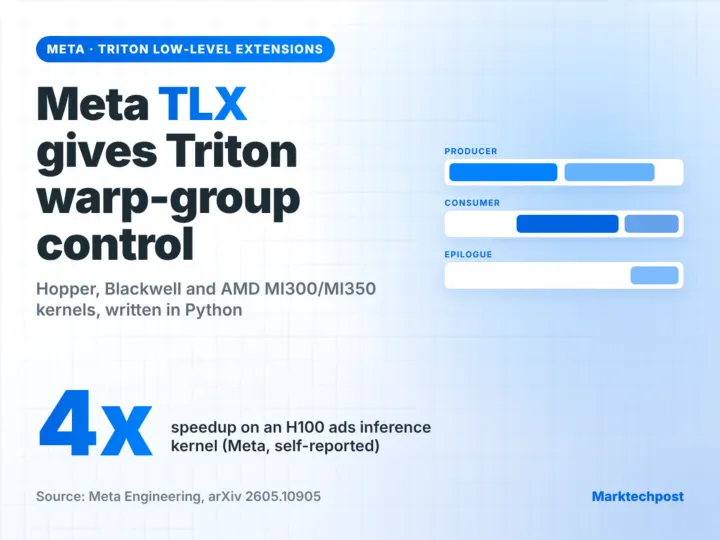
Meta TLX Brings Warp-Group GPU Control to Triton on Hopper, Blackwell, AMD
Meta has published a detailed report on TLX (Triton Low-Level Extensions). It is the GPU compiler extension behind Meta’s production ML kernels. Meta TLX is a Triton extension that exposes warp groups, barriers, TMA and clusters to Python kernels. It targets NVIDIA Hopper and Blackwell plus AMD MI300 and MI350-series GPUs. For kernel engineers, the message is CUDA-level control without leaving Triton. TL;DR What it is: an extension to Triton, not a new language. A Blackwell GEMM ta