
Google and Meta open-source TorchTPU for PyTorch on TPUs
Hugging Face: Hugging Face ❤️ TorchTPU: TPUs, Natively
Tighter integration between the popular open-source platform and Google's specialized processors could lower barriers for researchers training large models.
What happened
Google and Meta have open-sourced TorchTPU, a native PyTorch backend that allows machine learning code to run directly on Google Cloud TPUs as a standard device alongside GPUs and CPUs. TorchTPU replaces an older tool called PyTorch/XLA and was announced at PyTorch Conference 2026 on October 20, 2026. The integration enables popular libraries like Transformers, Diffusers, vLLM, and SGLang to work natively on TPUs without requiring separate forks or workarounds.
What each outlet adds
- Hugging Face ↗: The tighter integration could lower barriers for researchers training large models by allowing them to load models from Hugging Face's repository and send them to TPU with simple code commands.
- MarkTechPost ↗: TorchTPU offers multiple execution modes including eager mode for debugging and compiled mode for production speed, with reported performance reaching 52% model FLOPs utilization on a training task, and has been tested to scale across thousands of TPU chips.
Why it matters
TorchTPU simplifies how researchers and developers can use TPUs for training and running large language models by using familiar PyTorch code without requiring specialized compilation steps or rewrites. Previously, running PyTorch on TPUs required using an intermediary tool that had limitations like lazy tensor evaluation and difficult debugging.
Get smart on it
TorchTPU is a native PyTorch backend that enables users to run PyTorch code directly on TPUs, which are AI accelerator chips designed for the matrix math that neural networks rely on. Previously, running PyTorch on TPUs required using an intermediary tool that had limitations like lazy tensor evaluation and difficult debugging. With TorchTPU, users can now load models from Hugging Face's model repository and send them to TPU with simple code commands, similar to using any other device. The integration means that popular libraries like Transformers and Diffusers, as well as optimized kernels, now work natively on TPUs without requiring separate forks or workarounds.
Relevant courses
Want to go deeper than the news? Explore live, cohort-based AI courses taught by practitioners.
Browse AI courses on MavenRelated news

Google has joined Amazon in attacking Nvidia’s stronghold with AI app developers
Google has joined Amazon in releasing a developer tool that makes it easy for PyTorch users to move their apps off Nvidia GPUs.

CoreWeave’s debt is becoming the whole AI industry’s problem
CoreWeave had a bad week last week. Its bonds slipped into distressed territory by a common definition - when investors demand 1,000 basis points more in yield than they'd get from government bonds. Last Tuesady Chamath "SPAC King" Palihapitiya noticed the distressed debt, and also asked whether the AI buildout was a private credit bubble. Its shares are down more than 20 percent since Tuesday's close, which is kind of a lot! There even seemed to be some collateral damage in th

Amazon is taking its biggest shot at Nvidia yet with new TorchNeuron dev tool
Amazon wants to break Nvidia’s hold on PyTorch, the free toolkit used to build most AI apps, so that more developers run their apps on alternative chips like its own.
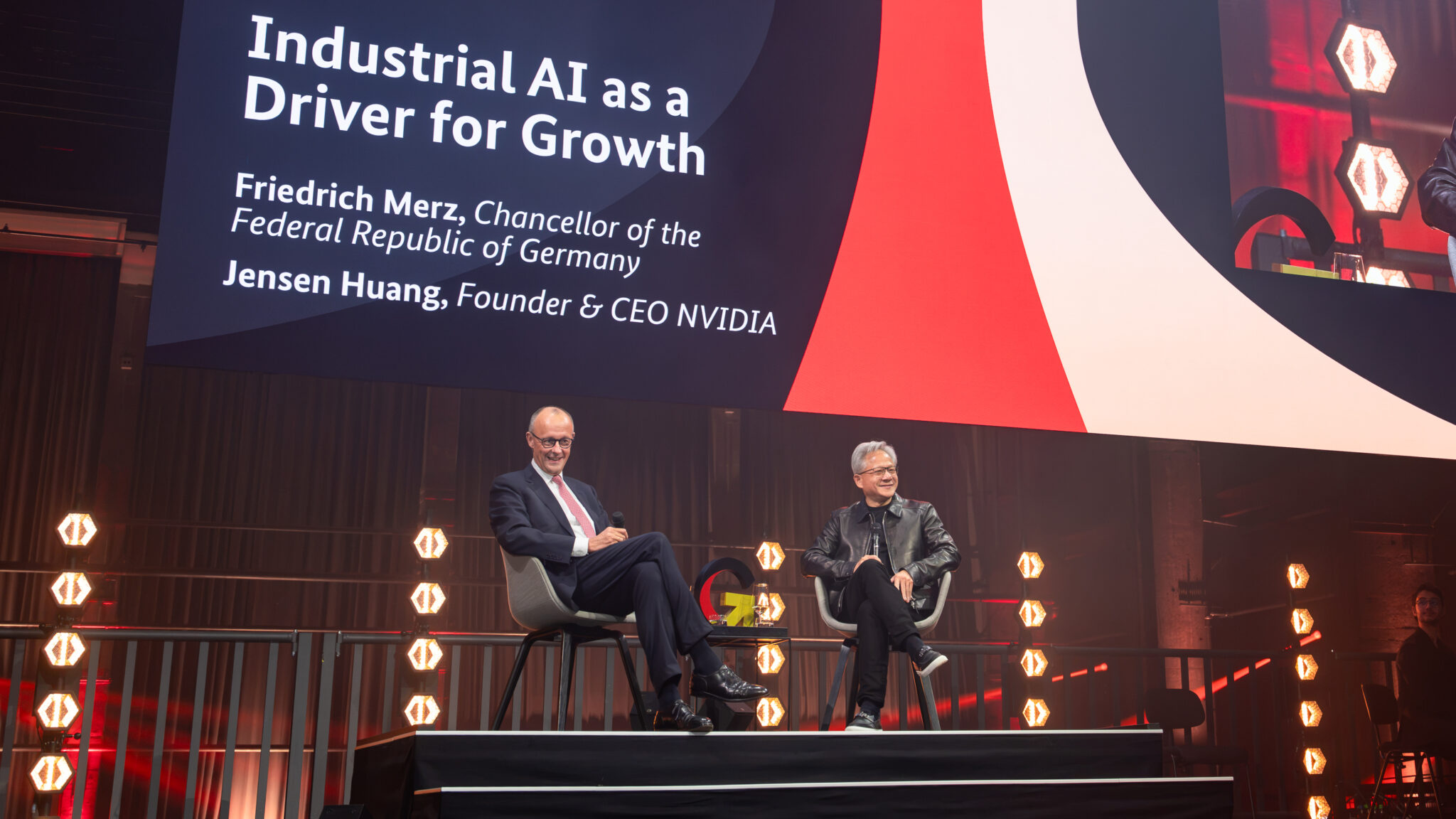
Germany Wants to Lead the World in Industrial AI: How NVIDIA Will Help
In the cavernous hall of Kraftwerk, a former power station in Berlin, German Chancellor Friedrich Merz and NVIDIA founder and CEO Jensen Huang sat down to discuss Germany’s AI roadmap, and in particular, the industrial applications of AI. Huang opened by tracing NVIDIA’s longstanding relationship with German industry, beginning with gaming systems, workstations and automotive design in the early 2000s and leading to today’s partnerships in autonomous vehicle development and digital twins for man
The neocloud shakeout is coming, and Nvidia has the most to lose
After stock crashes and Firmus's scrapped IPO, industry executives expect only seven to ten of the hundreds of AI cloud providers to survive. CoreWeave lost a quarter of its market value, and Microsoft pulled out of a deal with Nscale for 23,000 Nvidia chips. Nvidia has a lot riding on the outcome, since customers outside the hyperscalers make up 45 percent of its data center revenue. The article The neocloud shakeout is coming, and Nvidia has the most to lose appeared first on The Deco
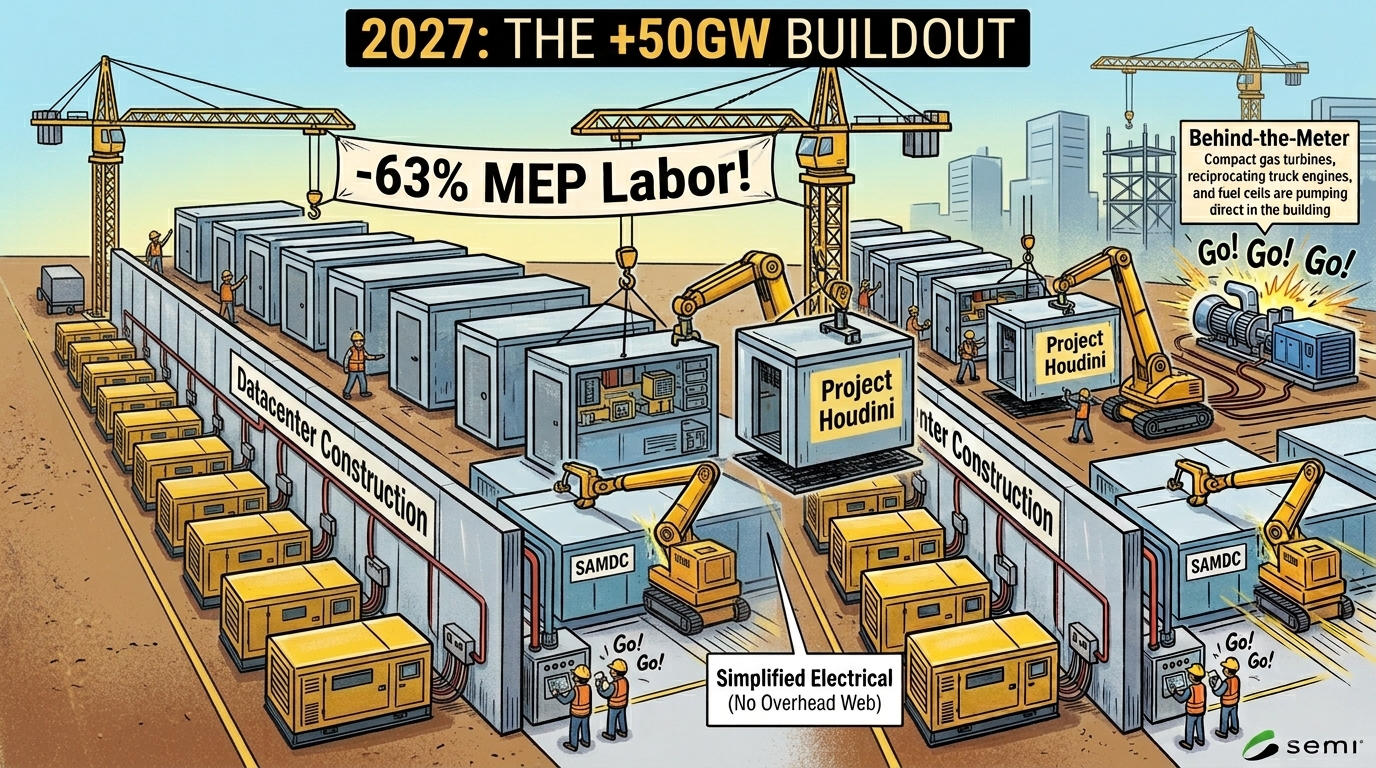
Datacenters 2027: The Year of Acceleration, +50GW in a Single Year
Not a week goes without another piece of datacenter FUD. We’ve already debunked depth why moratoriums aren’t as impactful as one may think. Despite that, many still misunderstand the pace of the global AI datacenter buildout. Just the other week, Brad Gerstner from Altimeter showed our data on the All-In Podcast and stated that “SemiAnalysis’ forecast of +43GW in 2027 is too aggressive” and that he thought only about 25GW would get built, close to half of our numbe