Google’s AI buildout drove 37% increase in electricity use in 2025
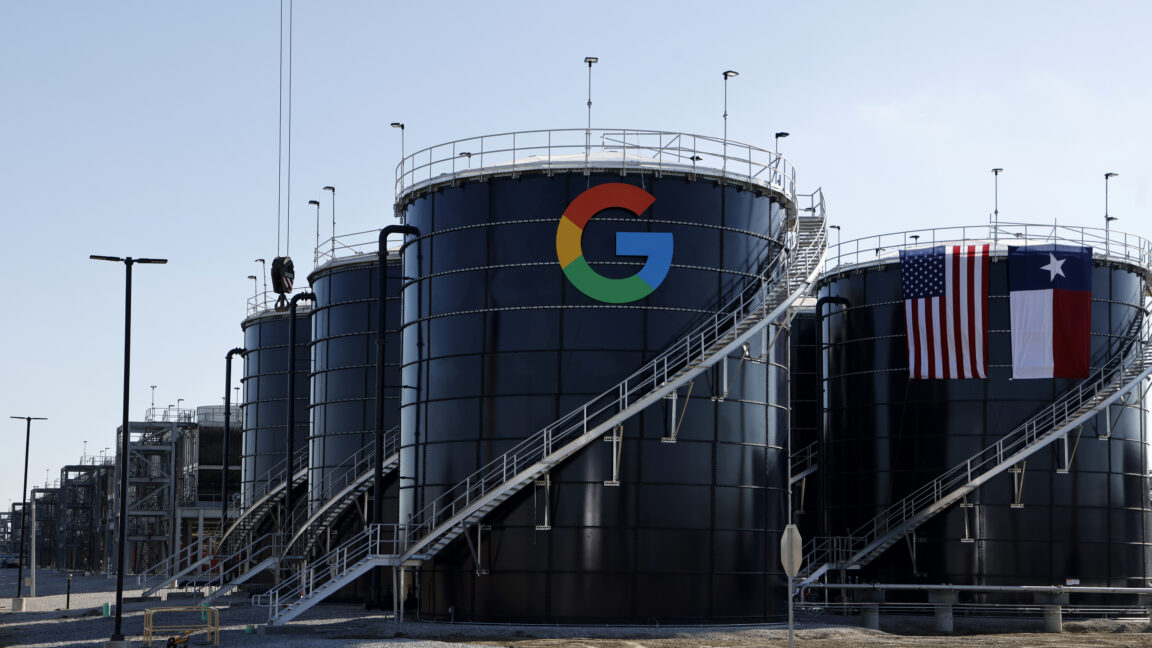
Google reported that its annual electricity consumption rose by 37 percent in 2025—the largest increase in the company’s history as Silicon Valley’s AI data center buildout continues. But the tech giant says it kept operational carbon emissions down by continuing to purchase massive amounts of clean energy. The company’s latest sustainability report acknowledges that Google’s total electricity usage has increased by more than 250 percent since 2019, which the company attributed to ongoing growth
Get smart on it
A major technology company reported that its electricity consumption increased by 37 percent in 2025, the largest annual increase in its history, driven primarily by construction and operation of data centers supporting AI products and services. Despite this dramatic rise in power usage, the company reported reducing operational carbon emissions by 2 percent through purchasing large amounts of clean energy, though it acknowledged that such renewable energy purchases do not guarantee the power actually comes from carbon-free sources at local grid levels. The company is pursuing multiple energy strategies including investments in nuclear, fusion, geothermal, and energy storage technologies, though analysis suggests some of its data center expansion may rely on natural gas generation. This situation reflects a broader tension in the industry between rapidly accelerating AI infrastructure demands and the pace at which electrical grids can transition to clean energy sources.
Related news

New Data Center Developments: July 2026
We look at some of the latest data center developments announced over the past month.
AI Interconnect Delays Spur $1.75B National Grid–Joulent Deal
The utility’s planned $1.75 billion investment in Joulent illustrates how dedicated power infrastructure is becoming central to AI data center growth.