Google is working on a new AI chip designed to make Gemini more efficient
Alphabet, Google's parent company, is reportedly working on a new chip designed to make its Gemini models run much more efficiently.
Get smart on it
Alphabet is designing a new server chip internally called "Frozen v2" to make its Gemini AI models operate more efficiently, with a planned release in 2028. According to reported sources, the chip could be between six and 10 times more efficient than Google's existing AI chips, measured by tokens generated per unit of power. AI companies increasingly develop their own chips to run models more efficiently, reduce dependence on dominant chipmakers, and address concerns about AI spending costs. The reported development appears to have boosted investor confidence, with Google's stock climbing approximately 3 percent following the news announcement.
Related news
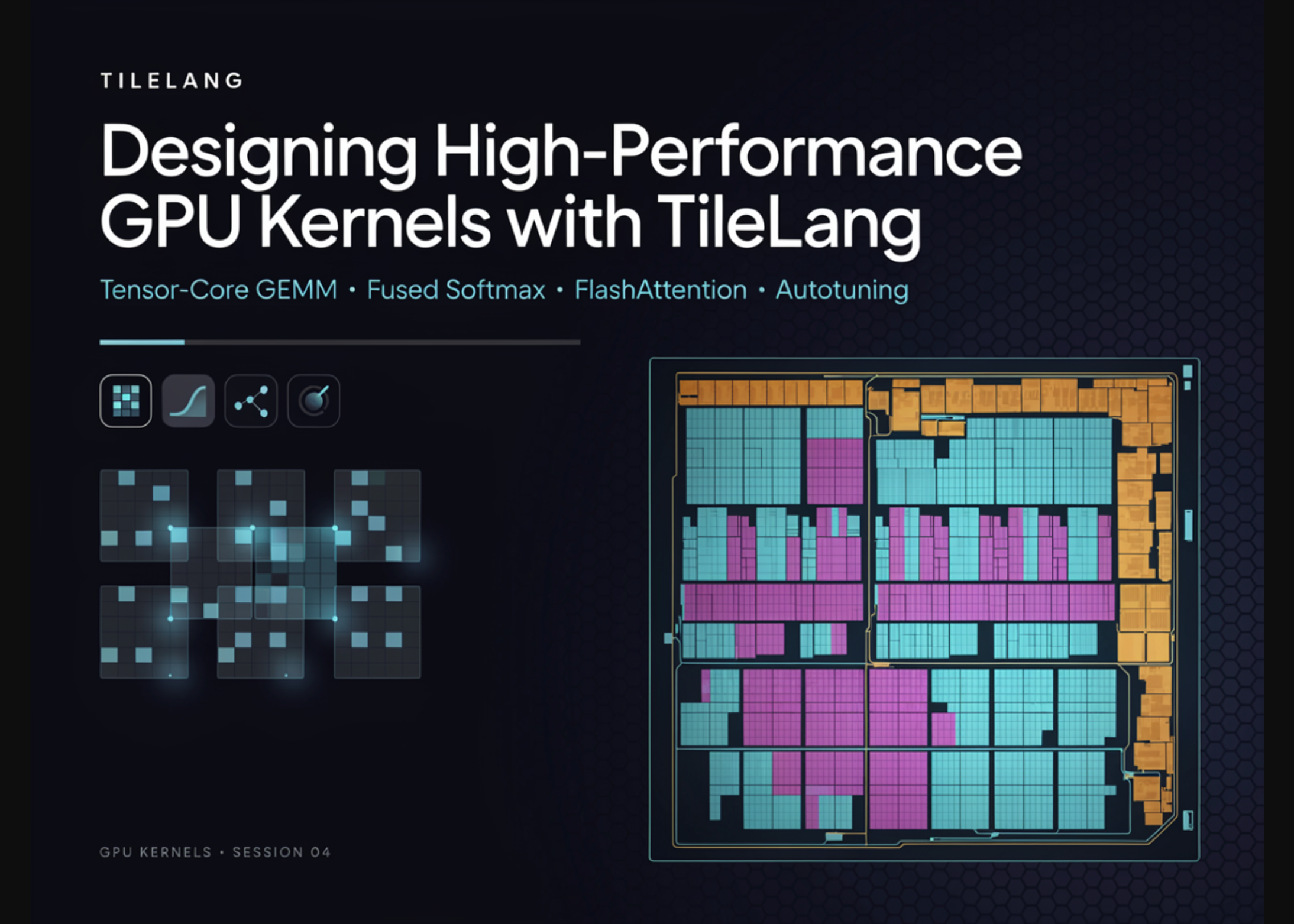
Designing High-Performance GPU Kernels with TileLang: Tensor-Core GEMM, Fused Softmax, FlashAttention, and Autotuning
In this tutorial, we explore TileLang as a high-level Python domain-specific language for designing and compiling performance-oriented GPU kernels through TVM. We begin by validating the CUDA environment and establishing reusable benchmarking and numerical-verification utilities, then progressively implement vector addition, tiled tensor-core matrix multiplication, schedule exploration, fused GEMM epilogues, row-wise softmax, and FlashAttention. Throughout the tutorial, we work directly with Ti

One fallen power line exposed a growing AI data center problem. Here’s how to fix it.
A close call in Northern Virginia revealed just how poorly data centers respond to grid disruptions. Here's how to fix the problem.

.jpg%3Fwidth%3D720%26quality%3D80%26disable%3Dupscale&s=kAmg5aaORKYzlMWL0upGuDAjzwWxVE-6xoVpfMYWKf4)