Europe’s Chips Act: A Brief Supply Chain Opinion
The European Chips Act is a bold step toward semiconductor sovereignty, but its success hinges on fostering local demand and innovation to sustain supply chains.
Get smart on it
The European Chips Act is industrial policy designed to reduce Europe's dependency on foreign semiconductor supplies by targeting roughly 20 percent of global chip production by 2030. The Act addresses chip supply shortages exposed in recent years and treats semiconductors as a matter of economic security. It pursues three main strategies: translating Europe's research capabilities into manufacturable technology, attracting strategic manufacturing capacity including wafer fabrication and advanced packaging, and creating monitoring systems to detect and respond to supply chain disruptions. However, the Act's success depends on whether Europe builds sufficient domestic demand from applications and design houses to support manufacturing capacity, as building fabs without local customers risks turning Europe into a subsidized manufacturer for other regions' chip architectures.
Related news
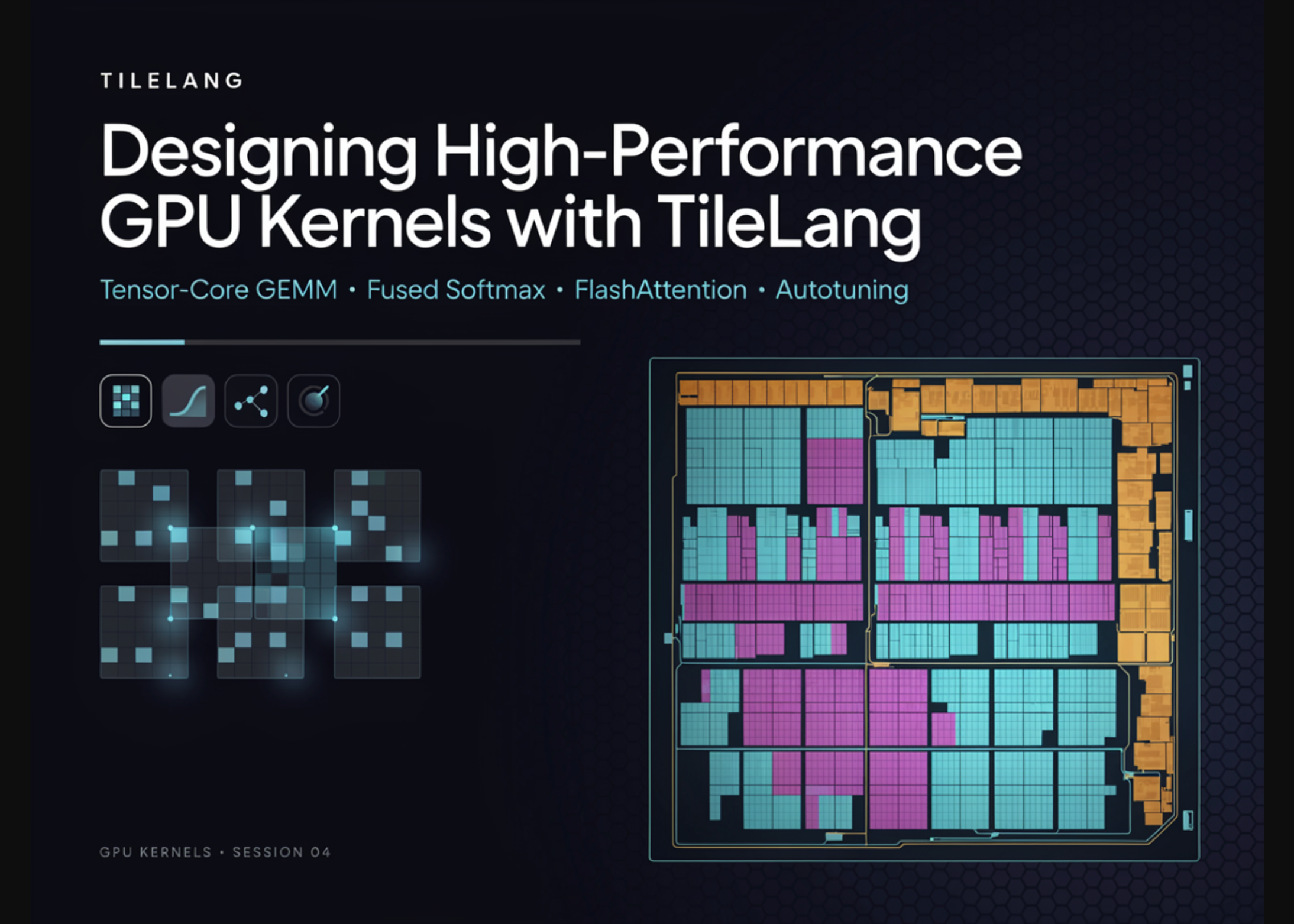
Designing High-Performance GPU Kernels with TileLang: Tensor-Core GEMM, Fused Softmax, FlashAttention, and Autotuning
In this tutorial, we explore TileLang as a high-level Python domain-specific language for designing and compiling performance-oriented GPU kernels through TVM. We begin by validating the CUDA environment and establishing reusable benchmarking and numerical-verification utilities, then progressively implement vector addition, tiled tensor-core matrix multiplication, schedule exploration, fused GEMM epilogues, row-wise softmax, and FlashAttention. Throughout the tutorial, we work directly with Ti

One fallen power line exposed a growing AI data center problem. Here’s how to fix it.
A close call in Northern Virginia revealed just how poorly data centers respond to grid disruptions. Here's how to fix the problem.

.jpg%3Fwidth%3D720%26quality%3D80%26disable%3Dupscale&s=kAmg5aaORKYzlMWL0upGuDAjzwWxVE-6xoVpfMYWKf4)